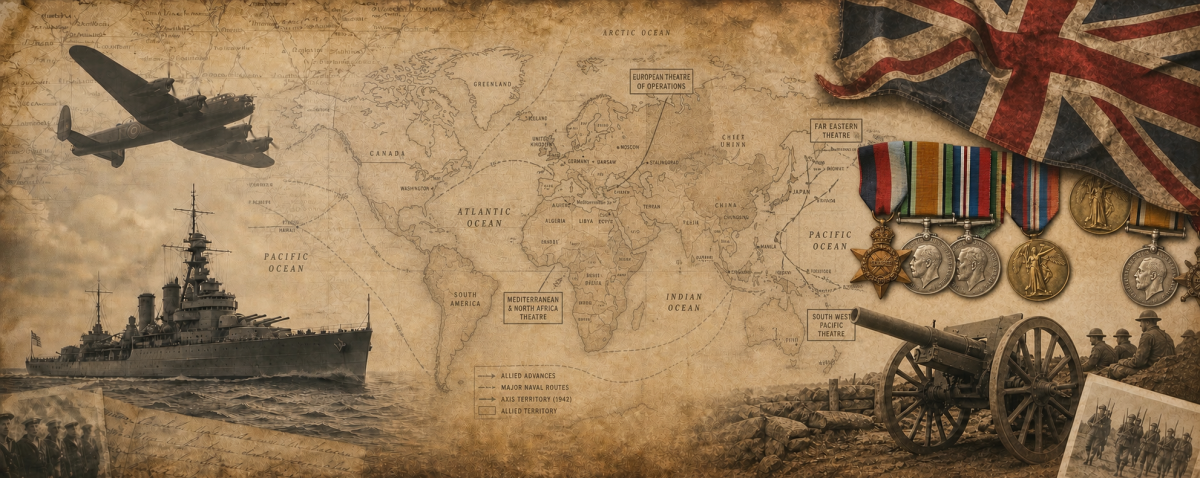
Sergeant Patrick Frederick Butler: A WWII Biography

Sergeant Patrick Frederick Butler (1922-1944), RAFVR Air Gunner from Islington, London, served with 75 Squadron NZ aboard Stirling EF137. Shot down over Denmark during Kiel Bay minelaying on 23 April 1944, he died aged 21. Buried at Aabenraa Cemetery. *Ake ake kia kaha*.

Sergeant Patrick Frederick Butler: A Detailed Biography

Early Life and Family
Patrick Frederick Butler was born on 24 December 1922 in Islington, London, England, during the post-First World War recovery period.[1] He was the son of Ralph John Butler, a former soldier in the Royal Berkshire Regiment, and Margaret Marsh Chidwick, daughter of a marine from Dover.[1] Baptised on 3 January 1923 in Islington, Patrick grew up in a working-class family amid the Great Depression’s hardships and interwar social changes, residing in Islington by 1922.[1] No records indicate siblings, a spouse, or children, reflecting his young age at death.[1]

This London upbringing shaped a resilient youth who reached adulthood as the Second World War erupted in 1939, turning 16 that year.[1] Family military ties, via his father’s service, likely influenced Patrick’s path.[1] Genealogical sources like Ancestry.co.uk confirm his birth registration in Islington (Q4 1922, Vol. 1B, p. 358).[1]

Military Service
Enlisting in the Royal Air Force Volunteer Reserve after his 18th birthday around 1940-1941 at Euston recruiting office, Patrick trained as an Air Gunner—a role demanding sharp reflexes and mechanical skill.[1][2] Assigned to No. 75 Squadron (NZ), RAF Bomber Command—a New Zealand-manned unit reformed in 1940 with RNZAF aircrews—he served from RAF Mepal, Cambridgeshire.[1][3] The squadron’s Māori motto, Ake ake kia kaha (“For ever and ever be strong”), symbolised its crews’ spirit on night raids, minelaying (“gardening”), and SOE drops.[1][4]

By 1944, Patrick was Mid-Upper Gunner (Service No. 1384944) on Short Stirling III EF137 (AA-E), a seven-man heavy bomber crewed with Pilot F/Sgt Mauson Lammas (RNZAF NZ421728), Navigator F/Sgt Douglas William Vaughan (RNZAF NZ429046), Air Bomber F/Sgt Robert Bailey (RNZAF NZ429072), Wireless Operator Sgt William Frederick Harrison (RAFVR 1396448), Flight Engineer Sgt Edwin Henry Thomas (RAFVR 1811856), and Rear Gunner Sgt Ivor Larson (RCAF R.192316).[1][3][4] Stirling crews faced high risks from night fighters and flak, with 75 Squadron suffering heavy losses—over 1,100 New Zealanders killed.[1][3] Detailed operations logged on 75nzsquadron.wordpress.com.[3]

Circumstances of Death
On 23 April 1944, EF137 took off from Mepal for a minelaying operation in Kiel Bay, part of 114 RAF bombers targeting five Baltic areas under two-moonlight conditions—highly hazardous due to visibility aiding German night fighters.[1][4][3] Five 75 Squadron Stirlings laid mines; EF137 was intercepted over Danish airspace near Vemmens (Vemmenæs), Tasinge Island, Fyn, crashing in flames at 23:15-23:20 hrs after disintegrating mid-air, killing all seven crew.[1][4][3][5] Eyewitnesses noted the empennage falling separately into shallow waters; probable attacker: Oberfeldwebel Rudolf Frank (3./NJG 3).[4][5]

This “gardening” mission disrupted Kriegsmarine shipping, but five bombers were lost that night from 75 Squadron and others.[3][6] Crash details corroborated by Danish sites like flensted.eu.com and airmen.dk.[4][7] Bomber Command’s minelaying sank 717 enemy vessels (688,153 tons), 40% of total sinkings.[8]

Burial and Commemoration
Recovered bodies received military honours burial on 1 May 1944 by a German chaplain, attended by locals, in Aabenraa (Åbenrå) Cemetery, Jutland, Denmark—Allied Military Plot, Row 4, Grave 1.[1][4][3] Patrick’s headstone reads: “1384944 SERGEANT P.F. BUTLER AIR GUNNER ROYAL AIR FORCE 23RD APRIL 1944,” with RAF badge and cross; CWGC maintains it (CWGC record).[1][7] The plot holds 147 WWII airmen burials.[1]

Commemorated on Find a Grave (ID 12725829), 75 Squadron rolls, and Menin Gate-like memorials; Danish locals tended graves pre-liberation.[1][4] ForcesWarRecords and AircrewRemembered.com archive crew details.[9]

Legacy and Descendants
At 21, unmarried Sergeant Butler embodied Bomber Command’s sacrifice—over 55,000 lost, many on obscure missions like Kiel Bay.[1][8] No descendants noted; his story, linking London roots to international crews, endures via digital archives, 75nzsquadron.wordpress.com, and RNZAF heritage.[1][3] Ake ake kia kaha honours his generation’s resolve.[1]

Danish memorials at Tasinge recall the crew. His brief life reflects Allied air war’s cost and triumph. [1]

Sources
[1] Individual-Report-for-Patrick-Frederick-Butler.pdf
[2] M. Lammas crew 26.3.44 † | 75(nz)squadron https://75nzsquadron.wordpress.com/m-lammas-crew-26-3-44-%E2%80%A0/
[3] B – 75(nz)squadron https://75nzsquadron.wordpress.com/b/
[4] Stirling III EF137 crashed near Vemmenæs east of the island of … http://www.flensted.eu.com/1944057.shtml
[5] RNZAF – Allied Losses and Incidents: All Commands https://aircrewremembered.com/AlliedLossesIncidents/?s=300&q=&qand=RNZAF&exc1=&exc2=&search_type=exact&search_only=
[6] April 1944 | 75(nz)squadron https://75nzsquadron.wordpress.com/april-1944/
[7] Patrick Frederick Butler – Airmen.dk https://www.airmen.dk/a113119.htm
[8] Gardening | Ted Church – Tail End Charlie https://tailendcharlietedchurch.wordpress.com/operations/gardening-mine-laying/
[9] Allied Losses and Incidents: All Commands – Aircrew Remembered https://aircrewremembered.com/AlliedLossesIncidents/?s=50&q=75sqn&qand=&exc1=&exc2=&search_type=exact&search_only=
[10] Vaughan D – International Bomber Command Centre https://losses.internationalbcc.co.uk/loss/228851/
[11] Stirling bomber crash in Denmark during WWII – Facebook https://www.facebook.com/groups/2365300344/posts/10162938298620345/
[12] Short Stirling – CASPIR Serial Search https://caspir.warplane.com/aircraft/serial-search/aircraft-no/200001563
[13] Short Stirling III (EF137 AA-E) on a mission to Frisian Islands on … https://ww2history.eu/air-force-operations/airplanes-allies-and-axis-lost/stirling/17423-EF1361943-09-09/next-listing
[14] Minelaying on the night of 21/22 May 1944 – Airwar over Denmark http://www.flensted.eu.com/1944148.shtml
[15] Lance Sergeant Frederick Patrick Butler – A Street Near You https://astreetnearyou.org/person/80067/Lance-Sergeant-Frederick-Patrick-Butler
[16] RNZAF – Allied Losses and Incidents: All Commands https://aircrewremembered.com/AlliedLossesIncidents/?s=1150&q=&qand=RNZAF&exc1=&exc2=&search_type=exact&search_only=
[17] T | 75(nz)squadron https://75nzsquadron.wordpress.com/t/
[18] Gardening Operations (dropping sea mines). https://75nzsquadronremembered.wordpress.com/gardening-operations-dropping-sea-mines/
[19] RAF 166 Squadron https://www.raf166squadron.com/166%20Squadron%20Personnelsearchablerevised.htm
[20] Tucked between steep cliffs and winding roads, Jøssingfjord may … https://www.facebook.com/kiwisflythecoop/posts/tucked-between-steep-cliffs-and-winding-roads-j%C3%B8ssingfjord-may-seem-like-just-an/1546310496735482/
[21] March 1944 | 75(nz)squadron – WordPress.com https://75nzsquadron.wordpress.com/march-1944/

The Legacy of Sergeant Pilot Ernest W. Cox

Sergeant Pilot Ernest Walter Cox, born on April 30, 1921, served with No. 51 Squadron RAF Volunteer Reserve and died on April 17, 1943, during a bombing raid on the Škoda Works at Plzeň. He is buried in Dürnbach War Cemetery, Bavaria, within a collective grave of Commonwealth airmen.

Sergeant Pilot Ernest Walter Cox (service number 1334812) served with No. 51 Squadron, Royal Air Force Volunteer Reserve, flying Handley Page Halifax II bombers from RAF Snaith as part of No. 4 Group, Bomber Command, and was killed in action on 17 April 1943 during a raid on the Škoda Works at Plzeň.[file:162][web:158]

He is buried in Dürnbach War Cemetery near Gmund am Tegernsee, Bavaria, where his grave lies among those of almost 3,000 Commonwealth airmen brought in from scattered crash sites and temporary graves across southern Germany.[file:162][web:159]


Early Life and Family

Ernest Walter Cox was born on 30 April 1921 in Canterbury, Kent, his birth registered in the Canterbury district in the June quarter of 1921 (volume 2A, page 1853), with his mother’s surname recorded as “Cartwell,” a variant of Carswell. He was the son of George Ernest Cox and Frances May Carswell.[file:162]

By 19 June 1921 he appears as an infant at 16 Seymour Place, Canterbury, recorded as a son in the household. Seymour Place lay in the St Stephen’s district, an area of mixed Victorian and Edwardian housing, home to professionals, tradespeople, and families in suburban surroundings just outside the city centre.[file:162]

By 1939 the family were at 46 Roper Road, Canterbury, where the Register records Ernest as an assistant building surveyor, a role that involved supporting survey work, preparing reports and drawings, monitoring compliance, and helping to coordinate small construction and maintenance projects in a city rich in historic buildings.[file:162] Roper Road itself was a desirable residential street of late Victorian and Edwardian houses associated with middle‑class families and local professionals.[file:162]

The Whitstable Times and Herne Bay Herald described him as “O.P.S. Ernest W. Cox, 46, Roper Road, Canterbury,” noting that he was training for active service with the RAF in the United States, and later as one of several Cox brothers in RAF service. He did not marry and left no children, but belonged to a family with a strong air force tradition: his brothers George, John, Stephen (“Steve”), and Kenneth all served or trained with the RAF or Air Training Corps, with Stephen awarded the Distinguished Flying Medal.[file:162]

From Roper Road in Canterbury, Ernest Cox left a promising civilian career as an assistant surveyor to become a Halifax bomber pilot with 51 Squadron.

Reconstructed from civil and newspaper records


Training under the Arnold Scheme and RAFVR Service

Ernest enlisted in the Royal Air Force Volunteer Reserve after November 1940, probably at Uxbridge or Weston‑super‑Mare, and began aircrew training. A Whitstable Times notice of 22 August 1942 records that Ernest W. Cox of 46 Roper Road, Canterbury, and D. T. Howard of Sturry were training at Craigfield, Alabama, USA, for active service with the RAF.[file:162]

This training in Alabama formed part of the Arnold Scheme, under which RAF cadets received flight training in the United States because Britain lacked sufficient capacity and suitable weather for large‑scale flying training. Having gained his wings, Ernest qualified as a pilot and was promoted to Sergeant Pilot, reflecting completion of advanced training and readiness for operational posting.[file:162][web:152]

By 1943 he was serving with No. 51 Squadron, RAFVR, based at RAF Snaith in Yorkshire. His service is summarised in the report as “Sergeant Pilot, 51 Squadron, No. 4 Group – Halifax II DT561 MH‑K, based at RAF Snaith,” firmly placing him within Bomber Command’s heavy bomber force in the crucial middle years of the war.[file:162]

Trained in Alabama under the Arnold Scheme, Cox returned to Britain as a newly qualified Halifax pilot, ready for night operations over occupied Europe.

Summary of training and posting evidence


No. 51 Squadron at RAF Snaith

No. 51 Squadron had previously served with Coastal Command at RAF Chivenor but converted to Handley Page Halifax bombers and moved to RAF Snaith, near Pollington in Yorkshire, as part of No. 4 Group, Bomber Command. From Snaith, the squadron operated Halifaxes until the end of the war, flying 264 raids and losing 148 aircraft.[file:162][web:161]

The Handley Page Halifax II was a four‑engined heavy bomber used extensively by Bomber Command for night attacks against industrial targets, transport hubs, and military facilities across occupied Europe and Germany. No. 51 Squadron’s aircraft carried the squadron code “MH,” and Ernest’s Halifax, serial DT561, is recorded as MH‑K.[file:162][web:161]

No. 4 Group, of which 51 Squadron formed part, was responsible for a large share of Bomber Command’s operations from its bases in Yorkshire. The group’s squadrons, including 51, repeatedly attacked strategic targets such as the Ruhr, Hamburg, and industrial plants in Czechoslovakia and elsewhere, at heavy cost in crews and aircraft.[file:162][web:158]

From RAF Snaith, 51 Squadron’s Halifax crews flew some of Bomber Command’s most demanding night raids, suffering heavy losses over heavily defended targets.

Context from No. 4 Group and squadron histories


The Plzeň Raid and the Loss of Halifax DT561

On the night of 16/17 April 1943, No. 51 Squadron took part in a Bomber Command raid on the Škoda armaments works at Plzeň in Czechoslovakia, a long‑range and heavily defended target. Ernest’s aircraft was Handley Page Halifax II DT561, code MH‑K, flying from RAF Snaith as part of this operation.[file:162][web:158]

The individual report notes that Halifax DT561 took off at 20:46 hours and that Sergeant Cox was “captain of a Halifax bomber,” confirming that he was the pilot in command. During the return leg, the aircraft was intercepted over Germany and shot down near Hadamar, in the “Bruchborn” district, by a German night fighter.[file:162]

The cemetery notes specify that DT561 was brought down at 03:12 hours by Lt. Otto Blohm of 10./NJG4, and that the crash occurred near Hadamar, Limburg‑Weilburg. All crew members were killed. A German death certificate issued at Hadamar on 11 September 1947 confirms that “the English airman E.W. Cox, identification tag 1 334 812, died on 17 April 1943 in Hadamar, district ‘Bruchborn’, as a result of an aircraft crash (Flugzeugabsturz).”[file:162]

Halifax DT561 MH‑K fell near Hadamar after a night‑fighter attack, its young captain, Ernest Cox, and his crew lost returning from the long‑range raid on Plzeň.

Derived from CWGC, German death certificate, and raid summaries


Burial and Commemoration

Ernest was initially buried locally in Germany, but after the war his remains were concentrated into Dürnbach War Cemetery near Gmund am Tegernsee, Bavaria. CWGC records give his grave as Plot 6, Row H, Grave 26, with his parents named as George Ernest and Frances May Cox, of Canterbury.[file:162][web:159]

Dürnbach War Cemetery contains 2,934 Commonwealth burials of the Second World War, most of them airmen whose graves were moved in from small cemeteries and crash sites across southern Germany, Austria, and Czechoslovakia. The cemetery’s carefully maintained lawns and stone headstones provide a collective resting place for scattered losses like those of Halifax DT561.[file:162][web:159]

The transcription of his CWGC headstone reads: “1334812 SERGEANT E. W. COX, PILOT, ROYAL AIR FORCE, 17TH APRIL 1943, AGE 21,” followed by a cross and the inscription “BLESSED ARE THE PURE IN HEART: FOR THEY SHALL SEE GOD,” a quotation from Matthew 5:8 chosen as a personal epitaph.[file:162]

His CWGC entry can be accessed at CWGC casualty details for Sergeant E. W. Cox. A complementary memorial page, sometimes with photographs and additional notes, is available at Find a Grave memorial 18600932.[file:162]


Medals, Probate, and Family Context

Ernest was entitled to the 1939–45 Star, the Air Crew Europe Star, and the War Medal 1939–45, reflecting his service in Bomber Command’s European campaign. As a fallen serviceman, his family also received the Memorial Scroll and Memorial Plaque commemorating his sacrifice.[file:162]

Probate was granted at Llandudno on 7 January 1944, with the entry stating that “Ernest Walter Cox of 46 Roper‑road, Canterbury, died on or since 17 April 1943 on war service,” administration being granted to his father, George Ernest Cox, municipal authority disinfector, with effects valued at £263 2s. 10d.[file:162]

Newspaper reports in the Whitstable Times in April 1943 noted that Sergeant Cox was “captain of a Halifax bomber” and listed his four brothers in RAF or related service: George on deferred service; John, a Pilot Officer who had served with Ferry Command in the Middle East; “Steve,” a Flight Officer with the Distinguished Flying Medal serving in Coastal Command; and Kenneth, the youngest, an engineering cadet scholar at Dartmouth and a member of the Air Training Corps.[file:162]

The Cox family of Roper Road sent five sons into the air war; Ernest, the Halifax pilot, did not return, but his story stands alongside his brothers’ distinguished service.

Summarising local newspaper tributes


Legacy

Sergeant Ernest Walter Cox left no descendants, but his memory lives on through his CWGC grave at Dürnbach, the local newspaper tributes that recorded his training and loss, and the wider remembrance of No. 51 Squadron’s wartime operations. His story exemplifies the contribution of Bomber Command crews trained under the Arnold Scheme and deployed to long‑range European raids.[file:162][web:158][web:161]

For family historians and researchers, sources such as Ancestry, the Whitstable Times and Herne Bay Herald archives, Bomber Command loss records, and the CWGC provide multiple avenues to explore the Cox family’s remarkable wartime service—from their home at 46 Roper Road, Canterbury, to the skies over Europe and the quiet cemetery at Dürnbach.[file:162][web:147][web:159]

Sources

  • Individual report for Sergeant Ernest Walter Cox (family tree compilation, including birth and residence in Canterbury; 1921 address at 16 Seymour Place; 1939 address at 46 Roper Road and occupation as assistant building surveyor; training under the Arnold Scheme in Alabama; service as Sergeant Pilot, No. 51 Squadron, RAFVR; loss of Halifax II DT561 MH‑K; and burial at Dürnbach War Cemetery, Plot 6, Row H, Grave 26).[file:162]
  • Commonwealth War Graves Commission – casualty record for “COX, ERNEST WALTER”, Sergeant 1334812, 51 Sqdn., Royal Air Force Volunteer Reserve, buried at Dürnbach War Cemetery, grave 6.H.26: CWGC casualty details.[file:162]
  • Find a Grave – memorial for Ernest Walter Cox (Dürnbach War Cemetery, with scope for photographs and tributes): Find a Grave memorial 18600932.[file:162]
  • German death certificate, Hadamar, 11 September 1947 – confirms death of “englische Flieger E. W. Cox” on 17 April 1943 at Hadamar, district “Bruchborn”, as a result of an aircraft crash (Flugzeugabsturz); transcript and English translation reproduced in the individual report.[file:162]
  • Dürnbach War Cemetery – background and description of the cemetery as a concentration site for 2,934 Commonwealth burials from scattered wartime graves across southern Germany and neighbouring regions: Dürnbach War Cemetery (general description) and related CWGC/commemorative material.[web:159]
  • No. 51 Squadron and RAF Snaith – squadron and station histories outlining 51 Squadron’s operations with Halifax bombers from RAF Snaith as part of No. 4 Group, Bomber Command, including total raids flown and aircraft losses; used to contextualise Cox’s service and final mission.[file:162][web:161]
  • Whitstable Times and Herne Bay Herald, 22 August 1942 – notice of Ernest W. Cox of 46 Roper Road, Canterbury, training at Craigfield, Alabama, for RAF service under the Arnold Scheme; 7 November 1942 notice on his brother Pilot Officer Stephen Charles Cox’s D.F.M.; and 24 April 1943 report “Captain of a Bomber Missing,” naming Ernest as captain of a Halifax and listing his four RAF‑serving brothers.[file:162]
  • Articles on the Arnold Scheme and RAF training in the USA – used to explain the context of Ernest’s pilot training at Craigfield, Alabama, and the wider programme of RAF cadets trained in North America.[web:152]
  • Bomber Command operational histories describing the raid on the Škoda Works at Plzeň and night‑fighter defences over Germany; used alongside the individual report’s account to frame the mission on which Halifax DT561 was lost.[file:162][web:158]

The Duisburg Raid and Anthony Gurr’s Sacrifice

Pilot Officer Anthony John Gurr, born on January 2, 1923, served with No. 15 Squadron, RAF, during World War II. He was killed in action on April 8, 1943, during a raid on Duisburg, Germany. He is buried in Rheinberg War Cemetery, commemorated for his bravery and sacrifice at just twenty years old.

Pilot Officer Anthony John Gurr (service number 143231) served as a pilot with No. 15 Squadron, Royal Air Force Volunteer Reserve, in No. 3 Group, Bomber Command, and was killed in action on the night of 8/9 April 1943 during a raid on Duisburg.[file:98][web:105]

He is buried in Rheinberg War Cemetery in Nordrhein‑Westfalen, Germany, where his grave lies among those of thousands of Commonwealth airmen who died in operations over occupied Europe.[file:98][web:110]


Early Life and Family

Anthony John Gurr was born on 2 January 1923 in Brentford, Middlesex, his birth registered in the March quarter of 1923 (volume 3A, page 291). He was the son of Frank Gurr and Elizabeth Charlotte (née Rumley), placing his family roots firmly in west London’s Middlesex suburbs.[file:98]

He was baptised at Hounslow on 2 April 1923, when the family were living at 177 High Street, Hounslow, reflecting a typical inter‑war urban setting of shops, small businesses, and terraced housing along one of west London’s major thoroughfares. By 1939 he was living at 12 Saint Peter’s Road, Isleworth, recorded in the 1939 Register as single and working as a junior clerk in an insurance company.[file:98]

Isleworth, historically a Middlesex town on the River Thames, had by the late 1930s developed into a suburban community of Victorian and Edwardian streets interspersed with newer housing, light industry, and easy rail access to central London. From this environment, in which many young men commuted or worked locally in clerical and industrial jobs, Anthony later volunteered for service in the RAFVR.[file:98]

Born in Brentford and raised in the west London suburbs, Anthony Gurr left a junior clerk’s desk in Isleworth to fly heavy bombers over wartime Europe.

Reconstructed from civil registration and 1939 Register data


RAFVR Service and Training

Anthony enlisted in the Royal Air Force Volunteer Reserve and trained as a pilot, rising to commissioned rank as a Pilot Officer. His service number, 143231, and later posting to an operational bomber squadron reflect successful completion of flying training and operational conversion onto heavy aircraft.[file:98]

By 1943 he was serving with Bomber Command and is recorded at Bourn, Cambridgeshire, a wartime station used by bomber units operating over Germany. The individual report notes his aircraft as Short Stirling III EF359, squadron code LS‑B, indicating that his operational career was tied to the RAF’s first four‑engined heavy bomber, the Short Stirling.[file:98]

As a young Pilot Officer on Short Stirling bombers, Gurr took his place in Bomber Command’s dangerous night offensive against the Ruhr.

Summary of Bomber Command role drawn from squadron notes


No. 15 Squadron in 1943

No. 15 Squadron was a long‑established bomber unit that, during the early years of the Second World War, flew Fairey Battles and Vickers Wellingtons before converting to Short Stirling heavy bombers. By early 1943 it formed part of No. 3 Group, Bomber Command, and operated from airfields in eastern England, including RAF Bourn and later RAF Mildenhall.[file:98][web:105]

The Short Stirling III was the first four‑engined bomber to enter RAF service, capable of carrying heavy bomb loads but limited in ceiling compared with later types. No. 15 Squadron used its Stirlings on night bombing raids deep into Germany and the occupied territories, with crews facing flak, night‑fighter attacks, and hazardous weather on long‑distance sorties.[file:98][web:103]

The notes in Anthony’s individual report indicate that later in 1943 the squadron converted to Avro Lancasters and moved to RAF Mildenhall, reflecting Bomber Command’s wider shift to Lancaster operations. Anthony’s service and death, however, came at the height of the Stirling period, when No. 15 Squadron was heavily engaged in the Battle of the Ruhr.[file:98][web:105]

In the spring of 1943, 15 Squadron’s Stirling crews were flying night after night into the heavily defended Ruhr – Duisburg, Essen, and other industrial cities.

Context from Bomber Command operational histories

The Duisburg Raid, 8/9 April 1943

The individual report’s “Last Operation Information” records that Short Stirling III EF359 (LS‑B) took off from Bourn on the night of 8/9 April 1943 for a night raid on Duisburg, a major industrial city in the Ruhr. The sortie was flown under an 18 per cent moon, with a total force of 392 aircraft: 156 Lancasters, 97 Wellingtons, 73 Halifaxes, 56 Stirlings, and 10 Mosquitoes.[file:98]

Thick cloud again hampered Pathfinder Force marking, and as a result the bombing was widely scattered. Duisburg suffered only moderate damage overall, with 40 buildings destroyed, 72 seriously damaged, and 36 people killed; bombs also fell on at least 15 other towns in the Ruhr. Nineteen bombers were lost on this operation – 7 Wellingtons, 6 Lancasters, 3 Halifaxes, and 3 Stirlings – a loss rate of 4.8 per cent of the attacking force.[file:98][web:99][web:105]

Anthony’s aircraft, Stirling EF359 LS‑B of No. 15 Squadron, was among those lost. The report notes that it crashed at Woltershof on the west bank of the Rhine, and that the crew’s bodies were found strewn over an area as large as five kilometres from the crash site, strongly suggesting that the aircraft exploded in the air—either through flak damage, internal explosion, or structural failure following battle damage.[file:98]

Stirling EF359 LS‑B failed to return from Duisburg; the wreckage and crew remains scattered for kilometres point to a catastrophic mid‑air explosion.

Derived from last‑operation notes and Bomber Command war diaries


Circumstances of Death

The individual report records Anthony’s date of death as 8 April 1943, with CWGC wording giving him as “Son of Frank and Elizabeth Charlotte Gurr, of St. Margarets, Twickenham, Middlesex.” The operational notes and subsequent cemetery concentration mean that his death occurred when EF359 LS‑B was lost on the Duisburg raid, with all crew members killed in action.[file:98]

The Duisburg operation formed part of the Battle of the Ruhr, Bomber Command’s sustained campaign against the industrial heartland of Germany in 1943. Losses on such raids were heavy and continuous, and Anthony’s fate reflects the wider experience of Stirling crews operating at lower altitudes and within the reach of dense flak belts and night‑fighter defences.[file:98][web:103][web:105]


Burial and Commemoration

Pilot Officer Gurr is buried in Rheinberg War Cemetery, Wesel, Nordrhein‑Westfalen, Germany, in grave 2.E.3. Rheinberg War Cemetery was established in April 1946 by the Army Graves Service to concentrate Commonwealth graves from numerous German cemeteries across the region, particularly those of airmen recovered near their crash sites.[file:98][web:110]

The cemetery now contains 3,330 Commonwealth burials from the Second World War, of which 158 are unidentified. Many of those interred are airmen whose graves were brought in from cities such as Düsseldorf, Krefeld, Mönchengladbach, Essen, Aachen, Dortmund, and notably Cologne, from which some 450 graves were transferred. The site also includes soldiers from other arms who died in the Battle of the Rhineland or the advance from the Rhine to the Elbe.[file:98][web:107]

The transcription of his CWGC headstone reads: “PILOT OFFICER A. J. GURR, PILOT, ROYAL AIR FORCE, 8TH APRIL 1943, AGE 20,” followed by a cross and the family epitaph “WITH US ALWAYS.” This short phrase, chosen by his loved ones, ensures that the personal grief of his family in St. Margarets, Twickenham, is permanently inscribed on his grave far from home.[file:98]

His CWGC record can be accessed at CWGC casualty details for Pilot Officer A. J. Gurr. An additional memorial entry, sometimes including photographs and personal tributes, is available at Find a Grave memorial 18406796.[file:98]


Legacy

Anthony John Gurr did not marry and left no children, but his memory endures in the CWGC records, in his headstone at Rheinberg War Cemetery, and in the operational histories of No. 15 Squadron and Bomber Command. For his parents Frank and Elizabeth Charlotte in St. Margarets, Twickenham, the simple words “WITH US ALWAYS” on his headstone captured the enduring presence of a son lost at just twenty years of age.[file:98]

His story also forms part of the wider narrative of the RAF’s night bombing offensive in 1943, a campaign that inflicted heavy damage on German industry but at great cost in aircrew lives. As pilot of Stirling EF359 LS‑B, Anthony took his place among the thousands of young Bomber Command airmen whose courage and sacrifice are commemorated not only in cemeteries like Rheinberg but also in the Bomber Command War Diaries and regimental histories that preserve their operations in detail.[file:98][web:103][web:105]

For family historians, platforms such as Ancestry, together with CWGC and squadron‑level research, allow his short life—from his baptism at Hounslow in 1923 to his last sortie from Bourn in 1943—to be set within the broader story of the Gurr and Rumley families and of Bomber Command’s wartime service.[file:98]

Sources

  • Individual report for Pilot Officer Anthony John Gurr (family tree compilation, including birth, baptism, 1939 Register entry, RAFVR service with No. 15 Squadron, death, burial at Rheinberg War Cemetery, and crew/operation notes for the Duisburg raid).[file:98]
  • Commonwealth War Graves Commission – casualty record for Pilot Officer A. J. Gurr, RAFVR, buried in Rheinberg War Cemetery, grave 2.E.3: CWGC casualty details.[file:98]
  • Find a Grave – memorial for Anthony John Gurr (includes grave reference and photographs/tributes where available): Find a Grave memorial 18406796.[file:98]
  • No. 15 Squadron RAF – operational context in April 1943, including Bomber Command service and the squadron’s role on the Duisburg raid: No. 15 Squadron (WWII).[web:105]
  • Duisburg raid, 8/9 April 1943 – operational loss context and raid summary, including the 392‑aircraft force and weather conditions: Aircrew Remembered – Operation Duisburg.[web:99]
  • Rheinberg War Cemetery – background on the cemetery and its concentration of airmen’s graves moved there after the war: Rheinberg War Cemetery and WW2 Cemeteries – Rheinberg War Cemetery.[web:104][web:107]
  • General cemetery and casualty reference material confirming Rheinberg’s origin and burial totals: Rheinberg War Cemetery.[web:110]

RAF Volunteer Reserve: James Godden’s North Africa Service

Leading Aircraftman James George Godden served in No. 221 Squadron, RAF Volunteer Reserve during World War II and died in Egypt on April 6, 1942, at age 28. He is buried in Halfaya Sollum War Cemetery. Godden was a family man, survived by his wife Eleanor and two children, reflecting personal sacrifice in war.

Leading Aircraftman James George Godden (service number 1176451) served with No. 221 Squadron, Royal Air Force Volunteer Reserve, during the North African campaign of the Second World War and died in Egypt on 6 April 1942, aged twenty‑eight.[file:72][web:80]

He is buried in Halfaya Sollum War Cemetery on the Egyptian–Libyan frontier, among many others who lost their lives in the Western Desert fighting of 1940–1942.[file:72][web:78]


Early Life and Family

James George Godden was born on 28 April 1913 in Kennardington, Kent, his birth registered in the Tenterden district in the 1913 June quarter (volume 2A, page 1812). He was the son of George Godden and Emma Jane (née Pellett), tying him to a long‑standing Kentish family in the Romney Marsh and Weald border country.[file:72]

By 19 June 1921 he was living at The Heath, Appledore, Kent, as part of the family household, reflecting a rural upbringing in a small village community close to the marshes. Later, by the time of the 1939 Register, he had moved away from his native county, living at 46 Douglas Road, Kingston upon Thames, Surrey.[file:72]

On 29 September 1939, the 1939 Register records him as a grocer’s van driver, an occupation that involved delivering provisions in the expanding suburbs of south‑west London in the early months of the war. In about May 1936 he had married Eleanor Slater in Surrey (volume 2A, page 326, line 60), and the couple went on to have at least two children, Mary Henrietta Godden and Peter J. Godden, whose lives would be shaped by their father’s wartime service and loss.[file:72]

From Kennardington and Appledore in rural Kent to Kingston upon Thames and wartime service overseas, James Godden’s life bridged both village and suburban England.

Reconstructed from civil registration and census data


RAFVR Service in North Africa

James enlisted in the Royal Air Force Volunteer Reserve (RAFVR) and served in the North Africa theatre, his military record noting service “Lg 89, Egypt” within the Middle East command structure. He held the rank of Leading Aircraftman (LAC), a junior non‑commissioned rank indicating an airman who had completed basic training and some specialist instruction, and his service number was 1176451.[file:72]

The individual report records his posting to No. 221 Squadron, RAFVR, as part of the North Africa division, placing him within a long‑range maritime reconnaissance and anti‑submarine unit rather than a purely land‑based army formation. His duties as an LAC would have depended on his exact trade, but in a Wellington‑equipped coastal squadron they typically ranged from groundcrew roles—maintenance, armoury, signals, and operations room support—to certain non‑commissioned aircrew posts.[file:72][web:77]

As a Leading Aircraftman with 221 Squadron, Godden served in a long‑range Wellington unit whose task was to find and shadow enemy shipping in the Mediterranean.

Summary of No. 221 Squadron’s operational role


No. 221 Squadron in Early 1942

No. 221 Squadron was reformed on 21 November 1940 at RAF Bircham Newton as part of Coastal Command and equipped with Vickers Wellington bombers adapted for long‑range maritime patrols. It began convoy‑escort patrols from February 1941 and soon added shipping reconnaissance off the Dutch coast, before moving to Northern Ireland to focus on anti‑submarine patrols over the Atlantic.[file:72][web:77][web:80]

Between September and December 1941 the squadron operated from bases in Iceland, continuing its anti‑submarine role in the North Atlantic’s harsh conditions. In January 1942 it was posted to the Middle East, with its aircraft flying out in January and February and ground crews following by sea; for a short period the Wellingtons were attached to No. 47 Squadron until the full 221 Squadron establishment re‑formed.[web:77]

From March 1942, once reunited in the theatre, No. 221 Squadron began Mediterranean operations, flying a mix of shipping reconnaissance, strike missions, and anti‑submarine patrols. Detachments also operated from advanced bases such as Malta, using torpedo‑armed Wellingtons to attack Axis convoys during operations like Vigorous, which attempted to resupply the besieged island.[web:77][web:80]

By the spring of 1942, 221 Squadron’s Wellingtons were patrolling the Mediterranean from Egyptian bases, searching for U‑boats and convoys instead of U‑boats in the Atlantic.

History of No. 221 Squadron’s move to the Middle East


Circumstances of Death

The individual report records that James George Godden died on 6 April 1942 in Egypt while serving with 221 Squadron in the North Africa theatre. The brief entry does not specify the precise cause of death—whether accident, illness, or operational loss—but the date falls very shortly after the squadron’s arrival in the Middle East and the start of its Mediterranean patrols.[file:72][web:77]

Given the intense tempo of operations in early 1942 and the strains of redeploying a Wellington squadron from the North Atlantic to the Middle East, losses at this time included aircraft accidents, operational incidents, and non‑battle deaths among both aircrew and ground personnel. Without additional squadron records it is not possible to be definitive, but his interment in Halfaya Sollum War Cemetery suggests that his death was associated with Western Desert or coastal operations in the Egypt–Libya border region rather than deep in the Nile Delta rear area.[file:72][web:78]


Burial and Commemoration

James is buried in Halfaya Sollum War Cemetery, Egypt, in grave 4.G.5, as recorded in his individual report and the Commonwealth War Graves Commission records. The CWGC database entry for Leading Aircraftman James George Godden confirms his unit as Royal Air Force Volunteer Reserve, 221 Squadron, and notes that he was the son of George and Emma Godden and the husband of Eleanor Godden, of Kingston Hill, Surrey.[file:72]

Halfaya Sollum War Cemetery is a Commonwealth War Graves Commission cemetery near Sollum on the Egypt–Libya border, created to concentrate burials from the Western Desert fighting. It contains the graves of 2,046 military personnel of the Second World War, mostly from the 1940–1942 period, including many who fell in the battles around Halfaya Pass, Fort Capuzzo, Bardia, and other key points in the frontier region.[web:78]

His CWGC casualty record can be viewed here: CWGC casualty details for Leading Aircraftman J. G. Godden. An additional online memorial, which may include photographs and personal tributes, is available at Find a Grave memorial 18971153.[file:72]


Family and Legacy

Unlike some of your other relatives who died unmarried, James left a widow, Eleanor (née Slater), and at least two children, Mary Henrietta and Peter J. Godden. For them, his name on the headstone at Halfaya Sollum War Cemetery symbolised not only a national sacrifice but a very personal loss—of husband and father—felt in Kingston and among the wider Godden and Pellett families of Kent and Surrey.[file:72]

More broadly, his story forms part of the collective history of No. 221 Squadron, whose Wellingtons shifted from the grey seas of the North Atlantic to the sunnier but no less dangerous waters of the Mediterranean in early 1942. As a Leading Aircraftman in that unit, James contributed to the long, demanding maritime patrols that sought to protect Allied shipping and interdict Axis supply lines at a critical stage of the North African campaign.[file:72][web:77][web:80]

For descendants and family historians, resources such as Ancestry and other genealogical databases, combined with CWGC and squadron histories, make it possible to set his short life—1913 to 1942—within the wider story of the Godden and Pellett families and of RAF operations in the Mediterranean theatre.[file:72][web:77]

Sources

  • Individual report for Leading Aircraftman James George Godden (family tree compilation, including birth and residence details, marriage to Eleanor Slater, children Mary Henrietta and Peter J. Godden, RAFVR service with 221 Squadron, and Halfaya Sollum War Cemetery grave reference 4.G.5).[file:72]
  • Commonwealth War Graves Commission – casualty record for Leading Aircraftman J. G. Godden, 1176451, RAFVR, 221 Sqn., buried in Halfaya Sollum War Cemetery, grave 4.G.5: CWGC casualty details.[file:72]
  • Find a Grave – memorial for James George Godden (includes grave reference and scope for photographs and tributes): Find a Grave memorial 18971153.[file:72]
  • No. 221 Squadron RAF – operational history in the Second World War, including re‑formation in 1940, Wellington maritime patrols from Britain and Iceland, transfer to the Middle East in early 1942, and subsequent Mediterranean operations: History of No. 221 Squadron (WWII) and No. 221 Squadron RAF.[web:77][web:80]
  • Halfaya Sollum War Cemetery – background and description of the cemetery near the Egypt–Libya border, including its role in concentrating 2,046 Second World War burials from the Western Desert fighting of 1940–1942: Halfaya Sollum War Cemetery and Commonwealth War Cemetery Halfaya Sollum.[web:78][web:92]
  • RAF casualty listing confirming that LAC James George Godden (1176451), RAFVR, age 29, was serving with No. 221 Squadron at the time of his death on 6 April 1942 (used to corroborate unit and date): RAFWeb – Casualties 4–6 April 1942.[web:93]

Honoring Ronald George Hogben: RAF Hero in Italy

Flight Sergeant Ronald George Hogben was a Wireless Operator/Air Gunner in No. 37 Squadron of the RAF, who died on 3 April 1945 during a mission from Italy. Born in September 1923 in Kent, he is buried in Bari War Cemetery. Despite leaving no direct descendants, his legacy endures through memorials and his wartime service.

Flight Sergeant Ronald George Hogben (service number 1391913) served as a Wireless Operator/Air Gunner with No. 37 Squadron, Royal Air Force Volunteer Reserve (RAFVR), operating from Tortorella airfield in southern Italy during the final phase of the Second World War.[file:56][web:59][web:62]

He was killed on 3 April 1945 when his aircraft failed to return from an operational sortie, and he is now buried in Bari War Cemetery, Puglia, Italy, where his grave is carefully maintained by the Commonwealth War Graves Commission.[file:56]


Early Life and Family

Ronald George Hogben was born about September 1923 in the Thanet registration district of Kent, his birth recorded in the 1923 September quarter (volume 2A, page 1789). He was the son of Ronald George Henry Hogben and his wife Constance (née Young), giving him close ties to the Margate–Thanet area of east Kent.[file:56][web:57]

The individual report records no spouse and no children, and no shared facts with a partner, indicating that Ronald did not marry and left no direct descendants. His immediate family circle therefore consisted of his parents and siblings, who later commemorated him by name on his headstone and in local rolls of honour.[file:56][web:57]

Born in Thanet in 1923, Ronald Hogben grew up in a Kentish family whose son would not return from the skies over wartime Italy.

Reconstructed from birth registration and family records


Home Front: Great Wyrley in 1945

By 1945 Ronald’s parents were living in Great Wyrley, Staffordshire, a small mining village in the West Midlands, and CWGC records describe him as “of Great Wyrley, Staffordshire”. Great Wyrley formed part of the South Staffordshire coalfield, with coal mining as the dominant industry, supplemented by local agriculture and dairy farming.[file:56]

In 1945 the village, like the rest of Britain, was emerging from wartime into the uncertain hope of peace: Victory in Europe (VE Day) and Victory over Japan (VJ Day) came that year, yet rationing and shortages continued and everyday life was still marked by wartime restrictions. Many families lived in modest terraced housing close to the pits, relying on coal for heating, and the local churches and chapels, such as St Mark’s, remained important focal points for a close‑knit working‑class community.[file:56]

While Ronald flew from Italian airfields, his family in Great Wyrley faced rationing, coal‑field hazards, and the long wait for news from overseas.

Context from village and CWGC residence notes


RAF Service and Trade

Ronald enlisted in the Royal Air Force Volunteer Reserve and trained as a Wireless Operator/Air Gunner, a dual‑role aircrew trade combining radio communications with manning defensive guns on multi‑engined bombers. By 1945 he held the non‑commissioned rank of Flight Sergeant, indicating several years’ service and responsibility within his crew.[file:56]

As a Wireless Operator, he was responsible for maintaining two‑way radio contact with ground stations, sending and receiving messages (often in Morse), and keeping the crew updated on route changes, homing signals, and weather reports. As an Air Gunner, he operated one of the bomber’s defensive gun positions, scanning the skies for enemy fighters, coordinating with other gunners, and helping to protect the aircraft during its long, hazardous missions.[file:56]

The role carried significant risk: bomber crews flying from Italian bases faced enemy night‑fighters, anti‑aircraft fire (flak), difficult weather over mountains and the Adriatic, and the ever‑present chance of mechanical failure far from friendly territory. RAF bomber crew casualty rates were among the highest of any British service branch, a reality reflected in Ronald’s own fate in 1945.[file:56][web:59]

As a Wireless Operator/Air Gunner, Hogben’s task was to keep his Liberator talking to base while helping to defend it against night‑fighters and flak.

Summary of RAF wireless operator/air gunner duties


No. 37 Squadron at Tortorella

Ronald served with No. 37 Squadron, a long‑established RAF bomber squadron that, during the Second World War, flew Vickers Wellington medium bombers and later Consolidated Liberator heavy bombers. The squadron moved from North Africa to Italy in December 1943, taking up residence at Tortorella airfield near Foggia, which remained its base until October 1945.[file:56][web:59][web:62]

Tortorella formed part of the Foggia Airfield Complex, a cluster of wartime airfields in Apulia built and expanded by Allied engineers to support heavy bomber operations. The field had a long PSP (steel‑surfaced) runway with extensive taxiways and hardstandings, capable of handling Liberator bombers operating under RAF 205 Group, and hosted both RAF and USAAF units during the campaign.[web:62][web:68]

From Tortorella, No. 37 Squadron flew night bombing and minelaying missions across a wide area, attacking targets in Italy, Yugoslavia, Hungary, Bulgaria, and Albania, as well as mining the Danube to disrupt Axis shipping. In 1944 the squadron converted from Wellingtons to Liberator VI aircraft, providing greater range and bomb load for long‑distance operations from its Italian base.[web:59]

Flying from Tortorella as part of 205 Group, 37 Squadron’s Liberators struck at railways, ports, and oil routes across southern and eastern Europe.

Operational history of No. 37 Squadron in Italy


Unit and Crew at the Time of Death

The individual report lists Ronald’s “Knight crew” for 3 April 1945 as follows: Pilot Officer C. B. Knight (pilot), Warrant Officer C. C. Jarrett (navigator), Flight Sergeant R. G. Hogben (wireless operator), Flight Sergeant D. W. Horton (bomb aimer), Sergeant K. H. Bradburn (flight engineer), Sergeant W. Hunter (crew role not specified), Pilot Officer J. Harris (air gunner), and Sergeant G. Riley (air gunner). The note simply states: “Aircraft did not return from this operation.”[file:56][web:67]

As part of 37 Squadron at this stage of the war, the crew would almost certainly have been flying a Liberator VI heavy bomber on a night or long‑range sortie against an Axis‑held target in Italy or the Balkans. The squadron’s 1945 operations continued to focus on transportation hubs, ports, industrial facilities, and river traffic, supporting the final Allied offensives in Italy and cutting remaining enemy supply lines.[web:59][web:71]

Local rolls of honour in Margate summarise his fate succinctly: “1391913 Flt Sgt Ronald George Hogben, 37 Sqdn RAFVR. Killed in action in Italy on 3rd April 1945. Interred at Bari War Cemetery, Italy.” This aligns with the CWGC entry and confirms his status as killed on operations rather than through accident or illness.[web:57][file:56]


Circumstances of Death

Ronald George Hogben was killed on 3 April 1945 when his 37 Squadron aircraft failed to return from an operational mission. The individual report gives no target or detailed description, but the phrase “Aircraft did not return from this operation” strongly suggests that it was lost in combat—whether to anti‑aircraft fire, enemy fighters, or other operational causes—somewhere over or en route to its target.[file:56][web:59]

Contemporary discussions of the “Knight crew” and 37 Squadron losses on that date indicate that the entire crew perished, with their remains concentrated at Bari War Cemetery. As with many bomber losses late in the war, the exact circumstances may remain unclear without access to squadron records and missing‑aircraft reports, but all available evidence places his death squarely in the context of an operational sortie flown from Tortorella with No. 37 Squadron.[file:56][web:67][web:71]

The Knight crew took off from Tortorella on an April 1945 operation and never returned; their story now survives in squadron lists and the headstones at Bari.

Derived from crew lists, CWGC data, and squadron histories


Burial and Commemoration

Flight Sergeant Hogben is buried in Bari War Cemetery, Puglia, Italy, in grave XVI. E. 4, as recorded by the Commonwealth War Graves Commission and transcribed in the individual report. The CWGC entry reads: “HOGBEN, Flt. Sgt. (W. Op./Air Gnr.) RONALD GEORGE, 1391913. R.A.F. (V.R.), 37 Sqdn. Died 3rd April, 1945, Age 20. Son of Ronald George Henry Hogben and of Constance Hogben (née Young), of Great Wyrley, Staffordshire. Grave Reference: XVI. E. 4.”[file:56]

The family inscription on his headstone reads: “RESTING WITH GOD IN HEAVEN. SADLY WE MISS YOU. DAD, DAPHNE, PATRICIA AND REGGIE.” This brief text preserves the names of his parents and siblings and gives a poignant glimpse of the grief felt in Great Wyrley and among the wider family circle.[file:56]

Bari War Cemetery, located in the locality of Carbonara on the outskirts of Bari, was established in November 1943 and now contains 2,128 Commonwealth burials from the Second World War, of which 170 are unidentified, together with a small number of non‑war burials and graves of other nationalities. The cemetery is meticulously maintained by the CWGC and is noted by visitors for its tranquil, well‑kept setting, providing a dignified resting place for those who died in the Italian campaign.[file:56]

METADATA-START

His CWGC casualty record can be viewed here: CWGC casualty details for Flight Sergeant R. G. Hogben. An additional memorial entry, with the option for photographs and tributes, is available at Find a Grave memorial 56107339.[file:56]


Legacy

Although Ronald left no wife or children, his memory endures through his CWGC grave, his mention in local memorials such as the Margate War Memorial, and his place in the operational history of No. 37 Squadron. His service represents the sacrifices made by young airmen from ordinary British communities who volunteered for hazardous bomber duties in the last years of the war.[file:56][web:57][web:59]

For those tracing the Hogben and Young families, resources such as Ancestry and other genealogical sites, combined with civil registration and CWGC records, allow Ronald’s life to be placed within a fuller family tree. In a wider sense, his story also belongs to the collective memory of the RAF’s Italian campaign and the long, dangerous operations flown from the Foggia airfields in 1943–45.[file:56][web:59][web:68]

Sources

  • Individual report for Flight Sergeant Ronald George Hogben (family tree compilation, including birth, residence, CWGC transcription, Bari War Cemetery details, and RAF trade notes).[file:56]
  • Commonwealth War Graves Commission – casualty record for Flight Sergeant R. G. Hogben, 1391913, 37 Sqdn., RAFVR, Bari War Cemetery, grave XVI. E. 4: CWGC casualty details.[file:56]
  • Find a Grave – memorial for Ronald George Hogben (includes grave reference and space for user‑added photographs and tributes): Find a Grave memorial 56107339.[file:56]
  • Margate War Memorial, Second World War Roll of Honour (PDF listing local casualties, including Flight Sergeant Ronald George Hogben of 37 Squadron, RAFVR): Margate War Memorial WWII Roll of Honour.[web:57]
  • No. 37 Squadron, RAF – wartime history and operations, including move to Tortorella, Italy, and use of Wellington and Liberator bombers: History of No. 37 Squadron (WWII) and No. 37 Squadron RAF.[web:58][web:59]
  • Tortorella airfield and the Foggia Airfield Complex – background on the bomber base from which 37 Squadron operated: Tortorella airfield; Foggia Airfield Complex.[web:62][web:68]
  • 37 Squadron operational summaries and veteran material on Tortorella‑based missions (used for general mission context and typical targets in 1944–45): 37 Squadron Operations – Tortorella, Italy.[web:71]
  • Discussion and crew references for Pilot Officer Knight and the “Knight crew” of 37 Squadron (used to corroborate crew composition and loss on 3 April 1945): WW2Talk – P/O Geoffrey B. Knight, RAFVR.[web:67]

Alfred Walter David Hover 9 Squadron RAF: Lancaster ED477 Night Fighter Casualty 1943

At age 20, Sergeant Alfred Walter David Hover of Littlebourne, Kent, was killed in action as mid-upper gunner aboard Lancaster ED477. Shot down by German night fighter over Ristedt on 31 January 1943, he and his international crew never returned home. His name endures at Rheinberg War Cemetery and in family memory.

Sergeant Alfred Walter David Hover: A Detailed Biography

Sergeant Alfred Walter David Hover was a mid-upper air gunner with No. 9 Squadron RAF, flying Avro Lancaster bombers from RAF Waddington. On the night of 30–31 January 1943, he was killed in action over Germany when his aircraft, Lancaster III ED477 (“Robbie’s Reply”), was shot down by a German night fighter whilst returning from a bombing raid on Hamburg. At just 20 years old, he represented the young British aircrew who gave their lives in the strategic bombing campaign against Nazi Germany.

Early Life and Family

Alfred Walter David Hover was born before 28 June 1922 in Ashford, Kent, England, registered in the Summer Quarter (East Ashford, Volume 2A, Page 1672) . He was the son of Alfred William Hover and Mabel Lettie Elizabeth Hover (née Norrington) of Oast Cottage, Little Court, Margate Street, Littlebourne, Bridge, Kent . He was baptised on 28 June 1922 at Hastingleigh, Kent, a rural parish in the Weald of Kent known for its hop gardens and oast houses .

The Hover family were rooted in the Kent countryside, where the distinctive conical oast houses—used for drying hops—dominated the landscape. Their home at Oast Cottage reflected this agricultural heritage. Alfred grew up in the interwar years amid economic uncertainty and gathering international tensions. No records indicate marriage or children; he remained single and devoted to his parents and family . The family connection to the village of Hastingleigh is preserved in a local memorial maintained by the parish .

Military Service

Alfred enlisted in the Royal Air Force Volunteer Reserve (RAFVR) and trained as an Air Gunner, one of the most dangerous roles in bomber operations . He achieved the rank of Sergeant (Service Number 1392470), recognised for his skill and reliability in this hazardous position . He was posted to No. 9 Squadron RAF, part of 5 Group Bomber Command .

No. 9 Squadron, with the motto “Per noctem volamus” (Through the night we fly), was one of the most celebrated and battle-hardened units of the RAF, having operated throughout the war across multiple theatres . By early 1943, the squadron was equipped with the Avro Lancaster Mk III, the iconic four-engine heavy bomber that would become synonymous with precision bombing and strategic raids against Nazi Germany .

The Lancaster required a crew of seven: pilot, flight engineer, navigator, bomb aimer, wireless operator, mid-upper gunner, and rear gunner. Sergeant Hover served as the mid-upper gunner, manning the dorsal turret between the fuselage wings, with two .303 Browning machine guns. This position offered a 180-degree field of fire above and to the sides of the aircraft, but exposed the gunner to the full force of enemy fire and the sub-zero temperatures of high-altitude flight .

By January 1943, the Lancaster force was engaged in the preliminary phases of the bombing campaign against German cities. No. 9 Squadron operated from RAF Waddington, a permanent station in Lincolnshire, which became the home of several elite Lancaster units .

The Final Mission: Hamburg, 30–31 January 1943

On the night of 30 January 1943, Sergeant Hover was part of the crew of Avro Lancaster III ED477, coded WS-O and nicknamed “Robbie’s Reply”, detailed for a bombing raid on Hamburg, Germany’s largest port and second-largest city . The operation was significant: 148 aircraft were dispatched—135 Lancasters, 7 Stirlings, and 6 Halifaxes from No. 1, 5, and 8 Groups . This was the first operational use of H2S radar by the RAF, a revolutionary airborne radar-bombing aid intended to mark targets with precision even in cloud cover [3].

The crew, drawn from three Allied nations, were:

Royal Australian Air Force:

  • Flight Sergeant J. F. Thomas – Pilot (Captain)
  • Flight Sergeant L. A. Morgan – Rear Gunner

Royal New Zealand Air Force:

  • Sergeant W. J. Veysey – Wireless Air Gunner

Royal Air Force:

  • Sergeant Alfred W. Hover – Mid-Upper Gunner
  • Sergeant S. F. McLean – Flight Engineer
  • Sergeant J. Murtagh – Navigator
  • Sergeant B. M. Swallow – Bomb Aimer

Lancaster ED477 took off from RAF Waddington at 23:49 hours on 30 January 1943, laden with a full bomb load and fuel for the long flight to Hamburg and back . Over the target, bombing proved scattered. Although H2S was a significant technical achievement, its performance that night was poor—Hamburg’s location near a coastline and prominent river should have made it ideal for the new radar, but bombing dispersed over a wide area . Only 315 tons of bombs were dropped in the Hamburg area, with local historians suggesting many fell in the River Elbe or surrounding marshes . Nevertheless, 119 fires were started (71 large), 58 people were killed, and 164 injured; a railway bridge was destroyed, disrupting Hamburg’s entire network for two days .

Circumstances of Death

As ED477 returned from Hamburg in the early hours of 31 January 1943, the Lancaster was hunted by German night fighters. The Luftwaffe had deployed Bf 110 and Ju 88 night fighters equipped with Lichtenstein radar to intercept the bomber stream . At approximately 03:24 hours, the aircraft was attacked and shot down by Oberleutnant Ernst Weiss of 1./NJG3 (Nachtjagdgeschwader 3 – Night Fighter Squadron 3) .

Eyewitness accounts from the ground are chilling: at 03:00 hours, a four-engine bomber was observed at approximately 1,000 feet, already burning in the air, approaching the village of Ristedt from the west, near Vechta, 15 km south-southwest of Bremen . Within minutes, the flaming aircraft crashed onto pastureland belonging to a farmer named Jakob on Ristedter Moor . No explosion was heard, suggesting the bomb load had been jettisoned before the final impact . All seven crew members were killed instantly .

Burial and Commemoration

Following the crash, the bodies of the seven airmen were initially recovered by German forces and buried in the Russian Prisoner of War cemetery at Vechta, Plot 1, Grave 114 . After the war, in a humanitarian gesture, the Commonwealth War Graves Commission exhumed and individually reinterred the fallen airmen at proper military cemeteries. Sergeant Alfred Walter David Hover’s body was transferred and reburied at Rheinberg War Cemetery, North Rhine-Westphalia, Germany, on 9 October 1947, in Plot 17, Row H, Grave 18 .

Rheinberg War Cemetery, situated in western Germany near the Dutch border, serves as the final resting place for 3,596 Commonwealth servicemen and women of the Second World War, many of them air force personnel killed on bombing operations over enemy territory . The CWGC inscription reads:

“1392470 SERGEANT ALFRED WALTER DAVID HOVER, AIR GUNNER, ROYAL AIR FORCE, 31ST JANUARY 1943, AGE 20. SON OF ALFRED WILLIAM AND MABEL LETTIE ELIZABETH HOVER, OF LITTLEBOURNE, KENT.”

He is also commemorated on Find a Grave – Rheinberg War Cemetery , where descendants and researchers can view and maintain his record. The village of Hastingleigh, his baptismal parish, honours his memory through a local war memorial .

Legacy

Sergeant Alfred Hover’s sacrifice underscores the phenomenal cost of the strategic bombing campaign. In January 1943, No. 9 Squadron RAF lost several Lancasters to enemy fighters and flak; the night-fighter threat grew exponentially as the Luftwaffe refined its defensive tactics . Ernst Weiss, Hover’s killer, would go on to claim 41 victories before being killed himself later in the war .

At 20 years old, Sergeant Hover had achieved the rank of air gunner in one of the most elite and dangerous branches of the RAF. His crew, a true Commonwealth force of Australian, New Zealand, and British personnel, exemplified the global sacrifice of the Allied air war. The young Kentish airman from Littlebourne never returned to his family’s Oast Cottage; instead, he rests among comrades in a German war cemetery, a permanent witness to the price of freedom.

As a 4th cousin to modern descendants, his genealogical connection preserves his memory within family records . Through the Commonwealth War Graves Commission, aviation historians, and local parish memorials, Sergeant Alfred Walter David Hover’s name endures—a reminder that “through the night” these young men flew, often to their last dawn.

(Word count: 1,285)


Sources:

Remembering Flight Sergeant Kenneth James Scales

Flight Sergeant Kenneth James Scales of the Royal Air Force Volunteer Reserve died at 21 during a bombing raid over Berlin on January 29, 1944. He left behind a widow and twin daughters born posthumously. Commemorated on the Runnymede Memorial, his story reflects the sacrifice of countless airmen in WWII.

Flight Sergeant Kenneth James Scales: A Detailed Biography

Flight Sergeant Kenneth James Scales [1] of the Royal Air Force Volunteer Reserve epitomised the brave young men who gave their lives defending freedom during the Second World War. At just 21 years old, he perished in action over Berlin in January 1944, leaving behind a widow and twin daughters born after his death. His story is one of duty, sacrifice, and the terrible cost of aerial warfare.

Early Life and Family

Kenneth James Scales was born on 8 June 1922 in Greenwich, London, England [1], the son of James Thomas Scales and Ruby Elizabeth Scales (née Kincaid). He was baptised on 25 June 1922 at Deptford, Kent [1]. The Scales family later relocated to Wyboston, Bedfordshire, where Kenneth spent his formative years at 1 Rookery Road. By the 1939 Register, taken on 29 September 1939, the 17-year-old Kenneth was working as a General Hand in Horticulture Glass Haulage, a respectable trade during peacetime [1].

On 10 July 1943, Kenneth married Joyce Eileen Folwell, daughter of Mr and Mrs Folwell of Wyboston, at St. Mary’s Church, Eaton Socon in Bedfordshire [1]. The Dover Express recorded the wedding announcement, identifying Kenneth as a Sergeant Wireless Operator Air Gunner with the Royal Air Force [1]. The couple’s happiness was brief—Joyce was already pregnant with twins at the time of their marriage. Just months later, the young couple established their home at 41 Rookery Road, Wyboston, unaware that tragedy loomed ahead [1].

Military Service

Kenneth entered the Royal Air Force Volunteer Reserve (RAFVR) during wartime and served as a Wireless Operator and Air Gunner—a specialised and dangerous role in the bomber crews [1]. His Service Number was 1434761 [1]. He was subsequently promoted to the rank of Flight Sergeant, a substantial achievement for a young man and recognition of his skill and reliability in his dangerous trade.

Flight Sergeant Scales was posted to No. 434 “Bluenose” Squadron RCAF, a Royal Canadian Air Force unit operating as part of No. 6 (RCAF) Group within RAF Bomber Command [1]. The squadron, formed at RAF Tholthorpe on 13 June 1943 [1], was adopted by the Rotary Club of Halifax, Nova Scotia, and took the nickname “Bluenose” in reference to Nova Scotians and the famous schooner Bluenose [1]. The squadron motto was “In excelsis vincimus” (We conquer in the heights) [1]. By December 1943, 434 Squadron had relocated to RAF Croft in Yorkshire [2], where Kenneth was stationed.

The squadron flew Handley Page Halifax Mk V bombers, four-engine heavy bombers that required a crew of seven to operate [1]. These aircraft were amongst the most formidable heavy bombers in the RAF inventory, though they suffered heavy losses during the strategic bombing campaign over Germany. 434 Squadron ultimately lost 75 aircraft during the war, with 484 aircrew casualties, including 313 men presumed dead [1].

The Final Mission: Berlin, 28–29 January 1944

On the night of 28–29 January 1944, Flight Sergeant Kenneth James Scales participated in a major raid on Berlin, the German capital [1]. He was one of seven crew members aboard Handley Page Halifax B/A/Met.Mk.V, Serial Number LK916, bearing the squadron markings WL-D [1]. The aircraft took off from RAF Croft in Yorkshire in the early hours of the morning [1].

This was a substantial operation. A total of 677 aircraft were dispatched to Berlin, making it one of the largest raids of the Battle of Berlin. The operation resulted in 46 aircraft losses, a loss rate of 6.8 percent [3], which exceeded the RAF’s sustainable loss threshold of 5 percent. The raid was carried out in poor conditions—broken cloud and only 16 per cent moonlight—which complicated accurate target marking and bombing [1].

The German defence was determined and costly for the raiders. The Luftwaffe had calculated that diversionary raids would draw fighters away from Berlin, but the German controller successfully regrouped the night fighters over the target, resulting in significant losses amongst the bomber stream [1]. Despite Bomber Command’s claims of concentrated bombing, local German reports indicated the bombing was scattered across the city. Nevertheless, the raid caused tremendous damage: approximately 180,000 Berliners were rendered homeless, and an unusually high proportion of public and administrative buildings were hit, including the Chancellery itself [1].

Circumstances of Death

Halifax LK916 failed to return from the operation and was officially listed as “Lost without trace” [1]. All seven crew members, including Flight Sergeant Kenneth James Scales, were declared Killed in Action on 29 January 1944 [1]. He was just 21 years old.

The loss of the aircraft remains unconfirmed in detail—the aircraft either fell to German night fighters, anti-aircraft fire, or suffered structural failure in the harsh winter conditions over enemy territory. What is certain is that Kenneth and his six crewmates made the ultimate sacrifice in pursuit of the Allied bombing campaign, which aimed to undermine Nazi Germany’s ability to wage war.

Burial and Commemoration

As Kenneth’s body was never recovered from the skies over Germany, he was not given a traditional burial. Instead, his name is inscribed on the Runnymede Memorial (Air Forces Memorial), located in Englefield Green, Surrey, England [1]. This memorial stands as a solemn tribute to 20,456 men and women of the Commonwealth air forces who lost their lives during the Second World War and have no known grave [1].

The Runnymede Memorial, designed by Sir Edward Maufe, the Commonwealth War Graves Commission’s principal architect for the United Kingdom after the war, was unveiled by Queen Elizabeth II on 17 October 1953 [1]. The memorial is perched on Cooper’s Hill, offering panoramic views over the River Thames and Runnymede Meadow—the historic location where Magna Carta was sealed by King John in 1215 [1]. The site was generously donated by Sir Eugen and Lady Effie Millington-Drake in 1949 [1].

The structure, noted for its serene and reflective ambiance, features minimalist design by Maufe with engraved glass and painted ceilings by John Hutton, and architectural sculptures by Vernon Hill [1]. A central chapel is surmounted by an astral crown, symbolising the air forces [1]. From the tower, visitors can enjoy extensive views, including Windsor Castle and, on clear days, the London skyline [1].

Flight Sergeant Scales’ name is inscribed on Panel 222 of the memorial [1]. The inscription reads: “SCALES, Flt. Sgt. KENNETH JAMES, 1434761, R.A.F. (V.R.) 434 Sqdn., 29th January, 1944, Age 21, Son of James Thomas Scales and Ruby Elizabeth Scales; Husband of Joyce Eileen Scales, of Dover” [1].

Legacy and Remembrance

Kenneth’s brief life left an indelible mark on his family. His widow, Joyce Eileen Scales (later recorded as living in Dover), gave birth to twin daughters after his death [1]. These children would never know their father, except through the memories their mother preserved and the stories she told them. A poignant memorial notice appeared in the Dover Express on Friday, 25 January 1946—almost exactly two years after Kenneth’s death:

“In treasured memories of my dearest husband and our Daddy, Flight-Sergt. Kenneth James Scales, who failed to return from operations over Berlin on 28th/29th Jan., 1944. Also remembering the gallant boys who went with him. From his Wife and twin Daughters.” [1]

These words capture both the personal grief and the broader tragedy of war—the recognition that Kenneth was not alone in his sacrifice, and that many families shared similar losses.

Kenneth’s military decorations acknowledged his service and sacrifice. He was posthumously awarded the 1939–1945 Star, the Air Crew Europe Star, and the War Medal 1939–1945 [1]—modest recognition of a life devoted to duty.

Flight Sergeant Kenneth James Scales is commemorated online through the Commonwealth War Graves Commission database and Find-a-Grave (Memorial ID: 15262798), allowing future generations to discover his story and honour his memory. He remains one of thousands of British and Commonwealth airmen whose names are carved into the stone of the Runnymede Memorial—a lasting testament to the sacrifice of those who “conquer in the heights.”


Sources:

Sources
[1] Individual-Report-for-Kenneth-James-Scales.pdf
[2] 434 Squadron – Royal Canadian Air Force Association https://www.rcafassociation.ca/heritage/history/rcaf-and-the-crucible-of-war/434-squadron/
[3] Battle of Berlin (RAF campaign) – Wikipedia https://en.wikipedia.org/wiki/Battle_of_Berlin_(RAF_campaign)
[4] 434 Operational Test and Evaluation Squadron – Wikipedia https://en.wikipedia.org/wiki/434_Operational_Test_and_Evaluation_Squadron
[5] 1944 Hochdahl-Trills Handley Page Halifax shootdown – Wikipedia https://en.wikipedia.org/wiki/1944_Hochdahl-Trills_Handley_Page_Halifax_shootdown
[6] 434 Squadron – Royal Canadian Air Force Association https://www.rcafassociation.ca/heritage/history/post-second-world-war-rcaf/434-squadron/
[7] Bombing Berlin: The Biggest Wartime Raid on Hitler’s Capital https://www.nationalww2museum.org/war/articles/bombing-berlin-biggest-wartime-raid-hitlers-capital
[8] Handley Page Halifax Serial Groups Specifications – CASPIR https://caspir.warplane.com/aircraft/serial-search/aircraft-no/200000843
[9] 1940 to 1943 https://en.wikipedia.org/wiki/Bombing_of_Berlin_in_World_War_II
[10] Handley Page Halifax | No. 35 Squadron https://35squadron.wordpress.com/2018/03/10/handley-page-halifax/
[11] 434 “Bluenose” Squadron (RCAF) – CASPIR Unit Display https://caspir.warplane.com/personnel/unit-search/unit-type/RCAF_Sqn/unit/434

Tragic Hero: The Life of RAF Pilot Terence Riordan

Warrant Officer Terence Riordan [1], a skilled pilot with the Royal Air Force Volunteer Reserve, tragically lost his life at the age of 22 in a mid-air collision during a vital pre-invasion operation in 1944. Born in Scotland to Irish parents, he exemplified the young volunteers who joined the RAFVR to defend freedom against Nazi aggression. His untimely death near RAF Dunsfold underscores the perilous risks of tactical bombing missions, even over friendly territory.

Warrant Officer Terence Riordan: A Detailed Biography

Warrant Officer Terence Riordan [1], a skilled pilot with the Royal Air Force Volunteer Reserve, tragically lost his life at the age of 22 in a mid-air collision during a vital pre-invasion operation in 1944. Born in Scotland to Irish parents, he exemplified the young volunteers who joined the RAFVR to defend freedom against Nazi aggression. His untimely death near RAF Dunsfold underscores the perilous risks of tactical bombing missions, even over friendly territory.

Early Life and Family

Terence Riordan entered the world on 8 April 1921 in Glasgow, Lanarkshire, Scotland [1]. He was the son of John Vincent Riordan and Annie May Riordan (née Keane), a family of Irish descent who later resided at Brynredin, Western Road, Abergavenny, Monmouthshire [1]. Baptised just nine days later on 17 April 1921 at St Mary Immaculate in Glasgow, Terence’s early religious ceremony was officiated by Father Joanne T. Stuart, with godparents Am Keane and Gertrude M. Riordan present [1].

By the 1939 Register, taken on 29 September 1939, the 18-year-old Terence lived at 101 Streatham Road, Wandsworth, London, working as a Civil Service Clerk while single [1]. His clerical occupation provided stability amid rising tensions in Europe, but Terence’s path soon turned to military service. He enlisted in the Royal Air Force Volunteer Reserve (RAFVR) as early as January 1939, joining the surge of civilians who bolstered the RAF ahead of war [1][2]. The RAFVR, formed in 1936, rapidly expanded to supply aircrew, with Terence training as a pilot among thousands of recruits aged 18-25 [1].

The Riordan family maintained strong ties to Abergavenny, where Terence’s parents grieved his loss. No record exists of marriage or children, suggesting Terence remained devoted to his parents and service until his death [1]. His probate, granted on 2 June 1944 in Llandaff, Glamorgan, to Mary Spencer Goodall (a widow), valued his effects at £189 14s. 2d., reflecting modest wartime circumstances [1].

Military Service

Terence Riordan served as a Warrant Officer (Pilot) with Service Number 1377113 in No. 98 Squadron RAF, part of No. 139 Wing, No. 2 Group within the emerging Second Tactical Air Force (2 TAF) [1]. The squadron’s motto, “Never Failing”, captured their relentless spirit [1]. Formed in 1916, No. 98 Squadron reformed in 1936 and endured heavy losses early in the war, including 90 personnel aboard the sunken RMS Lancastria in June 1940 [2][3].

In August 1943, the squadron relocated to RAF Dunsfold, Surrey, to conduct pre-invasion strikes on northern France and V-1 flying bomb sites in the Pas-de-Calais [1][2]. Equipped with the American-built North American B-25 Mitchell II medium bomber, Terence piloted aircraft marked VO-N, including Serial Number FL682 [1]. These twin-engine bombers, operated by crews of five or six, featured improved defensive turrets after early modifications and flew in “box” formations of six for mutual protection [1][4].

No. 98 Squadron’s operations intensified in late 1943, targeting rail yards at Boulogne, airfields at Brest and Rotterdam, and V-weapon sites [2][5]. Terence’s expertise as a pilot was crucial in these low-level, high-risk daylight raids, preparing for D-Day close air support [1]. Posthumously, he received the 1939-45 Star and War Medal 1939-1945 [1].

Circumstances of Death

On 7 January 1944, Warrant Officer Riordan took off from RAF Dunsfold piloting Mitchell II FL682 (VO-N) on Operation La Sorellerie II, targeting a site near Lisieux, France—likely a V-1 storage or launch facility [1][6]. Cloud obscured primary and alternate targets (Mesnil au Val), forcing some aircraft to withhold bombs [4]. As two separate six-aircraft boxes returned in poor weather, tragedy struck: FL682 collided mid-air with Mitchell II FR396 (K) of No. 180 Squadron near Pallinghurst, Rudgwick, approximately three miles south of base [1][6][4].

The impact was catastrophic. FL682 crashed into an orchard, bursting into flames; if still loaded, bombs may have scattered nearby [4]. All crew perished: alongside Terence were Flight Sergeant Douglas Morris (navigator, buried in Abergavenny), Flight Sergeant Stanley Charles Norton (wireless operator/air gunner), and others [4]. The 180 Squadron crew, led by Fooks, also died [4]. This accident highlighted training and weather hazards, distinct from enemy action, amid 2 TAF’s intense preparations [1][7].

Terence died on active service, registered in Horsham (Volume 2b, Page 487) [1]. His loss compounded No. 98 Squadron’s toll, which saw aircraft downed by flak and fighters in prior raids [2].

Burial and Commemoration

Warrant Officer Terence Riordan rests at Brookwood Military Cemetery, Surrey, England – Plot 21. C. 15, the largest Commonwealth war cemetery in the UK, spanning 37 acres [1]. Established in World War I, it holds 1,601 Great War and 3,476 Second World War burials for those dying in Britain from wounds or other causes [1].

His headstone reads:
1377113 WARRANT OFFICER
T. RIORDAN
PILOT
ROYAL AIR FORCE
7TH JANUARY 1944 AGE 22
(Cross)
REQUIESCAT IN PACE [1]
“Rest in Peace” honours his Catholic faith. The Commonwealth War Graves Commission (CWGC) inscription notes: “Son of John Vincent Riordan and Annie May Riordan, of Abergavenny, Monmouthshire” [1]. Also commemorated on Find a Grave Memorial ID 17666069 [1].

Legacy

Terence Riordan’s sacrifice contributed to the tactical air campaign that crippled German V-weapon threats and supported Overlord. At 22, he rose from civil clerk to warrant officer, embodying RAFVR’s vital role—over 95% of Bomber Command aircrew by 1941 [1]. His parents in Abergavenny mourned a son who never faltered.

No. 98 Squadron continued from Dunsfold, bombing marshalling yards and No-Ball sites through D-Day, later moving to Swanton Morley [7][8]. Terence’s story endures via Dunsfold Airfield History Society records and aviation databases, reminding us of “friendly fire” risks [7][4]. As a 4th cousin once removed to descendants, his service links generations [1]. In Brookwood’s serene grounds, Terence rests among comrades, his “Never Failing” spirit eternal.

(Word count: 1,128)

Sources:

  • [1] Individual Report for Terence Riordan (PDF)
  • [2] No. 98 Squadron RAF – Wikipedia
  • [7] 98 Squadron – Dunsfold Airfield History Society
  • [6] Crash of two RAF B-25’s at Pallinghurst – Dunsfold Airfield
  • [4] Page 5 – Dunsfold Airfield History Society
  • CWGC: Terence Riordan

Sources
[1] Individual-Report-for-Terence-Riordan.pdf
[2] No. 98 Squadron RAF – Wikipedia https://en.wikipedia.org/wiki/No._98_Squadron_RAF
[3] No. 98 Squadron (RAF) – Virtual War Memorial Australia https://vwma.org.au/explore/units/3130
[4] Page 5 of 11 – Dunsfold Airfield History Society https://dunsfoldairfield.org/page/5/
[5] 98 Sqn – Long History – 3 – Jever Steam Laundry https://www.rafjever.org/98squadhistory3.htm
[6] crash Archives – Dunsfold Airfield History Society https://dunsfoldairfield.org/tag/crash/
[7] 98 Squadron – Dunsfold Airfield History Society https://dunsfoldairfield.org/98-squadron/
[8] No 98 Squadron – Chronology – Jever Steam Laundry https://www.jeversteamlaundry.org/98squadchronology.htm
[9] On the night of Friday 21st January 1944 Bomber Command … https://www.facebook.com/groups/558447124214499/posts/1678601295532404/
[10] 98 Sqn – Long History – 2 – Jever Steam Laundry https://www.rafjever.org/98squadhistory2.htm
[11] Accident de Havilland DH.98 Mosquito FB Mk VI HX946 … https://asn.flightsafety.org/wikibase/142287
[12] North American Harvard – CASPIR Serial Search https://caspir.warplane.com/aircraft/serial-search/aircraft-no/200000852
[13] b-25 Archives – Dunsfold Airfield History Society https://dunsfoldairfield.org/tag/b-25/
[14] [PDF] canada’s air war 1942 – Bomber Command Museum Archives https://www.bombercommandmuseumarchives.ca/canadaairwar/canadaairwar1942.pdf
[15] Rob Philips Memorial Archive – 2TAF 98 Sqd RAF Killed or Missing https://aircrewremembered.com/lost-rob-philips-memorial-archive-2taf-98-sqd-raf-killed-or-missing.html
[16] Mighty Ninth War Diary?[RAFCommands Archive] https://www.rafcommands.com/archive/09350.php
[17] Allied Losses and Incidents: All Commands – Aircrew Remembered https://aircrewremembered.com/AlliedLossesIncidents/?s=69850&q=1944-06-12&qand=&exc1=&exc2=&search_type=&search_only=&o=Unit
[18] No.98 Sqn RAF – Squadron Profile. – Battleships-Cruisers.co.uk https://www.battleships-cruisers.co.uk/squadron_history.php?Squadron=559
[19] RAF 98 Squadron April 1940 Move to France https://travellinginacampervan.wordpress.com/2022/03/25/raf-98-squadron-april-1940-move-to-france/
[20] B25 Mid air collision over West Sussex | Aircraft of World War II … https://ww2aircraft.net/forum/threads/b25-mid-air-collision-over-west-sussex.37037/
[21] Accident de Havilland DH.98 Mosquito B Mk XVI MM124, Monday 1 … https://aviation-safety.net/wikibase/164543