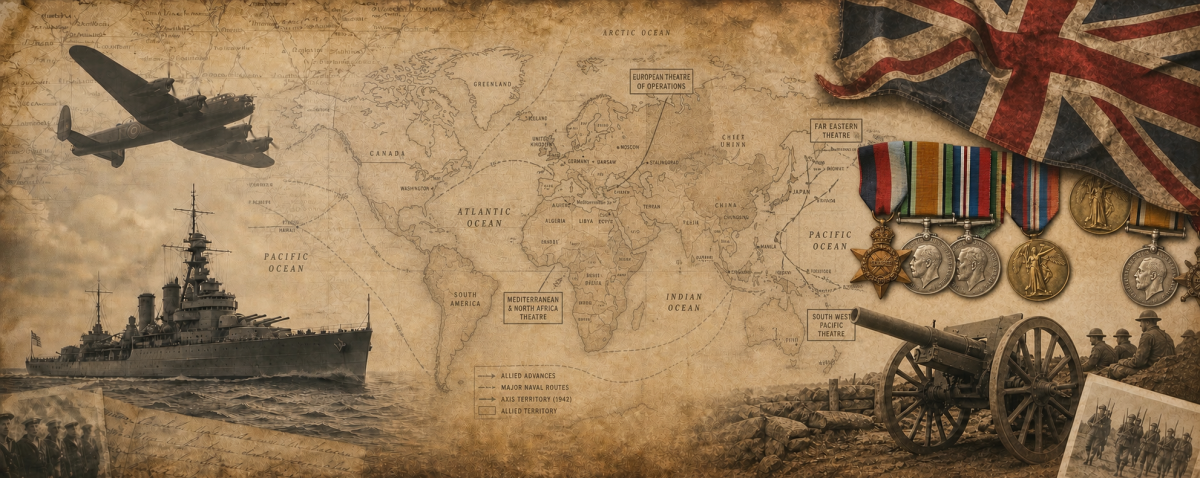
Remembering Corporal Charles Keyte: RAF Casualty in Operation Dynamo

Corporal Charles Thomas Keyte, 531194, Royal Air Force, No. 3 Air Mission, was killed at sea on 28 May 1940 when the SS Abukir was torpedoed off Ostend during Operation Dynamo.

Family report and RAF casualty sources

Early Life and Family

Charles Thomas Keyte was born on 13 February 1914, with his birth registered in the West Ham district, and was baptised on 30 August 1914 at Holy Trinity, Harrow Green, Essex.[file:200] He was the son of Charles Thomas Keyte and Louisa Mary Luckhurst, and in the 1921 census he was living at 10 Manby Road, Stratford, Cann Hall, Essex, aged seven.[file:200] By 1938 he was associated with South Willesborough near Ashford, Kent, a location that remained central to his adult life and family identity.[file:200]

On 16 April 1938 he married Doris Esther Barter at Uxbridge, Middlesex.[file:200] Contemporary local newspaper notices, quoted in the family report, describe Doris as the eldest daughter of Mr and Mrs Barter of Harefield, and Charles as the only son of Mr and Mrs C. T. Keyte of South Wellesborough Farm, Ashford, Kent.[file:200] The report also notes a daughter, Sylvia Willis, and the official death wording later described him as the husband of Doris Esther Keyte of Ashford, Kent.[file:200]

Royal Air Force Service

Charles served in the Royal Air Force as Corporal 531194.[file:200] His unit is given in the report as No. 3 Air Mission, with the associated note that he was lost in the SS Abukir while being evacuated from Ostend during Operation Dynamo.[file:200] RAF casualty listings also identify him as Corporal Charles Thomas Keyte, 531194, killed on 28 May 1940 and associated with SS Abukir, confirming the essentials of the family report.[web:203][web:207]

No. 3 Air Mission was one of the RAF administrative and liaison elements operating with forces in France during the collapse of the Allied position in May 1940.[file:200][web:202] Men from such units were not always aircrew in the operational sense, but they were directly involved in supporting RAF activities on the Continent, including liaison, administration, transport, and the increasingly desperate business of withdrawal once the German advance broke through.[web:202][web:203] Charles’s medal entitlement, however, included the Air Crew Europe Star as well as the 1939–45 Star and War Medal, indicating recognition of his operational theatre and wartime RAF service.[file:200]

Unit Context at the Time of Death

The unit context of Charles Keyte’s death lies in the chaotic evacuation from Belgium and northern France during Operation Dynamo.[web:209][web:215] Operation Dynamo, coordinated from Dover Castle between 26 May and 4 June 1940, was the great effort to rescue trapped British and Allied troops from Dunkirk and nearby ports as the German army pressed them to the coast.[web:209][web:215] Although Dunkirk is the best-known name associated with the evacuation, Ostend and other Belgian embarkation points were also used during the wider retreat, especially for men stranded east of Dunkirk.[file:200][web:206]

The family report records that Charles was lost in the SS Abukir, torpedoed by an E-boat off Nieuwpoort or Ostend while evacuating troops from Ostend.[file:200] External accounts of the sinking describe SS Abukir as an old cross-Channel or coastal steamer used in the emergency evacuation and attacked by the German S-boat S-34 off the Belgian coast on the night of 28 May 1940.[web:206] RAF-related casualty discussions and archival listings likewise connect several missing airmen, including Charles Keyte, with the torpedoing of SS Abukir while en route from Ostend to Britain.[web:201][web:202]

This matters because Charles died not in a fixed air station or conventional RAF combat sortie, but while his unit was being withdrawn by sea from a collapsing theatre of war.[file:200][web:202] The report includes a vivid letter from Pilot Officer J. Muirhead describing how he, Flight Lieutenant Ives, Charles’s party and others boarded the Aboukir at about 10 p.m., manned the guns in expectation of air attack, and were then torpedoed at point-blank range, with only 24 survivors out of about 500 aboard.[file:200] That letter gives a rare first-hand glimpse of the danger faced by RAF ground and mission personnel caught up in the maritime side of the Dunkirk evacuation.[file:200]

The report also notes a reference to No. 151 Squadron in the military service notes, but the substance of the evidence points much more specifically to No. 3 Air Mission and to the SS Abukir disaster rather than to service as a front-line 151 Squadron airman.[file:200] The 151 Squadron extract seems to have been included because Flight Lieutenant Ives, mentioned in Muirhead’s letter, had squadron connections, whereas Charles himself is directly identified in the formal records as RAF, No. 3 Air Mission.[file:200][web:203] For the purposes of his biography, the clearest and best-supported unit context is therefore RAF No. 3 Air Mission during the emergency evacuation from Ostend.[file:200][web:202]

Charles Keyte died in one of the lesser-known tragedies of Dunkirk: the sinking of the SS Abukir, when RAF and Army personnel escaping from Ostend were struck at sea before reaching home.

Family report and Operation Dynamo sources

Circumstances of Death

Charles Thomas Keyte was killed at sea on 28 May 1940 at the age of twenty-six.[file:200] His death occurred during the evacuation from Ostend when the SS Abukir was torpedoed by a German E-boat, with very heavy loss of life.[file:200][web:206] The first-hand letter quoted in the family report describes men being blown into the water and records that only a tiny number survived, underlining the sudden and violent nature of the disaster.[file:200]

Because his body was not recovered, Charles is commemorated on the Runnymede Memorial rather than in an individual grave.[file:200][web:207] This is entirely consistent with deaths at sea during the Dunkirk evacuation, where many casualties were lost in the Channel or North Sea without identifiable burial.[web:209][web:215] His official death wording names him as the son of Charles Thomas Keyte and Louisa Mary Keyte, and the husband of Doris Esther Keyte of Ashford, Kent.[file:200]

Commemoration

Charles is commemorated on the Runnymede Memorial, Panel 22.[file:200] The memorial stands at Englefield Green, Surrey, and commemorates airmen and women of the Commonwealth Air Forces who were lost in the Second World War and have no known grave.[file:200][web:207] For men such as Charles, whose deaths occurred in maritime evacuation and whose bodies were never recovered, Runnymede became the principal place of remembrance.[file:200]

His recorded medals were the War Medal 1939–1945, the 1939–45 Star, and the Air Crew Europe Star.[file:200] These awards reflect both his wartime RAF service and his presence in the operational theatre over north-west Europe during the intense campaign of May 1940.[file:200] Together with his memorial inscription, they preserve the official recognition of a life lost in one of the most perilous episodes of the early war.[file:200][web:209]

Legacy and Family

Charles Thomas Keyte’s story joins together Essex childhood, Kent farming family roots, marriage in Middlesex, and death in the retreat from Belgium.[file:200] He was a young husband and father when he died, and the family report identifies him as a second cousin once removed to the researcher, preserving his memory within an extended living family network as well as in official records.[file:200] His biography is especially poignant because it stands at the intersection of domestic family life and the sudden violence of the Dunkirk evacuation.[file:200]

Sources and Further Reading

Remembering Flight Sergeant Kenneth James Scales

Flight Sergeant Kenneth James Scales of the Royal Air Force Volunteer Reserve died at 21 during a bombing raid over Berlin on January 29, 1944. He left behind a widow and twin daughters born posthumously. Commemorated on the Runnymede Memorial, his story reflects the sacrifice of countless airmen in WWII.

Flight Sergeant Kenneth James Scales: A Detailed Biography

Flight Sergeant Kenneth James Scales [1] of the Royal Air Force Volunteer Reserve epitomised the brave young men who gave their lives defending freedom during the Second World War. At just 21 years old, he perished in action over Berlin in January 1944, leaving behind a widow and twin daughters born after his death. His story is one of duty, sacrifice, and the terrible cost of aerial warfare.

Early Life and Family

Kenneth James Scales was born on 8 June 1922 in Greenwich, London, England [1], the son of James Thomas Scales and Ruby Elizabeth Scales (née Kincaid). He was baptised on 25 June 1922 at Deptford, Kent [1]. The Scales family later relocated to Wyboston, Bedfordshire, where Kenneth spent his formative years at 1 Rookery Road. By the 1939 Register, taken on 29 September 1939, the 17-year-old Kenneth was working as a General Hand in Horticulture Glass Haulage, a respectable trade during peacetime [1].

On 10 July 1943, Kenneth married Joyce Eileen Folwell, daughter of Mr and Mrs Folwell of Wyboston, at St. Mary’s Church, Eaton Socon in Bedfordshire [1]. The Dover Express recorded the wedding announcement, identifying Kenneth as a Sergeant Wireless Operator Air Gunner with the Royal Air Force [1]. The couple’s happiness was brief—Joyce was already pregnant with twins at the time of their marriage. Just months later, the young couple established their home at 41 Rookery Road, Wyboston, unaware that tragedy loomed ahead [1].

Military Service

Kenneth entered the Royal Air Force Volunteer Reserve (RAFVR) during wartime and served as a Wireless Operator and Air Gunner—a specialised and dangerous role in the bomber crews [1]. His Service Number was 1434761 [1]. He was subsequently promoted to the rank of Flight Sergeant, a substantial achievement for a young man and recognition of his skill and reliability in his dangerous trade.

Flight Sergeant Scales was posted to No. 434 “Bluenose” Squadron RCAF, a Royal Canadian Air Force unit operating as part of No. 6 (RCAF) Group within RAF Bomber Command [1]. The squadron, formed at RAF Tholthorpe on 13 June 1943 [1], was adopted by the Rotary Club of Halifax, Nova Scotia, and took the nickname “Bluenose” in reference to Nova Scotians and the famous schooner Bluenose [1]. The squadron motto was “In excelsis vincimus” (We conquer in the heights) [1]. By December 1943, 434 Squadron had relocated to RAF Croft in Yorkshire [2], where Kenneth was stationed.

The squadron flew Handley Page Halifax Mk V bombers, four-engine heavy bombers that required a crew of seven to operate [1]. These aircraft were amongst the most formidable heavy bombers in the RAF inventory, though they suffered heavy losses during the strategic bombing campaign over Germany. 434 Squadron ultimately lost 75 aircraft during the war, with 484 aircrew casualties, including 313 men presumed dead [1].

The Final Mission: Berlin, 28–29 January 1944

On the night of 28–29 January 1944, Flight Sergeant Kenneth James Scales participated in a major raid on Berlin, the German capital [1]. He was one of seven crew members aboard Handley Page Halifax B/A/Met.Mk.V, Serial Number LK916, bearing the squadron markings WL-D [1]. The aircraft took off from RAF Croft in Yorkshire in the early hours of the morning [1].

This was a substantial operation. A total of 677 aircraft were dispatched to Berlin, making it one of the largest raids of the Battle of Berlin. The operation resulted in 46 aircraft losses, a loss rate of 6.8 percent [3], which exceeded the RAF’s sustainable loss threshold of 5 percent. The raid was carried out in poor conditions—broken cloud and only 16 per cent moonlight—which complicated accurate target marking and bombing [1].

The German defence was determined and costly for the raiders. The Luftwaffe had calculated that diversionary raids would draw fighters away from Berlin, but the German controller successfully regrouped the night fighters over the target, resulting in significant losses amongst the bomber stream [1]. Despite Bomber Command’s claims of concentrated bombing, local German reports indicated the bombing was scattered across the city. Nevertheless, the raid caused tremendous damage: approximately 180,000 Berliners were rendered homeless, and an unusually high proportion of public and administrative buildings were hit, including the Chancellery itself [1].

Circumstances of Death

Halifax LK916 failed to return from the operation and was officially listed as “Lost without trace” [1]. All seven crew members, including Flight Sergeant Kenneth James Scales, were declared Killed in Action on 29 January 1944 [1]. He was just 21 years old.

The loss of the aircraft remains unconfirmed in detail—the aircraft either fell to German night fighters, anti-aircraft fire, or suffered structural failure in the harsh winter conditions over enemy territory. What is certain is that Kenneth and his six crewmates made the ultimate sacrifice in pursuit of the Allied bombing campaign, which aimed to undermine Nazi Germany’s ability to wage war.

Burial and Commemoration

As Kenneth’s body was never recovered from the skies over Germany, he was not given a traditional burial. Instead, his name is inscribed on the Runnymede Memorial (Air Forces Memorial), located in Englefield Green, Surrey, England [1]. This memorial stands as a solemn tribute to 20,456 men and women of the Commonwealth air forces who lost their lives during the Second World War and have no known grave [1].

The Runnymede Memorial, designed by Sir Edward Maufe, the Commonwealth War Graves Commission’s principal architect for the United Kingdom after the war, was unveiled by Queen Elizabeth II on 17 October 1953 [1]. The memorial is perched on Cooper’s Hill, offering panoramic views over the River Thames and Runnymede Meadow—the historic location where Magna Carta was sealed by King John in 1215 [1]. The site was generously donated by Sir Eugen and Lady Effie Millington-Drake in 1949 [1].

The structure, noted for its serene and reflective ambiance, features minimalist design by Maufe with engraved glass and painted ceilings by John Hutton, and architectural sculptures by Vernon Hill [1]. A central chapel is surmounted by an astral crown, symbolising the air forces [1]. From the tower, visitors can enjoy extensive views, including Windsor Castle and, on clear days, the London skyline [1].

Flight Sergeant Scales’ name is inscribed on Panel 222 of the memorial [1]. The inscription reads: “SCALES, Flt. Sgt. KENNETH JAMES, 1434761, R.A.F. (V.R.) 434 Sqdn., 29th January, 1944, Age 21, Son of James Thomas Scales and Ruby Elizabeth Scales; Husband of Joyce Eileen Scales, of Dover” [1].

Legacy and Remembrance

Kenneth’s brief life left an indelible mark on his family. His widow, Joyce Eileen Scales (later recorded as living in Dover), gave birth to twin daughters after his death [1]. These children would never know their father, except through the memories their mother preserved and the stories she told them. A poignant memorial notice appeared in the Dover Express on Friday, 25 January 1946—almost exactly two years after Kenneth’s death:

“In treasured memories of my dearest husband and our Daddy, Flight-Sergt. Kenneth James Scales, who failed to return from operations over Berlin on 28th/29th Jan., 1944. Also remembering the gallant boys who went with him. From his Wife and twin Daughters.” [1]

These words capture both the personal grief and the broader tragedy of war—the recognition that Kenneth was not alone in his sacrifice, and that many families shared similar losses.

Kenneth’s military decorations acknowledged his service and sacrifice. He was posthumously awarded the 1939–1945 Star, the Air Crew Europe Star, and the War Medal 1939–1945 [1]—modest recognition of a life devoted to duty.

Flight Sergeant Kenneth James Scales is commemorated online through the Commonwealth War Graves Commission database and Find-a-Grave (Memorial ID: 15262798), allowing future generations to discover his story and honour his memory. He remains one of thousands of British and Commonwealth airmen whose names are carved into the stone of the Runnymede Memorial—a lasting testament to the sacrifice of those who “conquer in the heights.”


Sources:

Sources
[1] Individual-Report-for-Kenneth-James-Scales.pdf
[2] 434 Squadron – Royal Canadian Air Force Association https://www.rcafassociation.ca/heritage/history/rcaf-and-the-crucible-of-war/434-squadron/
[3] Battle of Berlin (RAF campaign) – Wikipedia https://en.wikipedia.org/wiki/Battle_of_Berlin_(RAF_campaign)
[4] 434 Operational Test and Evaluation Squadron – Wikipedia https://en.wikipedia.org/wiki/434_Operational_Test_and_Evaluation_Squadron
[5] 1944 Hochdahl-Trills Handley Page Halifax shootdown – Wikipedia https://en.wikipedia.org/wiki/1944_Hochdahl-Trills_Handley_Page_Halifax_shootdown
[6] 434 Squadron – Royal Canadian Air Force Association https://www.rcafassociation.ca/heritage/history/post-second-world-war-rcaf/434-squadron/
[7] Bombing Berlin: The Biggest Wartime Raid on Hitler’s Capital https://www.nationalww2museum.org/war/articles/bombing-berlin-biggest-wartime-raid-hitlers-capital
[8] Handley Page Halifax Serial Groups Specifications – CASPIR https://caspir.warplane.com/aircraft/serial-search/aircraft-no/200000843
[9] 1940 to 1943 https://en.wikipedia.org/wiki/Bombing_of_Berlin_in_World_War_II
[10] Handley Page Halifax | No. 35 Squadron https://35squadron.wordpress.com/2018/03/10/handley-page-halifax/
[11] 434 “Bluenose” Squadron (RCAF) – CASPIR Unit Display https://caspir.warplane.com/personnel/unit-search/unit-type/RCAF_Sqn/unit/434