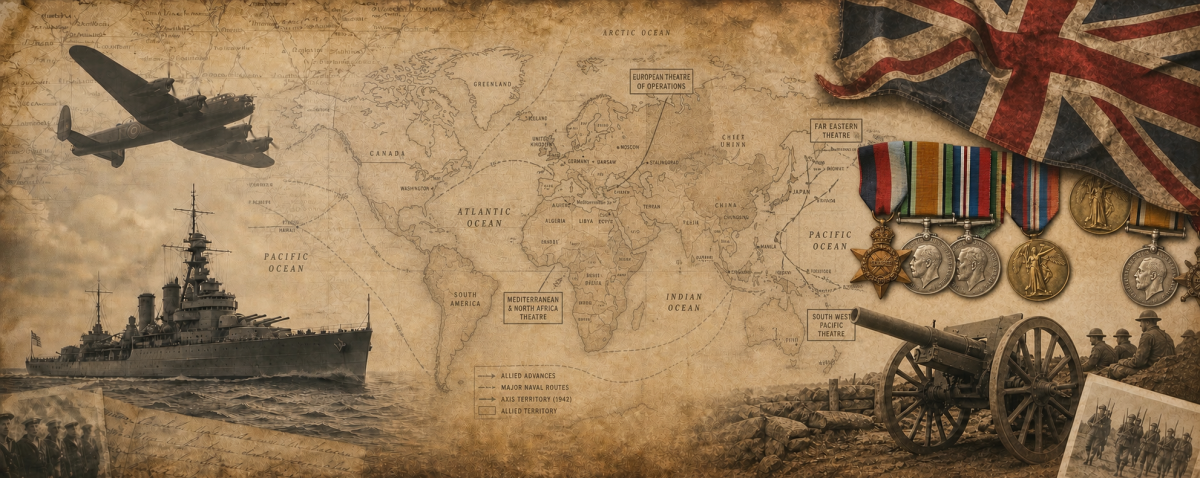
Corporal Charles Thomas Keyte, 531194, Royal Air Force, No. 3 Air Mission, was killed at sea on 28 May 1940 when the SS Abukir was torpedoed off Ostend during Operation Dynamo.
Family report and RAF casualty sources
Early Life and Family
Charles Thomas Keyte was born on 13 February 1914, with his birth registered in the West Ham district, and was baptised on 30 August 1914 at Holy Trinity, Harrow Green, Essex.[file:200] He was the son of Charles Thomas Keyte and Louisa Mary Luckhurst, and in the 1921 census he was living at 10 Manby Road, Stratford, Cann Hall, Essex, aged seven.[file:200] By 1938 he was associated with South Willesborough near Ashford, Kent, a location that remained central to his adult life and family identity.[file:200]
On 16 April 1938 he married Doris Esther Barter at Uxbridge, Middlesex.[file:200] Contemporary local newspaper notices, quoted in the family report, describe Doris as the eldest daughter of Mr and Mrs Barter of Harefield, and Charles as the only son of Mr and Mrs C. T. Keyte of South Wellesborough Farm, Ashford, Kent.[file:200] The report also notes a daughter, Sylvia Willis, and the official death wording later described him as the husband of Doris Esther Keyte of Ashford, Kent.[file:200]
Royal Air Force Service
Charles served in the Royal Air Force as Corporal 531194.[file:200] His unit is given in the report as No. 3 Air Mission, with the associated note that he was lost in the SS Abukir while being evacuated from Ostend during Operation Dynamo.[file:200] RAF casualty listings also identify him as Corporal Charles Thomas Keyte, 531194, killed on 28 May 1940 and associated with SS Abukir, confirming the essentials of the family report.[web:203][web:207]
No. 3 Air Mission was one of the RAF administrative and liaison elements operating with forces in France during the collapse of the Allied position in May 1940.[file:200][web:202] Men from such units were not always aircrew in the operational sense, but they were directly involved in supporting RAF activities on the Continent, including liaison, administration, transport, and the increasingly desperate business of withdrawal once the German advance broke through.[web:202][web:203] Charles’s medal entitlement, however, included the Air Crew Europe Star as well as the 1939–45 Star and War Medal, indicating recognition of his operational theatre and wartime RAF service.[file:200]
Unit Context at the Time of Death
The unit context of Charles Keyte’s death lies in the chaotic evacuation from Belgium and northern France during Operation Dynamo.[web:209][web:215] Operation Dynamo, coordinated from Dover Castle between 26 May and 4 June 1940, was the great effort to rescue trapped British and Allied troops from Dunkirk and nearby ports as the German army pressed them to the coast.[web:209][web:215] Although Dunkirk is the best-known name associated with the evacuation, Ostend and other Belgian embarkation points were also used during the wider retreat, especially for men stranded east of Dunkirk.[file:200][web:206]
The family report records that Charles was lost in the SS Abukir, torpedoed by an E-boat off Nieuwpoort or Ostend while evacuating troops from Ostend.[file:200] External accounts of the sinking describe SS Abukir as an old cross-Channel or coastal steamer used in the emergency evacuation and attacked by the German S-boat S-34 off the Belgian coast on the night of 28 May 1940.[web:206] RAF-related casualty discussions and archival listings likewise connect several missing airmen, including Charles Keyte, with the torpedoing of SS Abukir while en route from Ostend to Britain.[web:201][web:202]
This matters because Charles died not in a fixed air station or conventional RAF combat sortie, but while his unit was being withdrawn by sea from a collapsing theatre of war.[file:200][web:202] The report includes a vivid letter from Pilot Officer J. Muirhead describing how he, Flight Lieutenant Ives, Charles’s party and others boarded the Aboukir at about 10 p.m., manned the guns in expectation of air attack, and were then torpedoed at point-blank range, with only 24 survivors out of about 500 aboard.[file:200] That letter gives a rare first-hand glimpse of the danger faced by RAF ground and mission personnel caught up in the maritime side of the Dunkirk evacuation.[file:200]
The report also notes a reference to No. 151 Squadron in the military service notes, but the substance of the evidence points much more specifically to No. 3 Air Mission and to the SS Abukir disaster rather than to service as a front-line 151 Squadron airman.[file:200] The 151 Squadron extract seems to have been included because Flight Lieutenant Ives, mentioned in Muirhead’s letter, had squadron connections, whereas Charles himself is directly identified in the formal records as RAF, No. 3 Air Mission.[file:200][web:203] For the purposes of his biography, the clearest and best-supported unit context is therefore RAF No. 3 Air Mission during the emergency evacuation from Ostend.[file:200][web:202]
Charles Keyte died in one of the lesser-known tragedies of Dunkirk: the sinking of the SS Abukir, when RAF and Army personnel escaping from Ostend were struck at sea before reaching home.
Family report and Operation Dynamo sources
Circumstances of Death
Charles Thomas Keyte was killed at sea on 28 May 1940 at the age of twenty-six.[file:200] His death occurred during the evacuation from Ostend when the SS Abukir was torpedoed by a German E-boat, with very heavy loss of life.[file:200][web:206] The first-hand letter quoted in the family report describes men being blown into the water and records that only a tiny number survived, underlining the sudden and violent nature of the disaster.[file:200]
Because his body was not recovered, Charles is commemorated on the Runnymede Memorial rather than in an individual grave.[file:200][web:207] This is entirely consistent with deaths at sea during the Dunkirk evacuation, where many casualties were lost in the Channel or North Sea without identifiable burial.[web:209][web:215] His official death wording names him as the son of Charles Thomas Keyte and Louisa Mary Keyte, and the husband of Doris Esther Keyte of Ashford, Kent.[file:200]
Commemoration
Charles is commemorated on the Runnymede Memorial, Panel 22.[file:200] The memorial stands at Englefield Green, Surrey, and commemorates airmen and women of the Commonwealth Air Forces who were lost in the Second World War and have no known grave.[file:200][web:207] For men such as Charles, whose deaths occurred in maritime evacuation and whose bodies were never recovered, Runnymede became the principal place of remembrance.[file:200]
His recorded medals were the War Medal 1939–1945, the 1939–45 Star, and the Air Crew Europe Star.[file:200] These awards reflect both his wartime RAF service and his presence in the operational theatre over north-west Europe during the intense campaign of May 1940.[file:200] Together with his memorial inscription, they preserve the official recognition of a life lost in one of the most perilous episodes of the early war.[file:200][web:209]
Legacy and Family
Charles Thomas Keyte’s story joins together Essex childhood, Kent farming family roots, marriage in Middlesex, and death in the retreat from Belgium.[file:200] He was a young husband and father when he died, and the family report identifies him as a second cousin once removed to the researcher, preserving his memory within an extended living family network as well as in official records.[file:200] His biography is especially poignant because it stands at the intersection of domestic family life and the sudden violence of the Dunkirk evacuation.[file:200]
Sources and Further Reading
- Compiled family report: Individual Report for Charles Thomas Keyte.[file:200]
- Commonwealth War Graves Commission: Charles Thomas Keyte.[file:200]
- RAFWeb: RAF casualties, May 1940.[web:203]
- RAF members who died in May and June 1940, unit uncertain or special circumstances.[web:202]
- WW2Talk: The sinking of SS Abukir, 28 May 1940.[web:206]
- RAF Benevolent Fund: How the Battle of Dunkirk unfolded.[web:209]
- English Heritage: Operation Dynamo at Dover Castle.[web:215]
- RAF Commands archive discussion of unaccounted airmen, 28 May 1940.[web:201]
Discover more from Mike's Cousins
Subscribe to get the latest posts sent to your email.