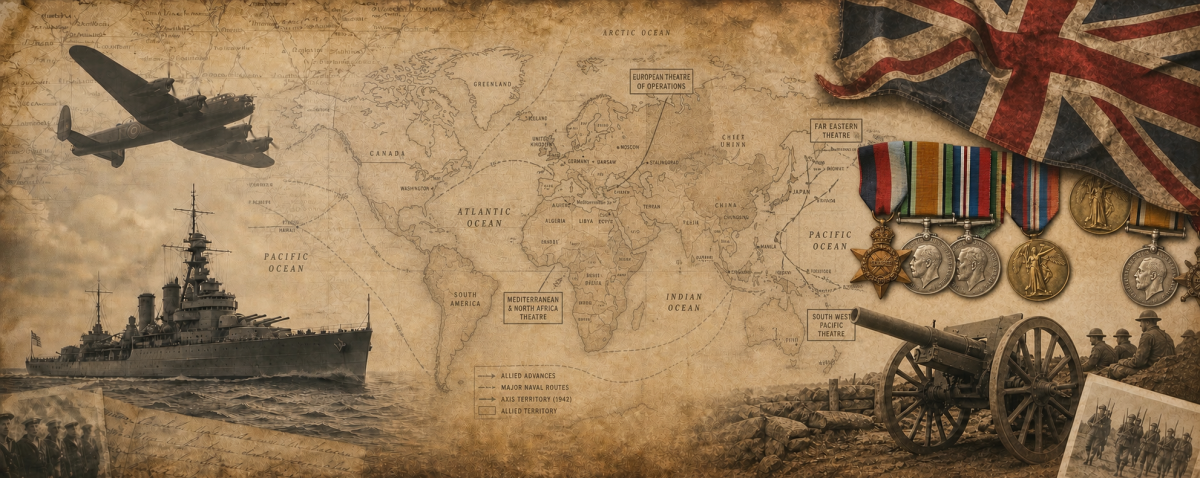
Exploring the Military Service of Joseph Chidwick

Joseph Thomas Chidwick, born in Dover in 1887, served as a Private in the 2nd Battalion of the South Lancashire Regiment during World War I. He died in France on 22 March 1918 during the German Spring Offensive and is commemorated on the Pozières Memorial, reflecting the fate of many lost servicemen.

Joseph Thomas Chidwick: A Detailed Biography

Private Joseph Thomas Chidwick, no. 32046, 2nd Battalion, Prince of Wales’s Volunteers (South Lancashire Regiment), was born at Dover, Kent, in early 1887 and was killed in action in France on 22 March 1918. [1][2][3] He is commemorated on the Pozières Memorial to the Missing of the Somme and also remembered in online databases dedicated to First World War casualties. [1][4][3]


Early Life and Family

Joseph Thomas Chidwick was born in Dover, Kent, before 27 April 1887, his birth registered in the Dover registration district (volume 2A, page 1003, line 226). [1] He was the son of Francis Thomas Chidwick and his wife Mary Ann, née Marsh, and was baptised at St John Mariner, Dover, on 27 April 1887, confirming his family’s ties to that parish and to the town’s maritime community. [1]

By the 1891 census Joseph was living at Hougham, Kent, recorded as a four‑year‑old son in his parents’ household. [1] This rural parish just outside Dover suggests a childhood spent between town and country, typical of working families whose livelihoods were connected to both agricultural and urban employment. [1]


Early Life and Family (Work and Home)

In the 1901 census Joseph appears back in Dover at 130 Clarendon Place, aged 14, still living as a son in the parental home and working as an under gardener, probably in domestic service or on a local estate. [1] By the 1911 census he is at 9 Montrose Cottages, Manor Road, Maxton, Dover, his occupation given as carter, indicating experience with horse‑drawn transport and local delivery work. [1]

By 1915 Joseph, then aged about 28, was recorded at 31 Kitchener Road, Dover, as head of household (“self”), still rooted firmly in the town where he had been born and raised. [1][4] A later service‑record abstract from the Dover War Memorial Project confirms this address and describes him as a carman, underlining his status as a skilled working‑class man employed in transport before joining the Army. [4]


Military Service

During the First World War Joseph served in the Prince of Wales’s Volunteers (South Lancashire Regiment), the county regiment which recruited mainly from South Lancashire but also absorbed men from other parts of Britain as the war progressed. [1][5] His specific unit is given as the 2nd Battalion, South Lancashire Regiment, and his rank as Private, with the regimental number 32046, placing him among the wartime drafts that reinforced the regular battalion on the Western Front. [1][3]

The 2nd Battalion South Lancashire Regiment was a regular battalion which went to France in August 1914 and served continuously on the Western Front. [6][7] Sources describing the regiment’s Great War service show that by early 1918 the battalion was engaged in front‑line duty in France and Belgium and was caught up in the German Spring Offensive launched on 21 March 1918, a massive assault along the Somme front. [6][8] Contemporary and later summaries of the battalion and associated units note heavy casualties during this period, with fighting and withdrawals through places such as Lagnicourt, Albert and other villages east of the old Somme battlefields. [9][10][7]


Circumstances of Death

Joseph’s individual report gives his date of death as 22 March 1918, in France, with no specific battlefield named. [1] On that date the German Spring Offensive (Operation “Michael”) was in its second day, with British units forced into rapid retreat, suffering large numbers of killed, wounded and missing as they attempted to hold rearguard positions and delay the enemy advance. [10][8] A modern roll of casualties for 22 March 1918 lists “Private 32046 JOSEPH THOMAS CHIDWICK, South Lancashire Regiment” among the fallen of that day, confirming his death in action. [2]

Other sources relating to the 2nd Battalion South Lancashire Regiment and to men killed or taken prisoner on 22 March 1918 suggest that the battalion was engaged in defensive and delaying actions in the battle zone around the Somme sector, though detailed battalion‑level war diaries for that exact day are not cited in the brief secondary summaries available. [9][7] The fact that Joseph has no known grave and is commemorated on the Pozières Memorial indicates that his body was either not recovered or could not be identified after the fighting, a common fate in the chaos of the March 1918 retreat. [1][3]


Burial and Commemoration

Joseph has no known grave and is therefore commemorated by name on the Pozières Memorial, which honours more than 14,000 British and South African servicemen who died on the Somme between 21 March and 7 August 1918 and have no known burial. [1][3] His entry in the Commonwealth War Graves Commission database records him as “Private JOSEPH THOMAS CHIDWICK, 32046, 2nd Bn., South Lancashire Regiment, who died on 22 March 1918, France, commemorated on the Pozières Memorial”, confirming the unit and date of death. [1]

An associated memorial entry on Find a Grave (Memorial ID 16081789) also preserves his details, ensuring continued online remembrance. [1] The Dover War Memorial Project includes him under reference “13582 – Chidwick Joseph Thomas – South Lancashire Regiment” with details of his pre‑war trade as a carman and home address at 31 Kitchener Road, Dover, linking the name on a distant battlefield memorial back to a specific street and community in his home town. [4]


Legacy

Within his extended family Joseph is linked to the wider Chidwick and Marsh family lines via his FamilySearch profile (ID GM54‑CN2). [1] Online remembrance projects such as the Imperial War Museums’ “Lives of the First World War” identify him as “Joseph Thomas Chidwick, born 1887, died 1918, British Army 32046 Private, South Lancashire Regiment”, ensuring that his service and sacrifice are documented in national as well as local memory. [11][12]

The combination of civil records, census entries and military memorials paints a picture of a Dover‑born working man whose life followed a typical late‑Victorian and Edwardian pattern until interrupted by global war. [1][4] His death on 22 March 1918, at the height of the German Spring Offensive, and his commemoration on the Pozières Memorial, place him among the many whose individual graves were lost in the fluid and violent fighting of 1918 but whose names endure on stone and in digital records. [1][2][3]


Key External Links

Sources
[1] Individual-Report-for-Joseph-Thomas-Chidwick.pdf
[2] Today’s Fallen Heroes Friday 22 March 1918 (4242) – Scribd https://www.scribd.com/document/372944297/Today-s-Fallen-Heroes-Friday-22-March-1918-4242
[3] South Lancashire Regiment – First World War Casualties https://astreetnearyou.org/regiment/251/South-Lancashire-Regiment
[4] Notes on Service Records – THE DOVER WAR MEMORIAL PROJECT http://doverwarmemorialproject.org.uk/Casualties/WWI/Service%20Notes/ChidwickJ.htm
[5] South Lancashire Regiment – Wikipedia https://en.wikipedia.org/wiki/South_Lancashire_Regiment
[6] The Prince of Wales’s Volunteers (South Lancashire Regiment) https://www.longlongtrail.co.uk/army/regiments-and-corps/the-british-infantry-regiments-of-1914-1918/the-prince-of-waless-volunteers-south-lancashire-regiment/
[7] South Lancashire Regiment – Men on the Gates https://menonthegates.org.uk/maf_army/south-lancashire-regiment/
[8] South Lancashire Regiment https://vickersmg.blog/in-use/british-service/the-british-army/south-lancashire-regiment/
[9] The Plumb brothers from Antrobus, Cheshire – Great War Forum https://www.greatwarforum.org/topic/299675-the-plumb-brothers-from-antrobus-cheshire/?do=findComment&comment=3143832
[10] British Entrenching Battalions of 1918 – The Long, Long Trail https://www.longlongtrail.co.uk/army/regiments-and-corps/the-british-infantry-regiments-of-1914-1918/british-entrenching-battalions-of-1918/
[11] Search for “Chidwick” in lastname | Lives of the First World War https://livesofthefirstworldwar.iwm.org.uk/searchlives/field/lastname/Chidwick/filter
[12] Search for “South Lancashire Regiment” in unit | Lives of the First … https://livesofthefirstworldwar.iwm.org.uk/searchlives/field/unit/South%20Lancashire%20Regiment/filter/?page=162
[13] THE HEROIC ACTIONS OF PRIVATE JACK COUNTER In the month … https://www.facebook.com/JerseyHeritage/posts/the-heroic-actions-of-private-jack-counter-in-the-month-of-remembrance-our-lates/1264712125696019/
[14] South Lancashire Regiment | Death and Service https://deathandservice.co.uk/category/regiment/south-lancashire-regiment/
[15] [PDF] Personal History He was living at Stalybridge, Cheshire when he … https://mlfhs.uk/images/wm-biogs/966-49.pdf
[16] REGIMENTS IN THE GREAT WAR | Lancashire Infantry Museum https://www.lancashireinfantrymuseum.org.uk/regiments-great-war
[17] Private R Taylor South Lancashire Regiment. Died Friday 22 March … https://astreetnearyou.org/person/254946/Private–Taylor
[18] My father’s elder brother, James Algernon joined the army on the 20 … https://www.facebook.com/groups/lancashireinfantrymuseum/posts/10158068594584910/
[19] 1/5th Battalion, http://www.prescot-rollofhonour.info/Documents/SLR_1-5Bn_WarDiaryV3.pdf
[20] 20654 Private Thomas Price, S. Lancashire Regiment – UBIQUE https://www.reubique.com/20654.htm
[21] 201805.pdf https://www.westernfrontassociation.com/media/5558/201805.pdf

George Skeer: Brabourne’s Decorated War Veteran

Serjeant George Skeer, a decorated NCO in the Royal Garrison Artillery, died on 21 March 1918 during the German Spring Offensive. Born in Kent, he was a rural postman and active church member before re-enlisting in 1914. His bravery earned him several awards, including the Military Medal and Belgian Croix de Guerre. His name is honored on the Pozières Memorial.

George Skeer: A Detailed Biography

Serjeant George Skeer, M.M., Croix de Guerre (Belgium), 280539, 222nd Siege Battery, Royal Garrison Artillery, was a decorated Kentish artillery NCO who died of wounds on 21 March 1918 during the opening day of the German Spring Offensive and is commemorated on the Pozières Memorial, Panel 10. [1][2][3]


Early Life and Family

George Skeer was born in the Bridge registration district of Kent in the final quarter of 1881 and baptised at Harbledown on 30 October 1881, the son of John Skeer and Mary (née Hills). [1] By the 1891 census he was living at Court Lodge Cottage, Lyminge Street, Lyminge, recorded as a scholar, indicating attendance at the local elementary school in this rural Downland parish. [1]

As a young man he left Harbledown and Lyminge in search of work. By April 1909 he was resident in Ashford, then a growing railway town, and on 2 August 1909 he married Lilian West at St Nicholas, Barfrestone, banns having been called there between 11 and 25 July. [1] The couple later settled at “Southside”, Brabourne Lees, near Ashford; in the 1911 census George appears at Egerton Cottage, Brabourne, aged about 29, employed as a rural postman, with Lilian listed as his wife. [1] They had at least two children, Donald George Skeer and Stephanie Joan Skeer, forming a small family that would be deeply affected by the war. [1]


Early Life and Family (Civic and Personal Background)

Before the war George became a well‑known figure locally as the Brabourne rural postman, responsible for delivering mail across country lanes and villages. [1][2] Local ringing records from the Kent County Association of Change Ringers also note his involvement in church life as a bell ringer and sidesman, reflecting a strong connection to parish and community. [1][4]

Within wider family research he is linked under FamilySearch ID KLHN‑4ZW, embedding his story within an extended Kentish family network. [1] This combination of rural employment, church service and family responsibility illustrates the settled civilian life he left behind when he returned to the colours in the First World War. [1][2]


Military Service

George’s military association began well before 1914. The individual report records that he enlisted in the Royal Garrison Artillery in 1900, serving until 1908 as a gunner and later a sergeant under service number 5539. [1] After this initial period of regular service he resumed civilian life as a postman, but retained his skills and experience with heavy guns, which would be invaluable when war came. [1][2]

At the outbreak of the First World War he re‑enlisted in the Royal Garrison Artillery. Posted to France in June 1915, he served continuously on the Western Front until his death in 1918, being renumbered 280539 in line with RGA administrative changes and eventually serving as a serjeant in 222nd Siege Battery. [1][5] Siege batteries operated heavy artillery pieces, such as 6‑inch or 8‑inch howitzers, tasked with counter‑battery fire, destruction of strongpoints and deep bombardment of enemy positions, placing their crews in important but hazardous roles just behind the front line. [1][6][7]


Military Service (Gallantry Decorations)

George’s conduct under fire earned him two high decorations. He was awarded the Military Medal (M.M.), instituted on 25 March 1916 as a level‑3 gallantry award for non‑commissioned officers and men, given for acts of gallantry and devotion to duty under fire that did not reach the threshold of the Distinguished Conduct Medal. [1] His award was announced in the London Gazette, granting him the right to use the post‑nominal letters “M.M.” and marking him out among his peers for bravery in action. [1][4]

In addition, George received the Belgian Croix de Guerre (1st Class), a foreign decoration granted by the King of the Belgians for distinguished bravery in operations connected with Belgian interests. [1] Gazette number 30631 of 15 April 1918 records that “His Majesty the King of the Belgians confirms the award of the ‘Croix de Guerre’” and that the British monarch granted unrestricted permission to wear the decoration, emphasising the international recognition of his gallantry. [1][8][4] He also qualified for the 1914–15 Star, British War Medal, Victory Medal and Memorial Plaque. [1][9]


Circumstances of Death

Serjeant Skeer died of wounds on 21 March 1918 at the age of 36. [1] This date marks the opening of Operation Michael, the first blow of the German Spring Offensive, directed primarily against the British Fifth Army around St Quentin and parts of the Third Army further north. At 04:40 that morning, German artillery launched an enormous five‑hour bombardment over an 80‑kilometre front, firing more than a million shells, including high explosive and gas, in a carefully planned strike against British trenches, batteries and communications. [1][3][10]

Regimental and local accounts note that 222nd Siege Battery was in the St Quentin sector and that, although Serjeant Skeer was officially off duty when the offensive began, he voluntarily joined efforts to reposition his battery’s guns in response to the German advance. [1][2][5] During this hazardous work, carried out under heavy shellfire and amid collapsing communications, he was wounded and later succumbed to his injuries, his death officially recorded as “died of wounds” on 21 March 1918. [1][2][11] The scale and confusion of the fighting meant that his body was not recovered for identified burial. [1]


Burial and Commemoration

Because no known grave exists for George, his name is inscribed on the Pozières Memorial in the Somme region of Picardie, France, where it appears on Panel 10. [1][12] The memorial, maintained by the Commonwealth War Graves Commission, commemorates more than 14,000 soldiers of the British and South African forces of the Fifth and Fourth Armies who died between 21 March and 7 August 1918 and have no known grave, many of them casualties of Operation Michael and the subsequent fighting. [1][13]

His CWGC entry reads: “SKEER, GEORGE, Serjeant, 280539, Royal Garrison Artillery, 222nd Siege Battery, died 21 March 1918, aged 36. Son of John and Mary Skeer, of Lyminge, Kent; husband of Lilian Skeer, of ‘Southside’, Brabourne Lees, Ashford, Kent. Military Medal. Croix de Guerre (Belgium).” [1][13] A Find a Grave memorial (ID 16079046) and dedicated biographical page on the Faded Genes website provide further detail on his life and awards, ensuring that researchers and descendants can access his story easily. [1][2][9]


Legacy

George Skeer’s legacy is that of a highly regarded non‑commissioned officer whose life linked quiet village service and exceptional battlefield leadership. As a rural postman and church bell ringer in Brabourne Lees he embodied the dependable core of pre‑war village society; as a serjeant in the Royal Garrison Artillery he became one of the experienced NCOs on whom the effectiveness of Britain’s heavy artillery depended. [1][2][4] His Military Medal and Belgian Croix de Guerre demonstrate that his courage was recognised by both his own country and an Allied nation grateful for his actions.

For his widow Lilian and their children Donald George and Stephanie Joan, his loss on the first day of the Spring Offensive meant a lifetime shaped by absence, despite the pride they could take in his decorations and service. [1][2] Today, through CWGC records, local Kent memorials, bell‑ringers’ rolls of honour and online projects such as “We remember George Skeer” on Lives of the First World War, his name continues to be honoured as that of a Kentish postman turned decorated artillery serjeant who gave his life at a pivotal moment in 1918. [1][4][9]


Key External Links

Sources
[1] Individual-Report-for-George-Skeer.pdf
[2] George SKEER 1881 https://www.fadedgenes.co.uk/GeorgeSKEER.html
[3] Operation Michael https://en.wikipedia.org/wiki/Operation_Michael
[4] World War 1 Records – Kent County Association of Change Ringers https://kcacr.org.uk/association/ww1/
[5] 222nd Siege Battery – what did they do? – Great War Forum https://www.greatwarforum.org/topic/254915-222nd-siege-battery-what-did-they-do/
[6] HMS Exeter (68) – Wikipedia https://en.wikipedia.org/wiki/HMS_Exeter_(68)
[7] David Gibbins — Gunner Charles Gerald Cook, Royal Garrison Artillery (183, 93 and 224 Siege Batteries), 1916-19 http://davidgibbins.com/journal/2019/3/12/gunner-charles-gerald-cook-royal-garrison-artillery-183rd-93rd-and-224th-siege-batteries-1916-19
[8] Croix de Guerre – Wikipedia https://en.wikipedia.org/wiki/Croix_de_Guerre
[9] We remember George Skeer – Lives of the First World War https://livesofthefirstworldwar.iwm.org.uk/lifestory/4058315
[10] German attack at St Quentin, March 1918 https://www.dublin-fusiliers.com/battaliions/1-batt/campaigns/1918-kaisers.html
[11] Operation Michael, The Thirty Worst and an Advanced Dressing … https://www.westernfrontassociation.com/world-war-i-articles/operation-michael-the-thirty-worst-and-an-advanced-dressing-station/
[12] Pozières British Cemetery & the Pozières Memorial https://thebignote.com/2016/08/03/pozieres-british-cemetery-the-pozieres-memorial/
[13] Pozières Memorial (CWGC) – Remembering the Fallen https://www.ww1cemeteries.com/pozieres-memorial.html
[14] Royal Garrison Artillery – First World War Casualties https://astreetnearyou.org/regiment/161/Royal-Garrison-Artillery
[15] 220th Siege Battery, Royal Garrison Artillery – Wikipedia https://en.wikipedia.org/wiki/220th_Siege_Battery,_Royal_Garrison_Artillery
[16] May 2012 compressed.pub http://2mnbattery.org/newsletter/2012/May_2012.pdf
[17] Plain Text UTF-8 https://www.gutenberg.org/cache/epub/51776/pg51776.txt
[18] Battle Honour ST QUENTIN – German Spring Offensive 1918. https://www.royal-irish.com/events/battle-honour-st-quentin-german-spring-offensive-1918
[19] Full text of “”The cannoneer.” Recollections of service in the Army of the Potomac” https://archive.org/stream/cannoneerthe00buelrich/cannoneerthe00buelrich_djvu.txt
[20] List of recipients of the Croix de Guerre – Wikipedia https://en.wikipedia.org/wiki/List_of_recipients_of_the_Croix_de_Guerre
[21] Acta Militaria http://nelsonlambert.blogspot.com/2011/07/
[22] Battle of Saint-Mihiel – Wikipedia https://en.wikipedia.org/wiki/Battle_of_Saint-Mihiel
[23] March | 2015 – Historical Digression https://historicaldigression.com/2015/03/
[24] History of the Royal Regiment of Artillary, by Francis Duncan https://www.gutenberg.org/cache/epub/58209/pg58209-images.html