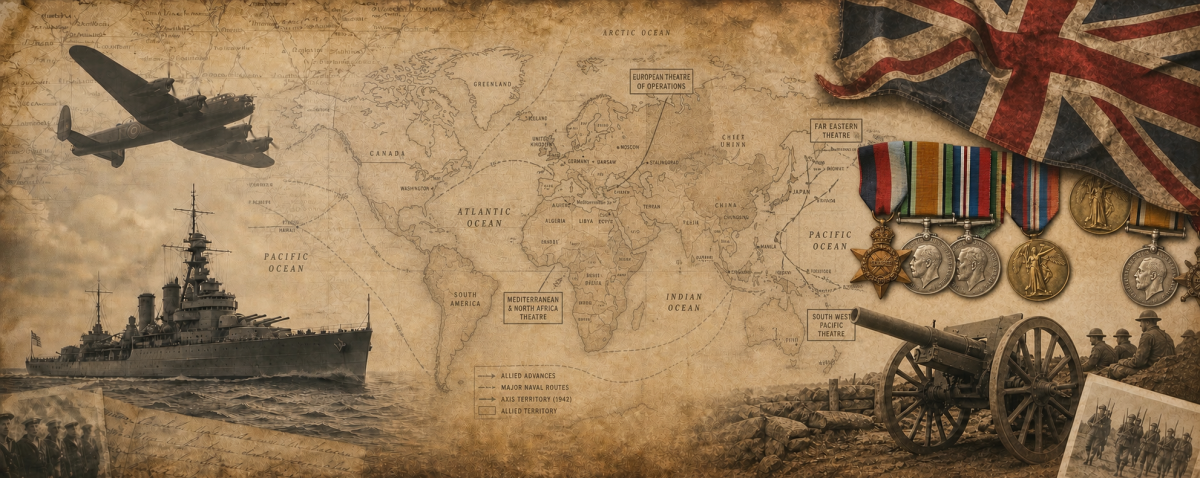

Private John Reginald Raynes (service number G/4674) served with the 1st Battalion, Queen’s Own (Royal West Kent Regiment), on the Western Front and died as a prisoner of war in Germany on 10 April 1917, aged twenty‑three.[file:130]
He is buried in Cologne Southern Cemetery, Nordrhein‑Westfalen, Germany, where his grave is among those of many Commonwealth soldiers who died in captivity or in German hospitals during the First World War.[file:130][web:110]
Early Life and Family
John Reginald Raynes was born in Pembury, Kent, in late 1893 or early 1894, his baptism taking place on 28 January 1894 at St Peter’s Church, Pembury. His birth was registered in the Tunbridge registration district in the March quarter of 1894 (volume 2A, page 720), and in the baptism register his mother’s surname appears as “Weller”, a common spelling variation on Kneller.[file:130]
He was the son of John Raines and Emily (née Kneller), though the family surname appears as “Raynes” in many later military records. In the 1901 census he is recorded as a seven‑year‑old at Providence Place, Pembury, and by 1911, aged seventeen, he was working as an agricultural labourer and living at Bo Peep, Pembury, as a brother in the household.[file:130]
By 1914 he was employed at Ivy Lodge Farm in Frant Forest near Tunbridge Wells and at Hubbles Farm, Pembury, reflecting a working life rooted firmly in the farms and woodland of west Kent. Military records list his residence at the time of enlistment as Pembury, with his civilian home area sometimes given as Tunbridge Wells, Sussex, under broader regional headings.[file:130]
From the fields and woods of Pembury and Frant Forest, John Raynes went from farm labourer to front‑line infantryman with the Royal West Kents.
Reconstructed from parish, census, and farm employment records
Enlistment and the 1st Battalion, Queen’s Own (Royal West Kent Regiment)
John enlisted at Tonbridge, Kent, and was posted to the 1st Battalion, Queen’s Own (Royal West Kent Regiment). His service number is recorded as G/4674, and he served as a Private in B Company. He was deployed to France on 23 April 1915 and remained in the Western European theatre until his capture in July 1916.[file:130]
The 1st Battalion was a regular army unit which, on 4 August 1914, was stationed in Dublin as part of 13th Brigade, 5th Division. Mobilised for war, it landed at Le Havre on 15 August 1914 and soon entered action in the opening campaigns on the Western Front.[file:130][web:123]
Over the course of the war the battalion fought in many major engagements: in 1914 at Mons and the subsequent retreat, Le Cateau, the Marne, the Aisne, La Bassée, Messines, Armentières, and the First Battle of Ypres; in 1915 at the Second Battle of Ypres and the Capture of Hill 60; in 1916 on the Somme at High Wood, Guillemont, Flers‑Courcelette, Morval, and Le Transloy; and in 1917 at Vimy, La Coulotte, and later Third Ypres (Polygon Wood, Broodseinde, Poelcapelle, and Passchendaele). After John’s death the battalion served in Italy from December 1917, before returning to France in 1918 for the final battles of the war.[file:130][web:123]
As a private in the 1st Royal West Kents, Raynes served in one of the British Army’s hard‑worked regular battalions, present in almost every major campaign of the war.
Summary of battalion service from regimental records
Wounds, Capture, and Prisoner of War
Medical records show that Private J. R. Raynes, age twenty‑two, service number 4674, with one year and four months’ service and eleven months with the field force, was admitted on 20 March 1916 to No. 42 Casualty Clearing Station suffering from bronchitis. He was then transferred to other hospitals on the same day, reflecting the routine movement of patients through the medical chain.[file:130]
On 12 September 1916, in the War Office casualty lists, “J. Raynes” of Pembury was reported as “Previously reported Wounded, now reported Wounded and Missing,” fulfilling the criteria for the award of a Wound Stripe under Army Order 204 of 6 July 1916. The man was thus entitled to wear a Wound Stripe, indicating that he had been officially recorded as wounded in action.[file:130]
The individual report notes that he became a prisoner of war on 22 July 1916. A later War Office Daily List (No. 5341), dated 18 August 1917, records “J. R. Raynes, 4674, Private, Queen’s Own (Royal West Kent Regiment)” as “Previously reported missing, now reported Died as Prisoner of War in German hands,” confirming that his death occurred in captivity. His next of kin address is given as Trent Forest (likely a farm or locality) in the Pembury area.[file:130]
Wounded and reported missing in 1916, Raynes was later confirmed to have died as a prisoner of war – one of many captured soldiers whose lives ended far from home.
Derived from War Office casualty lists and POW records
Circumstances of Death and Unit Context
John Reginald Raynes died on 10 April 1917 in Germany, with CWGC and associated records giving his place of death as “France & Flanders” in the Western European theatre but his burial location as Cologne Southern Cemetery. This reflects the common practice of burying deceased prisoners of war in cemeteries near German hospital and camp centres such as Cologne, then later concentrating those graves into larger CWGC sites.[file:130][web:110]
By the time of his death the 1st Battalion, Queen’s Own (Royal West Kent Regiment) had already taken part in some of the fiercest fighting on the Somme in 1916, including attacks on High Wood, Guillemont, Flers‑Courcelette and Morval, and was preparing for further operations in 1917 such as the Battle of Vimy Ridge and the Attack on La Coulotte during the Battle of Arras. Although captured in 1916, John’s service therefore spanned a critical period of the battalion’s operations on the Somme and in the wider British offensives.[file:130][web:121][web:123]
Burial and Commemoration
After the war, John’s remains were laid to rest in Cologne Southern Cemetery, grave VIII. B. 2. This cemetery, created and enlarged by the British Army Graves Service, contains the graves of Commonwealth servicemen who died in Germany during the First World War, many of them prisoners of war or men who died in German hospitals.[file:130][web:110]
Cologne Southern Cemetery now contains over 2,500 Commonwealth burials from the First World War, together with later burials from the Second World War. The headstones follow the standard CWGC design and stand in a landscaped setting maintained in perpetuity, ensuring that men like John Raynes are remembered far from their homes in Kent.[web:110]

His Commonwealth War Graves Commission entry can be viewed here: CWGC casualty details for Private J. R. Raynes. An additional memorial entry is available at Find a Grave memorial 12748019, which may include photographs and personal tributes.[file:130]
Medals and Recognition
John was entitled to the 1914–15 Star, having deployed to France on 23 April 1915, as well as the British War Medal and Victory Medal, reflecting his continuous service in the Western European theatre. In addition, he qualified for a Wound Stripe under Army Order 204 of 6 July 1916, having been officially reported wounded and then wounded and missing in the War Office casualty lists.[file:130]
His family also received the Memorial Plaque and Memorial Scroll, issued to the next of kin of those who died in the First World War, further confirming his place among Britain’s fallen servicemen. These awards, together with his grave at Cologne Southern Cemetery, form the physical legacy of his service.[file:130]
Family and Legacy
John Reginald Raynes did not marry and left no children, but he remained closely connected to Pembury throughout his life and service. His parents and siblings, and later extended family in Kent, would have learned first that he was wounded, then that he was missing, and finally—months later—that he had died as a prisoner of war in German hands.[file:130]
His story forms part of the wider history of the Queen’s Own (Royal West Kent Regiment), whose regular and service battalions fought from Mons in 1914 through the Somme, Arras, Ypres, and the final Hundred Days. For family historians, resources such as Ancestry, the National Archives medical file MH106/18, and local Pembury histories enable his life—from baptism at St Peter’s to burial in Cologne—to be set within a richer family and regimental narrative.[file:130][web:123]
Sources
- Individual report for Private John Reginald Raynes (family tree compilation, including birth and baptism at Pembury; census addresses at Providence Place and Bo Peep; employment at Hubbles Farm and Ivy Lodge Farm; enlistment at Tonbridge; service with 1st Battalion, Queen’s Own (Royal West Kent Regiment); POW status; death; and burial at Cologne Southern Cemetery).[file:130]
- Commonwealth War Graves Commission – casualty record for “RAYNES, –”, Private G/4674, 1st Bn., Queen’s Own (Royal West Kent Regiment), buried in Cologne Southern Cemetery, grave VIII. B. 2: CWGC casualty details.[file:130]
- Find a Grave – memorial for John Reginald Raynes (Cologne Southern Cemetery, with scope for photographs and tributes): Find a Grave memorial 12748019.[file:130]
- Queen’s Own (Royal West Kent Regiment) – regimental history and battalion‑level service, confirming 1st Battalion’s service with 13th Brigade, 5th Division, and listing actions at Mons, the Marne, Aisne, Ypres, Hill 60, the Somme, Arras, Third Ypres, Italy and the 1918 offensives: Queen’s Own (Royal West Kent Regiment).[web:123]
- Battle of Arras and Vimy Ridge – broader context for the battalion’s 1917 operations (Vimy, La Coulotte, and the wider Arras offensive), though Raynes himself died as a POW rather than in these battles: Battle of Arras (1917).[web:121]
- Cologne Southern Cemetery – background on the cemetery’s creation as a concentration site for Commonwealth burials from across Germany, especially POWs and men who died in German hospitals: Cologne Southern Cemetery and descriptive material on WW2/WW1 cemetery sites in Germany.[web:110][web:107]
- War Office and medical records – representative medical file MH106/18 (No. 42 Casualty Clearing Station) and Daily Casualty Lists recording J. R. Raynes as wounded, then wounded and missing, and later “Died as Prisoner of War in German hands” (used via transcript in the individual report to confirm POW status, dates, and entitlement to a Wound Stripe).[file:130]
