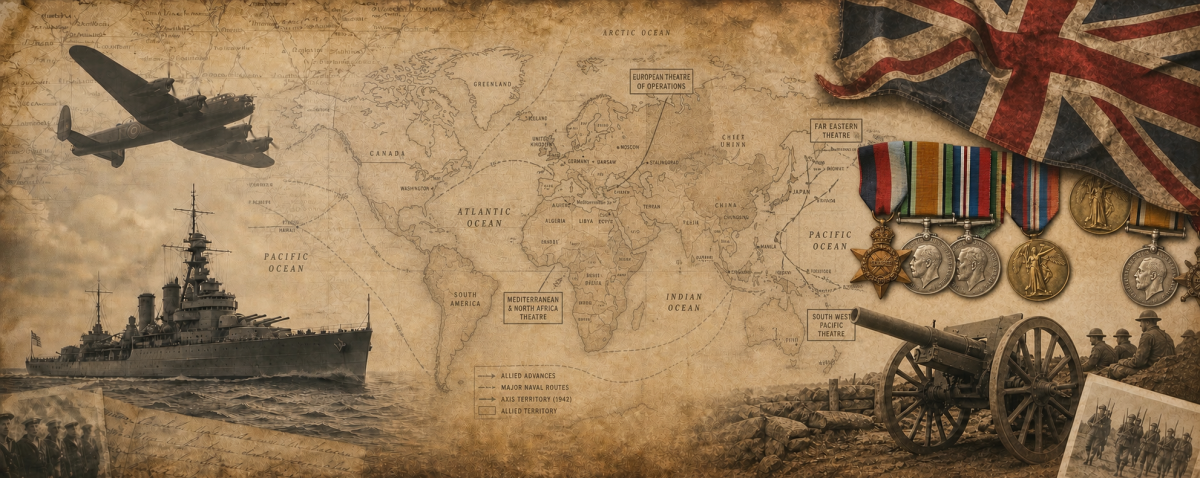

Private John Thomas Richards was a Sittingbourne brickmaker, husband and father of three, who served first with the East Kent Regiment and later with the Machine Gun Corps. He was killed in action in France on 26 August 1918, during the opening advance of the final Allied campaign of the First World War. [1][2]
A brickmaker from Sittingbourne, a husband and father, and a machine gunner in the final advance to victory.
In memory of Private John Thomas Richards, 10939
Early Life and Family
John Thomas Richards was born in Sittingbourne, Kent, about December 1888, his birth being registered in the Milton registration district in the final quarter of that year. He was the son of John Thomas Richards and Julia Kitney Richards, née Peyton, and belonged to a family rooted in the north Kent communities around Sittingbourne and Milton-next-Sittingbourne. [1]
In the census of 5 April 1891, John was recorded at Sittingbourne as a three-year-old son in his parents’ household. By 1901, aged twelve, he was living at Blue House, Ferry Road, Milton-next-Sittingbourne, again recorded as the son of the head of household. These census entries place his childhood beside the creek, brickfields and industrial life of the Sittingbourne district, where brickmaking, agriculture and riverside trade provided work for many local families. [1]
John followed the brickmaking trade, an occupation recorded in the family report and one that was closely associated with north Kent’s clay extraction and brick production. Before the war he married Rose Laver at Gravesend in about September 1913. Their family included three children: John Thomas Richards, Arthur Clement Richards and Thora Richards. His military service therefore removed not only a local working man from Sittingbourne, but also a young husband and father from a growing family. [1]
Military Service
Richards enlisted at Sittingbourne in 1914, soon after the outbreak of the First World War. He initially served in the East Kent Regiment, better known as The Buffs, under service number 8327. The Buffs were Kent’s senior county infantry regiment, and men from Sittingbourne and the surrounding district commonly enlisted into its battalions during the rapid expansion of the British Army in 1914 and 1915. [1]
At a later date, Richards transferred to the Machine Gun Corps (Infantry), receiving the service number 10939. The Machine Gun Corps had been created in October 1915 because the British Army had recognised that the Vickers machine gun required trained specialist crews and centralised tactical control. Instead of machine guns being dispersed among individual infantry battalions, the Corps brought trained teams together in dedicated companies and, from 1918, in battalions assigned to divisions. [3][4]
By the time of his death, Private Richards served with the 38th Battalion, Machine Gun Corps. This battalion was formed on 2 March 1918 by combining the 113th, 114th, 115th and 176th Machine Gun Companies, which had previously supported the brigades of the 38th (Welsh) Division. The reorganisation gave the division a single machine-gun battalion capable of concentrating its fire where it was most needed, whether to assist an assault, break up a counter-attack, or protect infantry consolidating newly captured ground. [5][3]
The 38th Machine Gun Battalion
The 38th (Welsh) Division was a wartime formation raised from Welsh units and later reinforced by soldiers from across Britain. Its machine-gun companies became the 38th Battalion, Machine Gun Corps in March 1918, shortly before the German Spring Offensive placed enormous pressure on the British Army. Machine gunners worked close to the fighting but frequently operated in exposed positions, moving heavy weapons, ammunition, spare barrels and equipment across damaged ground in order to establish firing lines in support of the infantry. [3][5]
The Vickers machine gun was a powerful defensive and supporting weapon, especially when several guns fired in coordinated barrages. A machine-gun battalion’s tasks could include laying down sustained fire over the heads of advancing troops, sweeping likely enemy positions, suppressing hostile machine guns, defending a threatened flank, and firing indirectly at roads or assembly areas beyond the immediate line. Such duties made the Corps essential to offensive operations, but also placed its men in constant danger from artillery fire, snipers and enemy counter-attacks. [4]
In the final months of the war, the 38th (Welsh) Division took part in the advance that followed the Allied counter-offensive of August 1918. Its formations returned to the front around 20 August and advanced eastwards through the former Somme battlefield, pushing German forces back from the Ancre sector. The division covered approximately fifteen miles between 21 August and 5 September, fighting throughout the advance from the River Ancre area towards the Canal du Nord. [6][7]
The 38th Division’s machine gunners provided the concentrated firepower that helped infantrymen advance, hold captured ground and resist German counter-attacks during the final campaign of 1918.
38th Battalion, Machine Gun Corps
Unit Context at Time of Death
Private Richards was killed on 26 August 1918, during the Hundred Days Offensive, the series of Allied operations that began in August and continued until the Armistice. The 38th (Welsh) Division had resumed front-line operations earlier that month and was participating in the Second Battle of the Somme, a campaign that drove German forces eastwards from ground long associated with the fighting of 1916. [7][6]
On 25 August, the division’s 113th Brigade cleared Mametz Wood, while the 115th Brigade captured Bazentin-le-Petit. The following day, 26 August, the division continued its advance through severely damaged and heavily contested terrain. Conditions were difficult: the ground had been shattered by years of shellfire, routes were congested, and advancing troops remained vulnerable to artillery, machine-gun fire and determined local resistance. [7]
The next day, 27 August, elements of the division attacked again in heavy rain. The divisional account describes men struggling in shell-holes filling with water and finding it difficult to keep pace with the creeping barrage; some reached the German line in what was later described as a gallant but unsuccessful effort. Although no surviving source cited here identifies Private Richards’s precise gun position or company task on 26 August, his death occurred during this intense phase of operations, when the 38th Machine Gun Battalion was supporting the division’s advance and its crews were exposed to the full hazards of mobile warfare. [7][1]
Circumstances of Death
John Thomas Richards was killed in action in France on 26 August 1918. The Commonwealth War Graves Commission records him as Private 10939, Machine Gun Corps (Infantry), 38th Battalion, with that date of death. He was twenty-nine years old, or possibly in his thirtieth year, and left behind his wife Rose and their three children. [2][1]
The available records do not reveal whether he was killed while serving a Vickers gun, carrying ammunition, moving into a new firing position, or during the infantry advance he was supporting. What can be stated with confidence is that he died during the division’s rapid advance across the Somme battlefield, at a time when machine-gun detachments were required to move forward with the attacking troops and establish fire support under dangerous conditions. His recorded status as “killed in action” reflects a death directly associated with combat operations rather than illness or accident. [2][6][7][1]
Burial and Commemoration
Private Richards has no known grave. He is commemorated on Panel 10 of the Vis-en-Artois Memorial, in Pas-de-Calais, France. The memorial bears the names of more than 9,000 men who died during the Advance to Victory, from 8 August 1918 until the Armistice, and whose graves are unknown. [8][2][1]
His inclusion on the Vis-en-Artois Memorial indicates that his body was either not recovered after the fighting or could not later be identified for individual burial. For Rose Richards and their children, the memorial became the family’s principal place of remembrance in France. His name remains recorded there among the many soldiers lost during the final months of the war, when the speed of the advance and the destruction of the battlefield often made recovery and identification impossible. [2][1]
Richards was entitled to the British War Medal and Victory Medal for his overseas service, while the Memorial Death Plaque was issued to commemorate his death in the conflict. These awards, together with his name on the Vis-en-Artois Memorial, provided tangible recognition of his service and sacrifice to his surviving family. [1]
Legacy
John Thomas Richards’s story joins the domestic history of Sittingbourne with the larger military history of the British Army’s final campaign in France. He began life in a Kentish working family, became a brickmaker, married Rose Laver, and became the father of three children before the war transformed the course of his life. His service also demonstrates the movement of men from local county regiments such as The Buffs into specialist formations such as the Machine Gun Corps, where their work became central to the changing tactics of industrial warfare. [4][1]
Within the wider family tree, he is recorded as a fourth cousin twice removed to the researcher. His commemoration at Vis-en-Artois ensures that, although he has no known grave, his name and service remain publicly remembered. For descendants, his biography is a reminder that the final Allied advance of 1918 still demanded the lives of men whose families had already endured four years of war. [8][2][1]
Sources and Further Reading
- Compiled family report: Individual Report for John Thomas Richards, including civil registration, census, family, military and medal details.
- Commonwealth War Graves Commission: Private John Thomas Richards – official casualty and commemoration record.
- The Long, Long Trail: 38th (Welsh) Division – divisional organisation and the formation of the 38th Machine Gun Battalion.
- Commonwealth War Graves Commission: Vis-en-Artois Memorial – memorial information and visitor details.
- Vis-en-Artois Memorial: background and names commemorated – context for the memorial and the Advance to Victory.
- The Western Front Association: 38th (Welsh) Division in the Final Advance – context for the division’s advance in August and September 1918.
Sources
[1] Individual-Report-for-John-Thomas-Richards.pdf https://ppl-ai-file-upload.s3.amazonaws.com/web/direct-files/attachments/141549598/b656b0a5-a7d0-49c5-b4c6-e73172b62e26/Individual-Report-for-John-Thomas-Richards.pdf?AWSAccessKeyId=ASIA2F3EMEYEQAS2OR65&Signature=jBx0xDBt20xCAOH5fckqsZ1MXvo%3D&x-amz-security-token=IQoJb3JpZ2luX2VjEFYaCXVzLWVhc3QtMSJHMEUCIA9N%2Fte0dS5xWUg6iScQ59XiEe9E%2F4QPOD3aMzDkej5BAiEAsYvLCq72G%2FzqnYAfrJSsiVysHtz%2FiWb0MiaEm3Pki2gq8wQIHxABGgw2OTk3NTMzMDk3MDUiDH0BoGqx%2Fsz359vQ0CrQBOb2cZbV4tlMbK67rLihODV%2BLJrluQwbuouG0jZDA1XHsYnYcC%2FtOrfeUNCcD5YHpMubbPNwn24%2FfaodxI5TrcQcKGW8Hiax2eOtT2zuxJjY%2BSTe6hzDI88WOiJpje4gKQASeu9mLf5dglWzGJWRp1nqZ3Ufk83NJf0MDg5KsRRzIqkrHLwDa8%2Ff0lX%2FpIYdNOlAW25y6IBb8Iwd%2Fvqb5%2BaP8oyCztZOJVgBYEMDmPMSdVm9wstWo57labhkGyOvY2oqKOLHe48978kFsVwx8eQqROzdf1kchOQW20qRQ5U6Xn04844NGPXNGJ9F1m9uLKxVEGOaozDPMfMDFIbypQMHhAB3hKi0VvnXkhoU30fQacr6Tc8b2f9blxceoRy12A5YEX9so%2B0%2F9mWe4mBOh9LNWq16lDiaA3Ebr3nHD1DbJXTemXBxDEychIWJjscApVpmHExp%2Fkv2PeMbntIfN4xCv8fRLrida5KFI%2B5GVsil%2FdF31xR0mjhCRCcteqt4zi9sSgvD2kUSCyTVu7hk7t8uakVg482Gw%2BgHfNkKI%2F1aljD1SF53m9FL2d75wssB6OrUgMIeQp7j1EJ8%2BVR1AVWNYO4LbYJ0HNZUsAT%2BBoHh5Sxhc8%2BEALFOR2PVPYuAnXf8nEzpBXnuII8zkYooyoSWszfifc5vjT52BH%2B%2BYqVAWiTaHXXPFL%2FaFS1%2BkiYExJu5FZiVMKHNVQMo1yP%2BmwPmmTIX%2FvrzRyR%2BTYVwzZhbXAkT58GAJLpxS%2BIvl7g9tYUGi%2F6bliHsk61HCrmQ%2BYkwzN%2B71AY6mAHwtjMej3Vrmv7F8AdNIVtUF%2FCG%2FAk3H4yaMbV9NTyrMspWTxolbegMLDrLhlmCieekJnYqGLmQHOr%2FPqfvHXG4f6aDH63f8ApG8%2FdWpUbGrJIOq2ybPaEkIAz%2BTFJ%2BHu%2BfmbIdhlJR5%2BeOV2YzozKGOm1EEzlS0h1JYcM8kbs%2BGOwJg%2FcHFdCDQrbu9PjH78ROYsD%2BpsJBDg%3D%3D&Expires=1787755657
[2] Private John Thomas Richards | War Casualty Details 1748082 https://www.cwgc.org/find-records/find-war-dead/casualty-details/1748082/john-thomas-richards/
[3] 38th (Welsh) Division – The Long, Long Trail https://www.longlongtrail.co.uk/army/order-of-battle-of-divisions/38th-welsh-division/
[4] Machine Gun Corps – Wikipedia https://en.wikipedia.org/wiki/Machine_Gun_Corps
[5] John Thomas Richards – Soldiers and their units – Great War Forum https://www.greatwarforum.org/topic/118174-john-thomas-richards/
[6] One of Haig’s omissions? 38th (Welsh) Division at Mametz Wood … https://www.westernfrontassociation.com/world-war-i-articles/2026/july/one-of-haig-s-omissions-38th-welsh-division-at-mametz-wood-july-1916/
[7] 38th (Welsh) Infantry Division – Wikipedia https://en.wikipedia.org/wiki/38th_(Welsh)_Infantry_Division
[8] The Yorkshire Regiment Memorials Overseas http://www.ww1-yorkshires.org.uk/html-files/vis-en-artois-memorial.htm
[9] John Thomas Richards (1853-1917) – Find a Grave Memorial https://www.findagrave.com/memorial/10519670/john_thomas-richards
[10] Lieutenant Thomas James ‘Rusty’ Richards | Australian War Memorial https://www.awm.gov.au/collection/P11013333
[11] Machine Gun Corps in the Great War – The Wartime Memories Project https://www.wartimememoriesproject.com/greatwar/allied/MGC.php
[12] Valley Cemetery, Vis-en-Artois, Pas de Calais, France https://www.ww1cemeteries.com/valley-cemetery.html
[13] History | AMEDD Center of History & Heritage https://achh.army.mil/history/book-wwi-divisionalmedsrvc-combatdivs/
[14] [PDF] The Capture of Mametz Wood – Open Research Online https://oro.open.ac.uk/63314/1/27777473.pdf
[15] John Thomas Richards (1860–1955) https://ancestors.familysearch.org/en/MJPX-V71/john-thomas-richards-1860-1955
[16] 38th Brigade Machine Gun Company https://vickersmg.blog/in-use/british-service/the-british-army/machine-gun-corps/machine-gun-corps-infantry/38th-brigade-machine-gun-company/
