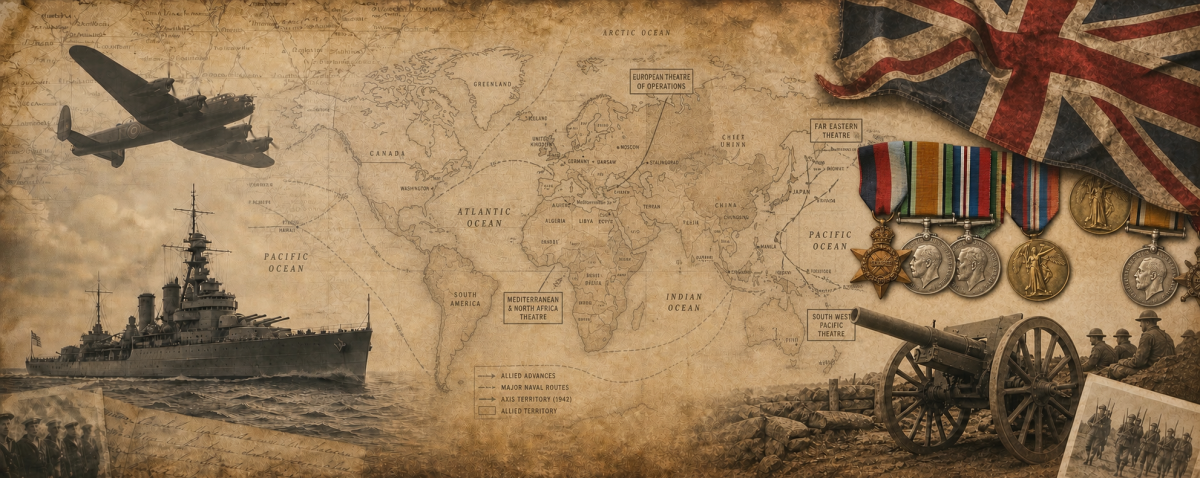

John Thomas Hanson was born in Dover, Kent, on 7 March 1895, the son of Thomas William Hanson and Alice West. He grew up in Dover and nearby Folkestone, working as a milk boy before enlisting in the Army as a teenager. He was killed in action on 15 August 1916 during the Battle of the Somme, aged 21, while serving as Private G/10461 in the 12th (Service) Battalion, Royal Fusiliers (City of London Regiment). [1]
A Dover milk boy turned soldier, John Hanson was killed outright by an artillery shell in the trenches between Delville Wood and Guillemont.
Early Life and Family
Hanson was born in Dover in 1895 and baptised at Charlton, Dover, on 25 April that year. His parents were Thomas William Hanson and Alice West, and the family lived within the close-knit maritime community of the Kent coast, where Dover’s harbour, garrison, and cross-Channel trade shaped much of local life.
By March 1901, aged six, John was living at 23 Youngs Road, Folkestone, recorded as the son of the head of the household. Ten years later, in April 1911, he had returned to Dover and was living at 4 Harveyan Place at the age of 16, working as a milk boy. This was typical employment for a working-class teenager of the period, involving early starts and physically demanding daily deliveries. By 1915 the family’s address was 4 Trevanion Court, Dover. [1]
John had at least one sister, Edith Ellen Hanson, whose own tragically early death in 1916 was recorded alongside his in a poignant Dover Express memorial notice of 1919. The notice recalled Edith’s death at the Royal Victoria Hospital, Dover, after fifteen weeks of illness, aged twelve, and named John as her brother, “killed in action at the Battle of the Somme, August 15th, 1916.” The Hanson family therefore endured the loss of two children within the same tragic year. [1]
Military Service
John Hanson enlisted at Dover on 13 December 1914, aged 19, joining the 12th (Service) Battalion, Royal Fusiliers, as a private with service number G/10461. The battalion had been formed at Hounslow on 13 September 1914 as part of Kitchener’s Third New Army, joining the 73rd Brigade of the 24th Division before training at Shoreham, Brighton, and Pirbright. [1]
The battalion mobilised for war and landed in France on 1 September 1915, transferring to the 17th Brigade of the same division. Hanson’s battalion saw its first major action at the Battle of Loos between 25 and 28 September 1915, where, according to the surviving war diary, the 12th Fusiliers endured a “tremendous bombardment” by German forces and were bombed “out of their trenches on both flanks”, before being forced to fight their way back “under heavy shell and machine gun fire.” This baptism of fire gave Hanson and his comrades brutal early experience of trench warfare on the Western Front. [1]
Through 1916, the battalion’s service widened further, including the German gas attack at Wulverghem and the fighting at Delville Wood and Guillemont on the Somme, before the battalion went on, in 1917, to serve at Vimy Ridge, Messines, Pilckem Ridge, Langemarck, and the Cambrai operations. The 12th Battalion was eventually disbanded in France on 13 March 1918, with its remaining personnel transferred to the 1st, 10th, and 11th Battalions. [1]
Unit Context at Time of Death
By mid-August 1916, the 12th Royal Fusiliers were serving with the 24th Division in one of the most gruelling sectors of the Somme battlefield: the ground between Delville Wood and the fortified village of Guillemont. Delville Wood had been the scene of prolonged and appallingly costly fighting since mid-July, while Guillemont itself, defended in strength by the German 27th Infantry Division and other units, had already resisted several British attacks by early August and would not finally fall until early September. [2][3]
The 24th Division held a difficult line facing Ginchy and Guillemont during this period, and contemporary accounts confirm that the 12th Royal Fusiliers were positioned in and around Delville Wood as part of this deployment, before eventually being relieved by the 8th Battalion, The Buffs. The division as a whole suffered roughly 2,000 casualties in the period from late August into early September, underlining just how costly this stretch of front had become even before the major set-piece assaults later that autumn. [4][2]
For infantry battalions such as the 12th Fusiliers, service in this sector meant holding and improving shattered trench lines under near-constant artillery fire, with the wood’s shattered tree stumps and churned earth offering little real shelter. German gunners had excellent observation over much of the ground, and the exchange of shellfire between the opposing lines was virtually continuous, even when no formal attack was under way.
The ground between Delville Wood and Guillemont was among the most heavily shelled and contested sectors of the entire Somme battlefield in August 1916.
Circumstances of Death
John Hanson was killed in action on 15 August 1916, in trenches between Delville Wood and Guillemont. According to the battalion’s war diary, he was killed outright by the explosion of an artillery shell, one of ten other ranks killed in the 12th Battalion that day. Such losses, sustained without any major infantry assault taking place, illustrate the grinding attrition that characterised the Somme sector at this stage of the battle. [1]
Death from artillery fire while simply holding the line was among the most common causes of casualties throughout the Somme campaign. Men could be killed or wounded at any moment, whether resting, working, or standing sentry, without warning and often without any opportunity to seek proper cover in the damaged trench systems. Hanson’s death, recorded plainly in the battalion diary alongside those of nine fellow soldiers, reflects this relentless and impersonal danger.
He was 21 years old, having served with his battalion through the Loos fighting of the previous autumn and into the second summer of the Somme offensive. His death came at a time when the wider battle for Guillemont and Ginchy was still unresolved, with British forces continuing to probe and attack the fortified village through August and into September 1916. [5][6]
Burial and Commemoration
John Thomas Hanson has no known grave. He is commemorated on the Thiepval Memorial to the Missing of the Somme, on Pier and Face 8 C, 9, and 16 A. The memorial bears the names of more than 72,000 British and South African servicemen who died in the Somme sector between July 1915 and March 1918 and who have no known grave, making it one of the largest and most significant British war memorials in the world. [1]
Hanson is also commemorated locally on the Dover War Memorial, ensuring that his name is remembered in the town where he was born, grew up, and enlisted. His entitlement to the 1914/15 Star, British War Medal, Victory Medal, and Memorial Death Plaque confirms both his overseas service and his death while on active duty. [1]
For his parents, Thomas William and Alice Hanson, and his surviving siblings in Dover, the loss of John so soon after the death of his young sister Edith made 1916 an especially devastating year. The 1919 Dover Express memorial notice, placed “from their sorrowing Mother, Father, Brothers and Sisters,” movingly links brother and sister together in the family’s enduring grief. [1]
Legacy
John Thomas Hanson’s life traces a familiar arc for young men of his generation in Dover and Folkestone: a childhood shaped by ordinary working-class routines, early employment as a milk boy, and enlistment as a teenager into one of Kitchener’s new service battalions. His service carried him from Hounslow’s training grounds through the horror of Loos and into the attritional trench fighting around Delville Wood and Guillemont.
His death illustrates a less dramatic but equally significant aspect of the Somme campaign: the daily cost of simply holding contested ground under sustained artillery fire, quite apart from the more famous set-piece assaults. The 12th Royal Fusiliers’ long service record, from Loos through to the Cambrai operations of 1917, shows the sustained and demanding nature of a New Army battalion’s war, of which Hanson’s final days formed only one part.
Remembering John Hanson restores an individual behind a name inscribed at Thiepval: a Dover-born milk boy, brother of Edith Ellen Hanson, and private of the 12th Royal Fusiliers who died among the shattered trenches of the Somme in August 1916.
Sources and Further Reading
- Commonwealth War Graves Commission: Private John Thomas Hanson
- Thiepval Memorial to the Missing of the Somme | Commonwealth War Graves Commission
- Battle of Delville Wood
- Battle of Guillemont
- The 24th Division at Delville Wood and Guillemont, August 1916
- Find a Grave memorial for John Thomas Hanson
Sources
[1] Individual-Report-for-John-Thomas-Hanson.pdf https://ppl-ai-file-upload.s3.amazonaws.com/web/direct-files/attachments/141549598/12a921e9-e26f-4cd2-9405-cf2f43a89e75/Individual-Report-for-John-Thomas-Hanson.pdf?AWSAccessKeyId=ASIA2F3EMEYERC3U7QJM&Signature=SuhqiPZ155CERcO9qwCQjIjwNk4%3D&x-amz-security-token=IQoJb3JpZ2luX2VjEO%2F%2F%2F%2F%2F%2F%2F%2F%2F%2F%2FwEaCXVzLWVhc3QtMSJIMEYCIQDJUAZgeGOI%2FHI9n2pLsCR7RfVM1gRC0nANbk4c2kOCCgIhANdsvVn2PoScoeXQdBeNv6%2BxGv55W9kHYvU9i1jxEm0yKvwECLf%2F%2F%2F%2F%2F%2F%2F%2F%2F%2FwEQARoMNjk5NzUzMzA5NzA1IgxiVDGnAAL2QAoteUUq0ASGYLCgH5V2VhqfVrrX5iN2pS17TcrfRhXD%2FvL5xt1pIRbCLySWJsUWG2tFg7hUgo7nrbX%2BJ2D%2FS28kuUCnhRiV8pAEnGl24fv33jbwEUjVCKd7p1gkZojFVKmDWslTQA61yaUyIBqz9vcV09wbTM3MjYKrPlc57QjCRDU%2FFV8xX5uDpMCM5a2SRNbVJp1WNVhytaoR9gLeWU8twOstHfqp3E%2BZll8xwsu0fUJyrBV7ApuheexXrBV8gJZKt8hLvLgv7EB8KzkvQsm60WekFU%2BzGcFdxSQWl9wyPx5O6tp004EaKmEdzI9cdldF5It3t95lWbWbvTCt5wv2ZG0FWAGS86TAJXNzLej4pJ98U3Km45KeTv28C7c3ZDIY5lKPvu3bwLiIBBRJ086LDrsnkRss1xfygEDtOYKjqGUkT%2Buf9OFuVcIWppGMwwt%2F1zCfwQjZVboiOU7TBDWcoaY3JDV7uBI%2FqHitpBjLo2Of7k66OexVWzopuzVEXiVuTujuIftWHkEXb5kRt8Vm2MaQ%2F%2ByQ%2BTSN%2BWgQ4LAUPDEc3ocSBImbrzrpzWdXONmMqa%2BVNC%2BbOWTd8mhhtyo70Wo%2BNu2wAbS0v%2FYDwci%2FXfS92aheF6iF1yGdfHeUeJv55To6NisC5dvtOH9hCOkF7b1qz0Ygqk2VLkTld8cJFSnZ78ZgCEC9PJKAb5FMSJTzwAA4%2BEcPXa57MGF30X3QGfBPj3LKA9nreB7fnpBOFeNWSCyOCvf%2B1pXok44zrsvZsqGOoPzVJScteXuT1%2FmhzI3qU%2BQ%2BMOTY7NMGOpcBby8%2BJVsBMs3KwP4hEsGbeOXSutL4cLQUsZ%2BLu1yx%2BfX54CkDsbGzxZ17PdJ7xukM4Lpg4E51TQHCJJJKFmvL9wfNrzK7ebkDY976HbUxUcWWLZCYpHJRXYF0vSTjpWBcy%2Beo8HSx7KnniZCnzegm1YLFxUwYK4qHgRX17%2BzhIb8sVta3Cw6KiBcDsOjYY1PQjbwSpAXTRg%3D%3D&Expires=1786458449
[2] Battle of Delville Wood – Wikipedia https://en.wikipedia.org/wiki/Battle_of_Delville_Wood
[3] Guillemont Quarry.August 1916 – The Western Front https://www.greatwarforum.org/topic/107545-guillemont-quarryaugust-1916/
[4] Guillemont – stevesmith1944 – WordPress.com https://stevesmith1944.wordpress.com/2016/08/18/guillemont/comment-page-1/
[5] Battle of Guillemont https://en.wikipedia.org/wiki/Battle_of_Guillemont
[6] The Battles of the Somme, 1916 https://www.longlongtrail.co.uk/battles/battles-of-the-western-front-in-france-and-flanders/the-battles-of-the-somme-1916/
[7] Map: The 8th Queen’s at Guillemont – 21 August, 1916 https://jackpeirs.org/commentary/guillemont-map/
[8] Delville Wood battle in World War I – Facebook https://www.facebook.com/groups/765624296887915/posts/27669884292701884/
[9] Guillemont, 3 September 1916 Tactics and Insights https://www.westernfrontassociation.com/world-war-i-articles/2021/september/guillemont-3-september-1916-tactics-and-insights/
[10] Guillemont | 17th Battalion Manchester Regiment on the Somme https://17thmanchesters.wordpress.com/guillemont/
[11] Somme 1916: Delville Wood’s Fiercest 48 Hours – Episode 4 https://www.youtube.com/watch?v=psbPJzA_A6s
[12] High Wood | With the British Army in Flanders & France https://thebignote.com/2016/08/01/high-wood/
[13] Delville Wood: Gethsemane for the South African Brigade http://www.worldwar1.com/heritage/delville.htm
[14] British soldiers in a trench in Guillemont, France during the … https://www.facebook.com/groups/histimages/posts/4279181689000941/
[15] Battle of guillemont 1916 Stock Photos and Images https://www.alamy.com/stock-photo/battle-of-guillemont-1916.html
[16] LONGUEVAL ALLEY and ANGEL TRENCH (just south of DELVILLE … https://www.greatwarforum.org/topic/319742-longueval-alley-and-angel-trench-just-south-of-delville-wood-late-july-early-august-1916-somme/
