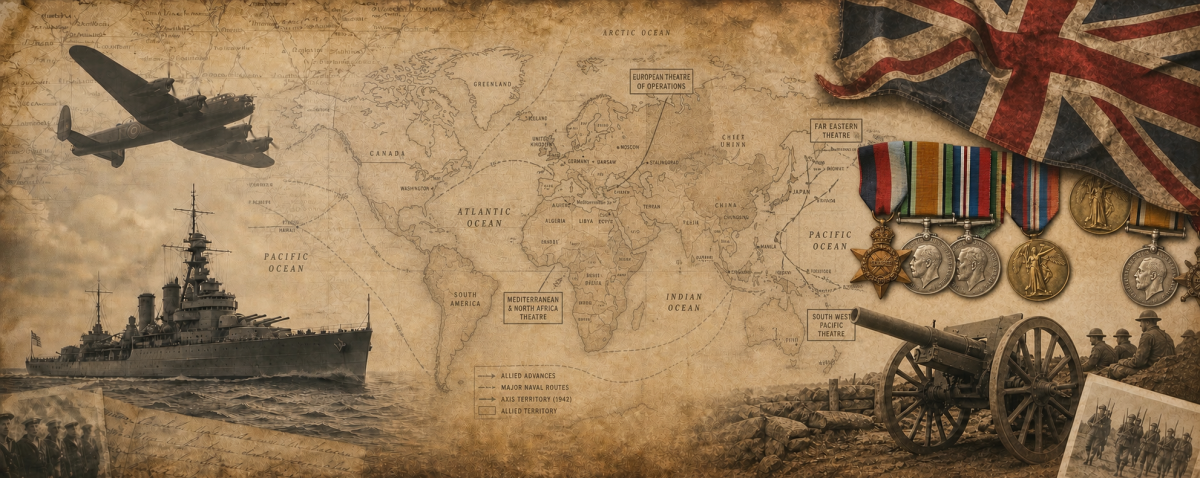
The Life and Sacrifice of William Edward Wiffen

Private William Edward Wiffen, born in 1890 in Thanington, Kent, served with the 10th Battalion of The Queen’s (Royal West Surrey Regiment) during World War I. He was killed in action on 26 March 1918 in the Battle of Bapaume and is commemorated on the Arras Memorial, as his grave remains unknown.

William Edward Wiffen: A Detailed Biography

Private William Edward Wiffen, G/7709, 10th (Service) Battalion, The Queen’s (Royal West Surrey Regiment), was a Kent farm worker from Wincheap, Thanington, who was killed in action in France on 26 March 1918 during the Battle of Bapaume in the German Spring Offensive. [1][2][3] With no known grave, he is commemorated on the Arras Memorial, Bay 2. [1]


Early Life and Family

William Edward Wiffen was born in Wincheap, Thanington, near Canterbury, in the March quarter of 1890; his birth was registered in the Bridge registration district (volume 2A, page 819). [1] He was baptised at Ss Nicholas, Thanington, on 2 February 1890, the son of John Wiffen and Harriet (née Richards), placing him in a long‑established Kentish working‑class family. [1]

The 1891 census shows William, aged 1, living with his parents at Wincheap, Thanington. [1] By 1901 the family remained in the same area, recorded at 69 Wincheap Street/Thanington Within, with William, aged 11, still at home. [1] In 1911 he appears at 1 Ada Road, Wincheap Street, Thanington Within, described as a “Cow Man”, indicating employment in dairy or cattle work on a local farm—typical agricultural labour in pre‑war rural Kent. [1]


Early Life and Family (Home and Status)

By 1915 William was still living at 1 Ada Road, Wincheap Street, Thanington Within, confirming continuity of residence in the Canterbury area into his mid‑twenties. [1] There is no evidence he married or had children; the individual report lists no spouse or offspring, and contemporary records treat him as a single man. [1]

Within family‑history research he is recorded under FamilySearch ID GMYZ‑HNX. [1] This genealogical linkage situates William within wider Wiffen and Richards kinship networks in east Kent, emphasising the local roots of a man whose life would end far from home in Picardy.


Military Service

William enlisted at Canterbury between 1914 and 1915, joining The Queen’s (Royal West Surrey Regiment) for service on the Western Front. [1] He was posted to the 10th (Service) Battalion, known as the “Battersea Battalion”, and given the service number G/7709. [1][2] The 10th Battalion had been raised on 3 June 1915 by the Mayor and Borough of Battersea as part of Kitchener’s New Army and placed in 124th Brigade, 41st Division. [1][2][3]

After training at Aldershot (Stanhope Lines) from February 1916, the battalion landed at Le Havre on 6 May 1916 and entered the line on the Western Front. [1][2][3] It saw heavy fighting during the 1916 Somme offensive, notably at the Battle of Flers–Courcelette and the Battle of the Transloy Ridges, and in 1917 took part in the Battle of Messines, the Battle of Pilkem Ridge, the Battle of the Menin Road and operations on the Flanders coast. [1][2] In November 1917 the 10th Queen’s moved to Italy, serving on the River Piave and in the Monte Grappa sector to bolster Italian resistance after Caporetto, before returning to France on 5 March 1918. [1][2][3]


Military Service (Spring 1918)

Back in France, the 10th Battalion rejoined 124th Brigade, 41st Division, just as the German Spring Offensive (Operation Michael) began on 21 March 1918. [1][4][5] The division, part of IV Corps, Third Army, was soon engaged in withdrawal fighting as German forces struck along the old Somme sector, pushing British units back across the 1916 battlefields towards Bapaume, Bray and Bucquoy. [1][6]

Divisional summaries quoted in the report note that by 23 March 1918, 41st Division had withdrawn to Beugny (Beugnetre), and on 24–25 March continued a fighting retreat towards Favreuil and Sapignies under intense pressure. [1][7] Units such as the 12th East Surrey Regiment and 15th Hampshire Regiment are recorded fighting rearguard actions and counter‑attacks around Bihucourt and Bihucourt Wood, while the remnants of the division were pulled back to Bucquoy to reorganise after 26 March. [1][8] As part of the same brigade and division, the 10th Queen’s would have been in this maelstrom of withdrawals, counter‑attacks and hastily improvised defensive lines.


Circumstances of Death

William’s date of death is given as 26 March 1918, with cause “Killed in Action” and theatre “France and Flanders”. [1] This places his death in the closing stages of the First Battle of Bapaume (24–25 March 1918) and the subsequent withdrawal of the Third Army to the line Bray–Albert–Hamel–Puisieux–Bucquoy, where General Byng ordered his troops to “Hold on. At all cost!” [1][6] Contemporary accounts of the battle describe exhausted British units conducting rearguard actions, counter‑attacks and stand‑to positions around Bihucourt, Favreuil, Sapignies and Bucquoy as the German advance continued. [1][8]

Although the battalion war diary is not quoted in the report, the timing suggests that William fell either during the rearguard actions and counter‑attack at Bihucourt Wood on 25 March or in the subsequent fighting as the battered 41st Division was relieved and pulled back towards Bucquoy. [1][7] The fact that he has no known grave and is commemorated on the Arras Memorial indicates that his body was either not recovered or not identified amid the chaos of the retreat and German advance. [1][4]


Burial and Commemoration

William Edward Wiffen is commemorated on the Arras Memorial, Bay 2, in the Faubourg d’Amiens Cemetery at Arras, which honours almost 35,000 British, South African and other Commonwealth soldiers who died in the Arras sector from spring 1916 to August 1918 and have no known grave. [1] His Commonwealth War Graves Commission entry reads: “WIFFEN, WILLIAM EDWARD, Private G/7709, 10th Bn., The Queen’s (Royal West Surrey Regiment), who died on 26 March 1918, son of John and Harriet Wiffen, of Wincheap, Canterbury, Kent.” [1][4]

A Find a Grave memorial (ID 124967151) reproduces these details and associates him with the Arras Memorial, providing a focal point for family and researchers. [1] He was entitled to the British War Medal, Victory Medal and Memorial Death Plaque, recognising his overseas service and death in action. [1] The “First World War – On This Day” project and casualty listings for 26 March 1918 also include “G/7709 Private William Edward Wiffen, 10th Bn. The Queen’s (Royal West Surrey Regiment)” among the fallen, confirming his place in the wider record of that day’s losses. [9][10]


Legacy

His life is woven into the broader story of the Wiffen and Richards families of Wincheap and Canterbury. [1] Local memory would have associated him with the rural community of Thanington, where he worked as a cowman before the war and where his parents continued to live after his death. [1]

Regimental histories of The Queen’s (Royal West Surrey Regiment) and studies of the 10th (Service) Battalion (Battersea) note that the battalion lost 44 officers and 640 other ranks killed or missing, and 60 officers and 2,200 other ranks wounded over its wartime service, underlining the heavy toll paid by this New Army unit. [2][3] William’s name on the Arras Memorial stands alongside those of comrades from Battersea and across Britain, representing a Kent farm worker who answered the call, fought through the Somme and Ypres campaigns, and died in the desperate fighting of March 1918 as the British Army struggled to contain the German Spring Offensive. [1][4][5]


Key External Links (for WordPress)

Sources
[1] Individual-Report-for-William-Edward-Wiffen.pdf
[2] Queen’s (Royal West Surrey Regiment) – The Long, Long Trail https://www.longlongtrail.co.uk/army/regiments-and-corps/the-british-infantry-regiments-of-1914-1918/queens-royal-west-surrey-regiment/
[3] 10th (Service) Battalion, Queen’s (Royal West Surrey Regiment … https://en.wikipedia.org/wiki/10th_(Service)Battalion,_Queen’s(Royal_West_Surrey_Regiment)(Battersea) [4] Queen’s Royal Regiment (West Surrey) – Wikipedia https://en.wikipedia.org/wiki/Queen’s_Royal_Regiment(West_Surrey)
[5] File:The German Spring Offensive, March-july 1918 Q6595.jpg https://commons.wikimedia.org/wiki/File:The_German_Spring_Offensive,March-july_1918_Q6595.jpg [6] [PDF] The history of the Second Division, 1914-1918 https://archive.org/download/historyofsecondd02wyra/historyofsecondd02wyra.pdf [7] 19th Middlesex Regt – Soldiers and their units – Great War Forum https://www.greatwarforum.org/topic/8204-19th-middlesex-regt/ [8] Official Despatch France and Flanders 21st December 1918 http://lynsted-society.co.uk/Research_WW1_Despatch_1918_12_21%20France%20and%20Flanders.html [9] 2031 died on this day: Tue 26/03/1918 – First World War – On this day https://firstworldwaronthisday.blogspot.com/2018/03/2031-died-on-this-day-tue-26031918.html [10] Today’s Fallen Heroes Tuesday 26 March 1918 | PDF – Scribd https://www.scribd.com/document/374791734/Today-s-Fallen-Heroes-Tuesday-26-March-1918 [11] Lives of the First World War https://livesofthefirstworldwar.iwm.org.uk/lifestory/4738293 [12] Search for “Wiffen” in lastname | Lives of the First World War https://livesofthefirstworldwar.iwm.org.uk/searchlives/field/lastname/Wiffen/filter/?page=2 [13] Search for “The Royal West Surrey Regiment” in unit | Lives of the … https://livesofthefirstworldwar.iwm.org.uk/searchlives/field/unit/The%20Royal%20West%20Surrey%20Regiment/filter/span%5B/?page=91 [14] Second Battle of Bapaume – Wikipedia https://en.wikipedia.org/wiki/Second_Battle_of_Bapaume [15] Search for “Surrey” in unit | Lives of the First World War https://livesofthefirstworldwar.iwm.org.uk/searchlives/field/unit/Surrey/filter/span%5B/?page=407 [16] 10th (Service) Bttn. Queens Regt. (Battersea Bttn. – Soldiers and … https://www.greatwarforum.org/topic/23694-10th-service-bttn-queens-regt-battersea-bttn/ [17] Leopard Antiques Antique Silver http://www.leopardantiques.com/object/stock/list/periodgroup?index=1061&metadataVVVorderby=saleprice+DESC%2Cavailable+DESC%2Ccreated+DESC
[18] Sapignies German Military Cemetery – Facebook https://www.facebook.com/groups/176980366188274/posts/1923070131579280/
[19] Bourne End Auction Rooms | Buckinghamshire Auctions https://www.bourneendauctionrooms.co.uk/catalogue/lot/cfad5a60c9cc9f057dbff03ef112439a/DF552CF371F2E3A723B4EBDB4BF38E80/antiques-collectors-sale-incorporating-clocks-watches/
[20] Leopard Antiques Small Collectables https://www.leopardantiques.com/object/stock/list/category_uid/12?index=220&metadataVVVorderby=saleprice+DESC%2Cavailable+DESC%2Ccreated+DESC
[21] The Villagers: Tamblin to Wright http://www.meltonww1.co.uk/index.php/the-people/t-to-z

Exploring the Military Service of Joseph Chidwick

Joseph Thomas Chidwick, born in Dover in 1887, served as a Private in the 2nd Battalion of the South Lancashire Regiment during World War I. He died in France on 22 March 1918 during the German Spring Offensive and is commemorated on the Pozières Memorial, reflecting the fate of many lost servicemen.

Joseph Thomas Chidwick: A Detailed Biography

Private Joseph Thomas Chidwick, no. 32046, 2nd Battalion, Prince of Wales’s Volunteers (South Lancashire Regiment), was born at Dover, Kent, in early 1887 and was killed in action in France on 22 March 1918. [1][2][3] He is commemorated on the Pozières Memorial to the Missing of the Somme and also remembered in online databases dedicated to First World War casualties. [1][4][3]


Early Life and Family

Joseph Thomas Chidwick was born in Dover, Kent, before 27 April 1887, his birth registered in the Dover registration district (volume 2A, page 1003, line 226). [1] He was the son of Francis Thomas Chidwick and his wife Mary Ann, née Marsh, and was baptised at St John Mariner, Dover, on 27 April 1887, confirming his family’s ties to that parish and to the town’s maritime community. [1]

By the 1891 census Joseph was living at Hougham, Kent, recorded as a four‑year‑old son in his parents’ household. [1] This rural parish just outside Dover suggests a childhood spent between town and country, typical of working families whose livelihoods were connected to both agricultural and urban employment. [1]


Early Life and Family (Work and Home)

In the 1901 census Joseph appears back in Dover at 130 Clarendon Place, aged 14, still living as a son in the parental home and working as an under gardener, probably in domestic service or on a local estate. [1] By the 1911 census he is at 9 Montrose Cottages, Manor Road, Maxton, Dover, his occupation given as carter, indicating experience with horse‑drawn transport and local delivery work. [1]

By 1915 Joseph, then aged about 28, was recorded at 31 Kitchener Road, Dover, as head of household (“self”), still rooted firmly in the town where he had been born and raised. [1][4] A later service‑record abstract from the Dover War Memorial Project confirms this address and describes him as a carman, underlining his status as a skilled working‑class man employed in transport before joining the Army. [4]


Military Service

During the First World War Joseph served in the Prince of Wales’s Volunteers (South Lancashire Regiment), the county regiment which recruited mainly from South Lancashire but also absorbed men from other parts of Britain as the war progressed. [1][5] His specific unit is given as the 2nd Battalion, South Lancashire Regiment, and his rank as Private, with the regimental number 32046, placing him among the wartime drafts that reinforced the regular battalion on the Western Front. [1][3]

The 2nd Battalion South Lancashire Regiment was a regular battalion which went to France in August 1914 and served continuously on the Western Front. [6][7] Sources describing the regiment’s Great War service show that by early 1918 the battalion was engaged in front‑line duty in France and Belgium and was caught up in the German Spring Offensive launched on 21 March 1918, a massive assault along the Somme front. [6][8] Contemporary and later summaries of the battalion and associated units note heavy casualties during this period, with fighting and withdrawals through places such as Lagnicourt, Albert and other villages east of the old Somme battlefields. [9][10][7]


Circumstances of Death

Joseph’s individual report gives his date of death as 22 March 1918, in France, with no specific battlefield named. [1] On that date the German Spring Offensive (Operation “Michael”) was in its second day, with British units forced into rapid retreat, suffering large numbers of killed, wounded and missing as they attempted to hold rearguard positions and delay the enemy advance. [10][8] A modern roll of casualties for 22 March 1918 lists “Private 32046 JOSEPH THOMAS CHIDWICK, South Lancashire Regiment” among the fallen of that day, confirming his death in action. [2]

Other sources relating to the 2nd Battalion South Lancashire Regiment and to men killed or taken prisoner on 22 March 1918 suggest that the battalion was engaged in defensive and delaying actions in the battle zone around the Somme sector, though detailed battalion‑level war diaries for that exact day are not cited in the brief secondary summaries available. [9][7] The fact that Joseph has no known grave and is commemorated on the Pozières Memorial indicates that his body was either not recovered or could not be identified after the fighting, a common fate in the chaos of the March 1918 retreat. [1][3]


Burial and Commemoration

Joseph has no known grave and is therefore commemorated by name on the Pozières Memorial, which honours more than 14,000 British and South African servicemen who died on the Somme between 21 March and 7 August 1918 and have no known burial. [1][3] His entry in the Commonwealth War Graves Commission database records him as “Private JOSEPH THOMAS CHIDWICK, 32046, 2nd Bn., South Lancashire Regiment, who died on 22 March 1918, France, commemorated on the Pozières Memorial”, confirming the unit and date of death. [1]

An associated memorial entry on Find a Grave (Memorial ID 16081789) also preserves his details, ensuring continued online remembrance. [1] The Dover War Memorial Project includes him under reference “13582 – Chidwick Joseph Thomas – South Lancashire Regiment” with details of his pre‑war trade as a carman and home address at 31 Kitchener Road, Dover, linking the name on a distant battlefield memorial back to a specific street and community in his home town. [4]


Legacy

Within his extended family Joseph is linked to the wider Chidwick and Marsh family lines via his FamilySearch profile (ID GM54‑CN2). [1] Online remembrance projects such as the Imperial War Museums’ “Lives of the First World War” identify him as “Joseph Thomas Chidwick, born 1887, died 1918, British Army 32046 Private, South Lancashire Regiment”, ensuring that his service and sacrifice are documented in national as well as local memory. [11][12]

The combination of civil records, census entries and military memorials paints a picture of a Dover‑born working man whose life followed a typical late‑Victorian and Edwardian pattern until interrupted by global war. [1][4] His death on 22 March 1918, at the height of the German Spring Offensive, and his commemoration on the Pozières Memorial, place him among the many whose individual graves were lost in the fluid and violent fighting of 1918 but whose names endure on stone and in digital records. [1][2][3]


Key External Links

Sources
[1] Individual-Report-for-Joseph-Thomas-Chidwick.pdf
[2] Today’s Fallen Heroes Friday 22 March 1918 (4242) – Scribd https://www.scribd.com/document/372944297/Today-s-Fallen-Heroes-Friday-22-March-1918-4242
[3] South Lancashire Regiment – First World War Casualties https://astreetnearyou.org/regiment/251/South-Lancashire-Regiment
[4] Notes on Service Records – THE DOVER WAR MEMORIAL PROJECT http://doverwarmemorialproject.org.uk/Casualties/WWI/Service%20Notes/ChidwickJ.htm
[5] South Lancashire Regiment – Wikipedia https://en.wikipedia.org/wiki/South_Lancashire_Regiment
[6] The Prince of Wales’s Volunteers (South Lancashire Regiment) https://www.longlongtrail.co.uk/army/regiments-and-corps/the-british-infantry-regiments-of-1914-1918/the-prince-of-waless-volunteers-south-lancashire-regiment/
[7] South Lancashire Regiment – Men on the Gates https://menonthegates.org.uk/maf_army/south-lancashire-regiment/
[8] South Lancashire Regiment https://vickersmg.blog/in-use/british-service/the-british-army/south-lancashire-regiment/
[9] The Plumb brothers from Antrobus, Cheshire – Great War Forum https://www.greatwarforum.org/topic/299675-the-plumb-brothers-from-antrobus-cheshire/?do=findComment&comment=3143832
[10] British Entrenching Battalions of 1918 – The Long, Long Trail https://www.longlongtrail.co.uk/army/regiments-and-corps/the-british-infantry-regiments-of-1914-1918/british-entrenching-battalions-of-1918/
[11] Search for “Chidwick” in lastname | Lives of the First World War https://livesofthefirstworldwar.iwm.org.uk/searchlives/field/lastname/Chidwick/filter
[12] Search for “South Lancashire Regiment” in unit | Lives of the First … https://livesofthefirstworldwar.iwm.org.uk/searchlives/field/unit/South%20Lancashire%20Regiment/filter/?page=162
[13] THE HEROIC ACTIONS OF PRIVATE JACK COUNTER In the month … https://www.facebook.com/JerseyHeritage/posts/the-heroic-actions-of-private-jack-counter-in-the-month-of-remembrance-our-lates/1264712125696019/
[14] South Lancashire Regiment | Death and Service https://deathandservice.co.uk/category/regiment/south-lancashire-regiment/
[15] [PDF] Personal History He was living at Stalybridge, Cheshire when he … https://mlfhs.uk/images/wm-biogs/966-49.pdf
[16] REGIMENTS IN THE GREAT WAR | Lancashire Infantry Museum https://www.lancashireinfantrymuseum.org.uk/regiments-great-war
[17] Private R Taylor South Lancashire Regiment. Died Friday 22 March … https://astreetnearyou.org/person/254946/Private–Taylor
[18] My father’s elder brother, James Algernon joined the army on the 20 … https://www.facebook.com/groups/lancashireinfantrymuseum/posts/10158068594584910/
[19] 1/5th Battalion, http://www.prescot-rollofhonour.info/Documents/SLR_1-5Bn_WarDiaryV3.pdf
[20] 20654 Private Thomas Price, S. Lancashire Regiment – UBIQUE https://www.reubique.com/20654.htm
[21] 201805.pdf https://www.westernfrontassociation.com/media/5558/201805.pdf

William Norris: A Tale of War and Commemoration

William Norris, born in 1886 in Petham, Kent, served as a Private in the 2nd Battalion of The Buffs (East Kent Regiment). Enlisting before the First World War, he was killed in action on February 14, 1915, during trench duties in the Ypres salient. He is commemorated on the Menin Gate Memorial.

William Norris: A Detailed Biography

Early Life and Family

William Norris was born in or about October 1886 in the rural parish of Petham, Kent, England, his birth registered in the East Ashford registration district (volume 2a, page 778, line 279). [1] He was the son of John Norris and Charlotte Ann (née Foord), a Kentish couple whose family life was centred on small villages south of Ashford. [1] William’s early years were shaped by this agricultural and village environment, in which many young men later found employment either on the land or in local trades before turning to military service.

By the time of the 1891 census, William was living at “The Lees,” Naccolt, in Kent, reflecting a move within the same general rural area. [1] This address sits close to the later community of Boughton Lees, near Ashford, indicating that the Norris family’s sphere of life remained firmly within the Kent countryside. In 1901, William, aged 14, is recorded as a “stepson” in Boughton Aluph, at Boughton Lees, suggesting a change in family structure, possibly through the death of a parent and remarriage of the surviving spouse. [1] The detail implies a potentially complex household, but one still rooted in the villages around Ashford.

William did not subsequently marry, and no children are recorded for him. [1] His adult life therefore appears to have been defined primarily by his army service rather than by domestic or family responsibilities. Later CWGC records describe him as “son of the late John and Charlotte Ann Norris, of Boughton Lees, Ashford, Kent,” confirming that both parents were deceased by the time of his death and that his closest association in civil life remained the Boughton Lees area. [1][2]

Early Life and Family (Appearance and Character)

Surviving military documentation preserves some physical details about William Norris. He was recorded as being 5 feet 6¾ inches tall, with brown hair and grey eyes. [1] These particulars, typical of attestation or service papers, present a brief but humanising glimpse of the man behind the regimental number L/8705. [1] Such records were compiled when he enlisted, most likely when joining The Buffs (East Kent Regiment) in the years before the First World War.

Coming from Boughton Lees and its surroundings, William would have grown up within sight of Ashford and within easy reach of the county town of Canterbury, where The Buffs had strong recruiting connections. [1][3] The regiment, one of the oldest in the British Army, drew heavily from Kentish men, and a sense of local pride in serving with “The Buffs” was well established by the late nineteenth century. [3][4] William’s enlistment into this regiment therefore reflects both geographical proximity and local martial tradition.

Military Service

William Norris enlisted at Canterbury, Kent, joining The Buffs (East Kent Regiment) and receiving the regular army number L/8705, the “L/” prefix associated with pre-war “old contemptible” regulars of the regiment. [1][2] He served in the 2nd Battalion, The Buffs, holding the rank of Private. [1][5] His recorded period of service runs from 19 November 1907 through to his death on 14 February 1915, indicating over seven years as a professional soldier, most of it in overseas garrisons of the British Empire. [1]

On 4 August 1914, at the outbreak of the First World War, the 2nd Battalion The Buffs was stationed at Wellington, Madras, in India. [1][4] In November 1914, as part of the rapid reinforcement of the British Expeditionary Force on the Western Front, the battalion embarked from Bombay, landing at Plymouth on 16 November and moving to Winchester. [1] There it joined the 85th Brigade of the newly formed 28th Division, a regular division composed largely of battalions brought home from imperial garrisons. [1][6]

On 15–18 January 1915, the 28th Division, including 2nd Buffs, embarked at Southampton for France. [1] Disembarking at Le Havre between 16 and 19 January, the division concentrated in the area between Bailleul and Hazebrouck by 22 January 1915, operating in the Ypres sector. [1][7] The 2nd Buffs were then engaged in trench-holding duties and minor operations in the Ypres salient, a notoriously dangerous sector where artillery, sniping and harsh winter conditions inflicted steady casualties even in periods of relative quiet. [7][8]

Circumstances of Death

Private William Norris, L/8705, 2nd Battalion, The Buffs (East Kent Regiment), was killed in action on 14 February 1915 in France or Belgium, aged about 28. [1][2] His battalion was serving with the 28th Division in the Ypres salient at the time, occupying trenches and positions that were subject to enemy shelling, trench raids and sniper fire. [1][7] While detailed battalion war diary extracts are not quoted in the summary, the date and location strongly suggest that William died during routine front-line duties or localised fighting near Ypres rather than in a major named battle.

Contemporary research on 2nd Buffs in early 1915 notes that the battalion was frequently in exposed positions around the Ypres–Comines Canal and east of Ypres, sustaining casualties from German shellfire and small-arms fire in the months preceding the Second Battle of Ypres. [7][9] Listings of casualties for 14 February 1915 include Private William Norris, L/8705, The Buffs, supporting the conclusion that his death formed part of this attritional pattern of losses. [2][10] Many such casualties were never recovered or their graves later lost due to the intensity of shelling and the subsequent reshaping of the battlefield.

The absence of a known grave for William, and his commemoration instead on a memorial to the missing, reflect the grim realities of the Ypres front. [1][8] The winter of 1914–15 saw foul conditions in the trenches, with mud, flooded dugouts, frostbite and constant harassment by enemy artillery and snipers all contributing to casualties. [8] William’s death on 14 February 1915 fits this pattern of relentless pressure on the early-war regular battalions, many of whose pre-war professionals would not survive to see the later battles of 1915 and 1916.

Burial and Commemoration

William Norris has no known grave and is commemorated on the Ypres (Menin Gate) Memorial in West-Vlaanderen, Belgium. [1] He is listed on Panels 12 and 14 of the memorial, alongside many comrades from The Buffs and other regiments who fell in the Ypres salient before 16 August 1917 and whose bodies were never identified or recovered. [1][2] The Menin Gate bears the names of over 54,000 officers and men of the British and Commonwealth forces who died in the Ypres sector without known graves, making it one of the most significant monuments to the missing of the First World War. [8][11]

The Commonwealth War Graves Commission record for William, available at https://www.cwgc.org/find-war-dead/casualty/919099/norris,-william/, confirms his details: Private L/8705, 2nd Bn. The Buffs (East Kent Regiment), date of death 14 February 1915, son of the late John and Charlotte Ann Norris of Boughton Lees, Ashford, Kent. [1] His Find a Grave memorial (ID 12043537) further records his commemoration on the Menin Gate and provides a virtual place of remembrance for relatives and researchers. [1][5]

William’s entitlement to the 1914–15 Star, British War Medal, and Victory Medal, together with the Memorial Plaque sent to next of kin, underscores his status as an early-war regular who served overseas from the outset of the battalion’s Western Front deployment. [1] These decorations would have been sent to his surviving family in Kent, probably his mother (if then alive) or siblings, forming tangible tokens of his service and sacrifice. [1][12]

Legacy

Within the family, William Norris is remembered as a 3rd cousin 2x removed to the present researcher, linking his story to a broader Kentish kin network. [1] Genealogical work drawing on birth registrations, census returns and CWGC data has re-established his place in the Norris family of Petham and Boughton Lees, ensuring that his name and service are not lost to history. [1][2] The description in CWGC records of him as “son of the late John and Charlotte Ann Norris, of Boughton Lees, Ashford, Kent” anchors his identity firmly to his home community. [1]

More widely, William represents the many pre-war regular soldiers of The Buffs who went to France and Flanders in the early months of the war and who bore the brunt of front-line service before the arrival of Kitchener’s New Army battalions and territorial reinforcements. [3][4] His presence on the Menin Gate links him to the great narrative of the Ypres battles, a place where, as later commentators noted, casualties across several major engagements may have exceeded one million. [8] For Kent and for The Buffs’ regimental community, his name is one among many on memorials, but each represents an individual life, family and story.

Modern digital resources such as the Imperial War Museum’s “Lives of the First World War” project and websites like A Street Near You record William’s service as Private L/8705, The Buffs, born 1886 and died 1915, and highlight his inclusion among the day’s casualties on 14 February 1915. [2][12] Through these resources, along with the Menin Gate and CWGC records, William Norris’s memory continues to be preserved and accessible, allowing descendants, local historians and the broader public to reflect on his journey from Petham and Boughton Lees to the Ypres salient, where he gave his life in the service of his country. [1][2]

Sources
[1] Individual-Report-for-William-Norris.pdf
[2] Sunday 14 February 1915 – First World War Casualties https://astreetnearyou.org/date/1915/02/14
[3] Buffs (Royal East Kent Regiment) – Wikipedia https://en.wikipedia.org/wiki/Buffs_(Royal_East_Kent_Regiment)
[4] [PDF] Buffs (Royal East Kent Regiment) https://www.queensregimentalassociation.org/media/Buffs%20(Royal%20East%20Kent%20Regiment).pdf
[5] Lives of the First World War https://livesofthefirstworldwar.iwm.org.uk/lifestory/3283493
[6] Historical records of the Buffs, East Kent Regiment (3rd Foot) https://www.gutenberg.org/cache/epub/73159/pg73159-images.html
[7] WW1 Roll of Honour – Leonard Terry of Teynham http://lynsted-society.co.uk/research_ww1_casualties_terry_l.html
[8] Battle of Ypres https://en.wikipedia.org/wiki/Battle_of_Ypres
[9] 2nd Btn The Buffs East Kent Regiment – Great War Forum https://www.greatwarforum.org/topic/152452-2nd-btn-the-buffs-east-kent-regiment/
[10] On This Day – from culturepics.org https://culturepics.org/on-this-day/index-bos.php?year=1915&month=02&day=14&collection=
[11] 2nd Lieutenant Elton Cyril Wanstall 8th Battalion The Buffs Royal … https://www.facebook.com/groups/436081820298097/posts/1680673975838869/
[12] Search for “Norris” in lastname | Lives of the First World War https://livesofthefirstworldwar.iwm.org.uk/searchlives/field/lastname/Norris/filter/?page=4
[13] Has anyone got any information on the 2nd Battalion? Doing some … https://www.facebook.com/groups/436081820298097/posts/1041976759708597/
[14] The Buffs – The Royal East Kents – Great War Forum https://www.greatwarforum.org/topic/12626-the-buffs-the-royal-east-kents/
[15] Second Battle of Ypres – Wikipedia https://en.wikipedia.org/wiki/Second_Battle_of_Ypres
[16] List of battalions of the Buffs (Royal East Kent Regiment) – Wikipedia https://en.wikipedia.org/wiki/List_of_battalions_of_the_Buffs_(Royal_East_Kent_Regiment)
[17] The Menin Gate Trilogy – AC https://www.remembering1418.com/menin-gate-triology-a-d
[18] Wednesday 10 February 1915 – First World War Casualties https://astreetnearyou.org/date/1915/02/10
[19] [PDF] st gregory the great – Canterbury Christ Church University https://repository.canterbury.ac.uk/download/66323ecf40dfc5587aa3219fc1760425100a35b817ef8f122d03b5c11d3205f0/508443/17494a_St.%20Gregory’s%20pamphlet.pdf
[20] Search for “East Kent Regiment, The Buffs.” in unit | Lives of the First … https://livesofthefirstworldwar.iwm.org.uk/searchlives/field/unit/East%20Kent%20Regiment,%20The%20Buffs./filter/span%5B/?page=11
[21] Buffs (East Kent) Regiment https://vickersmg.blog/in-use/british-service/the-british-army/buffs-east-kent-regiment/