
William Norris: A Detailed Biography
Early Life and Family
William Norris was born in or about October 1886 in the rural parish of Petham, Kent, England, his birth registered in the East Ashford registration district (volume 2a, page 778, line 279). [1] He was the son of John Norris and Charlotte Ann (née Foord), a Kentish couple whose family life was centred on small villages south of Ashford. [1] William’s early years were shaped by this agricultural and village environment, in which many young men later found employment either on the land or in local trades before turning to military service.
By the time of the 1891 census, William was living at “The Lees,” Naccolt, in Kent, reflecting a move within the same general rural area. [1] This address sits close to the later community of Boughton Lees, near Ashford, indicating that the Norris family’s sphere of life remained firmly within the Kent countryside. In 1901, William, aged 14, is recorded as a “stepson” in Boughton Aluph, at Boughton Lees, suggesting a change in family structure, possibly through the death of a parent and remarriage of the surviving spouse. [1] The detail implies a potentially complex household, but one still rooted in the villages around Ashford.
William did not subsequently marry, and no children are recorded for him. [1] His adult life therefore appears to have been defined primarily by his army service rather than by domestic or family responsibilities. Later CWGC records describe him as “son of the late John and Charlotte Ann Norris, of Boughton Lees, Ashford, Kent,” confirming that both parents were deceased by the time of his death and that his closest association in civil life remained the Boughton Lees area. [1][2]
Early Life and Family (Appearance and Character)
Surviving military documentation preserves some physical details about William Norris. He was recorded as being 5 feet 6¾ inches tall, with brown hair and grey eyes. [1] These particulars, typical of attestation or service papers, present a brief but humanising glimpse of the man behind the regimental number L/8705. [1] Such records were compiled when he enlisted, most likely when joining The Buffs (East Kent Regiment) in the years before the First World War.
Coming from Boughton Lees and its surroundings, William would have grown up within sight of Ashford and within easy reach of the county town of Canterbury, where The Buffs had strong recruiting connections. [1][3] The regiment, one of the oldest in the British Army, drew heavily from Kentish men, and a sense of local pride in serving with “The Buffs” was well established by the late nineteenth century. [3][4] William’s enlistment into this regiment therefore reflects both geographical proximity and local martial tradition.
Military Service
William Norris enlisted at Canterbury, Kent, joining The Buffs (East Kent Regiment) and receiving the regular army number L/8705, the “L/” prefix associated with pre-war “old contemptible” regulars of the regiment. [1][2] He served in the 2nd Battalion, The Buffs, holding the rank of Private. [1][5] His recorded period of service runs from 19 November 1907 through to his death on 14 February 1915, indicating over seven years as a professional soldier, most of it in overseas garrisons of the British Empire. [1]
On 4 August 1914, at the outbreak of the First World War, the 2nd Battalion The Buffs was stationed at Wellington, Madras, in India. [1][4] In November 1914, as part of the rapid reinforcement of the British Expeditionary Force on the Western Front, the battalion embarked from Bombay, landing at Plymouth on 16 November and moving to Winchester. [1] There it joined the 85th Brigade of the newly formed 28th Division, a regular division composed largely of battalions brought home from imperial garrisons. [1][6]
On 15–18 January 1915, the 28th Division, including 2nd Buffs, embarked at Southampton for France. [1] Disembarking at Le Havre between 16 and 19 January, the division concentrated in the area between Bailleul and Hazebrouck by 22 January 1915, operating in the Ypres sector. [1][7] The 2nd Buffs were then engaged in trench-holding duties and minor operations in the Ypres salient, a notoriously dangerous sector where artillery, sniping and harsh winter conditions inflicted steady casualties even in periods of relative quiet. [7][8]
Circumstances of Death
Private William Norris, L/8705, 2nd Battalion, The Buffs (East Kent Regiment), was killed in action on 14 February 1915 in France or Belgium, aged about 28. [1][2] His battalion was serving with the 28th Division in the Ypres salient at the time, occupying trenches and positions that were subject to enemy shelling, trench raids and sniper fire. [1][7] While detailed battalion war diary extracts are not quoted in the summary, the date and location strongly suggest that William died during routine front-line duties or localised fighting near Ypres rather than in a major named battle.
Contemporary research on 2nd Buffs in early 1915 notes that the battalion was frequently in exposed positions around the Ypres–Comines Canal and east of Ypres, sustaining casualties from German shellfire and small-arms fire in the months preceding the Second Battle of Ypres. [7][9] Listings of casualties for 14 February 1915 include Private William Norris, L/8705, The Buffs, supporting the conclusion that his death formed part of this attritional pattern of losses. [2][10] Many such casualties were never recovered or their graves later lost due to the intensity of shelling and the subsequent reshaping of the battlefield.
The absence of a known grave for William, and his commemoration instead on a memorial to the missing, reflect the grim realities of the Ypres front. [1][8] The winter of 1914–15 saw foul conditions in the trenches, with mud, flooded dugouts, frostbite and constant harassment by enemy artillery and snipers all contributing to casualties. [8] William’s death on 14 February 1915 fits this pattern of relentless pressure on the early-war regular battalions, many of whose pre-war professionals would not survive to see the later battles of 1915 and 1916.
Burial and Commemoration
William Norris has no known grave and is commemorated on the Ypres (Menin Gate) Memorial in West-Vlaanderen, Belgium. [1] He is listed on Panels 12 and 14 of the memorial, alongside many comrades from The Buffs and other regiments who fell in the Ypres salient before 16 August 1917 and whose bodies were never identified or recovered. [1][2] The Menin Gate bears the names of over 54,000 officers and men of the British and Commonwealth forces who died in the Ypres sector without known graves, making it one of the most significant monuments to the missing of the First World War. [8][11]
The Commonwealth War Graves Commission record for William, available at https://www.cwgc.org/find-war-dead/casualty/919099/norris,-william/, confirms his details: Private L/8705, 2nd Bn. The Buffs (East Kent Regiment), date of death 14 February 1915, son of the late John and Charlotte Ann Norris of Boughton Lees, Ashford, Kent. [1] His Find a Grave memorial (ID 12043537) further records his commemoration on the Menin Gate and provides a virtual place of remembrance for relatives and researchers. [1][5]
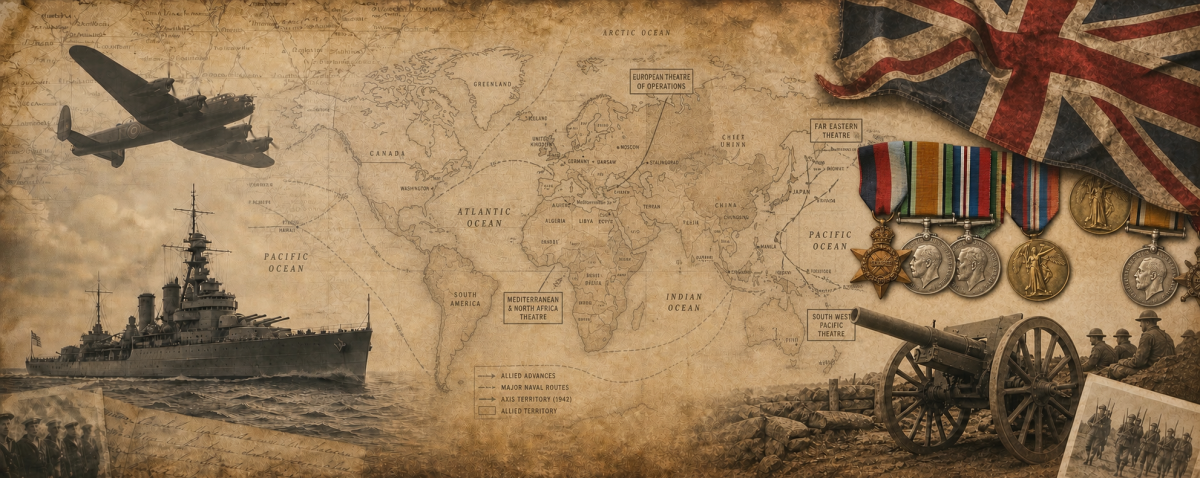
William’s entitlement to the 1914–15 Star, British War Medal, and Victory Medal, together with the Memorial Plaque sent to next of kin, underscores his status as an early-war regular who served overseas from the outset of the battalion’s Western Front deployment. [1] These decorations would have been sent to his surviving family in Kent, probably his mother (if then alive) or siblings, forming tangible tokens of his service and sacrifice. [1][12]
Legacy
Within the family, William Norris is remembered as a 3rd cousin 2x removed to the present researcher, linking his story to a broader Kentish kin network. [1] Genealogical work drawing on birth registrations, census returns and CWGC data has re-established his place in the Norris family of Petham and Boughton Lees, ensuring that his name and service are not lost to history. [1][2] The description in CWGC records of him as “son of the late John and Charlotte Ann Norris, of Boughton Lees, Ashford, Kent” anchors his identity firmly to his home community. [1]
More widely, William represents the many pre-war regular soldiers of The Buffs who went to France and Flanders in the early months of the war and who bore the brunt of front-line service before the arrival of Kitchener’s New Army battalions and territorial reinforcements. [3][4] His presence on the Menin Gate links him to the great narrative of the Ypres battles, a place where, as later commentators noted, casualties across several major engagements may have exceeded one million. [8] For Kent and for The Buffs’ regimental community, his name is one among many on memorials, but each represents an individual life, family and story.
Modern digital resources such as the Imperial War Museum’s “Lives of the First World War” project and websites like A Street Near You record William’s service as Private L/8705, The Buffs, born 1886 and died 1915, and highlight his inclusion among the day’s casualties on 14 February 1915. [2][12] Through these resources, along with the Menin Gate and CWGC records, William Norris’s memory continues to be preserved and accessible, allowing descendants, local historians and the broader public to reflect on his journey from Petham and Boughton Lees to the Ypres salient, where he gave his life in the service of his country. [1][2]
Sources
[1] Individual-Report-for-William-Norris.pdf
[2] Sunday 14 February 1915 – First World War Casualties https://astreetnearyou.org/date/1915/02/14
[3] Buffs (Royal East Kent Regiment) – Wikipedia https://en.wikipedia.org/wiki/Buffs_(Royal_East_Kent_Regiment)
[4] [PDF] Buffs (Royal East Kent Regiment) https://www.queensregimentalassociation.org/media/Buffs%20(Royal%20East%20Kent%20Regiment).pdf
[5] Lives of the First World War https://livesofthefirstworldwar.iwm.org.uk/lifestory/3283493
[6] Historical records of the Buffs, East Kent Regiment (3rd Foot) https://www.gutenberg.org/cache/epub/73159/pg73159-images.html
[7] WW1 Roll of Honour – Leonard Terry of Teynham http://lynsted-society.co.uk/research_ww1_casualties_terry_l.html
[8] Battle of Ypres https://en.wikipedia.org/wiki/Battle_of_Ypres
[9] 2nd Btn The Buffs East Kent Regiment – Great War Forum https://www.greatwarforum.org/topic/152452-2nd-btn-the-buffs-east-kent-regiment/
[10] On This Day – from culturepics.org https://culturepics.org/on-this-day/index-bos.php?year=1915&month=02&day=14&collection=
[11] 2nd Lieutenant Elton Cyril Wanstall 8th Battalion The Buffs Royal … https://www.facebook.com/groups/436081820298097/posts/1680673975838869/
[12] Search for “Norris” in lastname | Lives of the First World War https://livesofthefirstworldwar.iwm.org.uk/searchlives/field/lastname/Norris/filter/?page=4
[13] Has anyone got any information on the 2nd Battalion? Doing some … https://www.facebook.com/groups/436081820298097/posts/1041976759708597/
[14] The Buffs – The Royal East Kents – Great War Forum https://www.greatwarforum.org/topic/12626-the-buffs-the-royal-east-kents/
[15] Second Battle of Ypres – Wikipedia https://en.wikipedia.org/wiki/Second_Battle_of_Ypres
[16] List of battalions of the Buffs (Royal East Kent Regiment) – Wikipedia https://en.wikipedia.org/wiki/List_of_battalions_of_the_Buffs_(Royal_East_Kent_Regiment)
[17] The Menin Gate Trilogy – AC https://www.remembering1418.com/menin-gate-triology-a-d
[18] Wednesday 10 February 1915 – First World War Casualties https://astreetnearyou.org/date/1915/02/10
[19] [PDF] st gregory the great – Canterbury Christ Church University https://repository.canterbury.ac.uk/download/66323ecf40dfc5587aa3219fc1760425100a35b817ef8f122d03b5c11d3205f0/508443/17494a_St.%20Gregory’s%20pamphlet.pdf
[20] Search for “East Kent Regiment, The Buffs.” in unit | Lives of the First … https://livesofthefirstworldwar.iwm.org.uk/searchlives/field/unit/East%20Kent%20Regiment,%20The%20Buffs./filter/span%5B/?page=11
[21] Buffs (East Kent) Regiment https://vickersmg.blog/in-use/british-service/the-british-army/buffs-east-kent-regiment/
Discover more from Mike's Cousins
Subscribe to get the latest posts sent to your email.