
John Joseph Behan: A Detailed Biography
Early Life and Family
John Joseph Behan was born on 6 August 1888 in Baltinglass, County Wicklow, Ireland, his birth registered under reference 10344297 in volume 2, page 388 of the civil registers. [1] His parents are not named in the extracted report, but his Irish origins and subsequent army career place him within the stream of young Irishmen who enlisted in the British Army before the First World War. [1]
By the time of the 1911 census he was serving in England, recorded at Dover, Kent, as a Rifleman with the 2nd Battalion, Royal Irish Rifles, indicating that he was already a regular soldier well before war broke out. [1] On 27 July 1912 he married Maria Elizabeth (Elizabeth M.) Bowlt at Dover, Kent, their marriage registered in the Dover registration district (volume 2A, page 2531, line 21/75). [1] The couple had at least two daughters, Kathleen Elizabeth Behan and Ivy Isabella (Isobel) Behan, tying the Irish-born soldier firmly into an English coastal garrison community. [1]
Military/Career Service
Although his unit and medals are often associated with the Royal Irish Rifles, John’s service record shows that he first served with the 2nd Battalion, Royal Irish Fusiliers, rising from Private to Lance Corporal under service number 8651. [1] He later appears as Corporal (and in some notices Sergeant) John J. Behan of the Royal Irish Rifles, 2nd Battalion, retaining the same service number 8651, which indicates a transfer between closely related Irish regiments rather than a new enlistment. [1][2] On mobilisation for war his battalion, then part of 7th Brigade, 3rd Division, was stationed at Tidworth, Wiltshire, and crossed to France between 11 and 16 August 1914, concentrating around Aulnoye and Avesnes before moving towards the front. [1]
From late August 1914 onwards, John was engaged in almost every major early action of the British Expeditionary Force. These included the Battle of Mons and the subsequent retreat, the battles of Le Cateau, the Marne and the Aisne (including the passage and the actions on the Aisne Heights), followed by the Battle of La Bassée, the Battle of Messines, the Battle of Armentières, and the First Battle of Ypres, including the action at Nonne Bosschen and the attack on Wytschaete. [1] In 1915 he and his comrades endured the First and Second Attacks on Bellewaarde and the fighting at Hooge, all notorious for intense shelling and heavy casualties. [1] On 18 October 1915 the 2nd Battalion transferred to the 7th Brigade of the 25th Division, and on 26 October 1915 to the 74th Brigade of the same division, later taking part in operations including the German attack on Vimy Ridge and, subsequently, the Somme battles of Albert, Bazentin, Pozières and the Ancre Heights. [1]
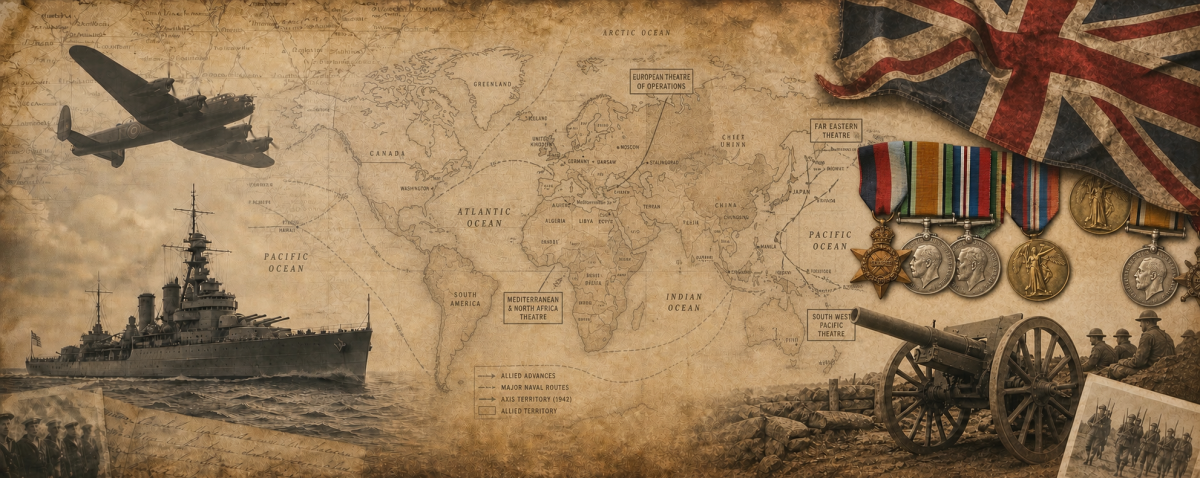
John’s conduct in 1914 was singled out for official notice. As Lance Corporal J. Behan, service number 8651, 2nd Battalion Royal Irish Fusiliers, he was “Mentioned in Despatches” in Field Marshal Sir John French’s despatches, his name appearing in the London Gazette issue 28942 of 16 October 1914 (page 8356) and again in issue 28945 of 20 October 1914 (page 8388). [1][2] A Mention in Despatches was a formal commendation for gallant or distinguished conduct in the field; recipients were later authorised to wear an oak-leaf emblem on the ribbon of the Victory Medal. [1] John’s medal entitlement comprised the 1914 Star with clasp, the British War Medal, the Victory Medal, and the Memorial Death Plaque issued to his next of kin. [1]
Circumstances of Death
By 1916 John’s official residence was still given as Dover, Kent, reflecting his family home, but he was serving on the Western Front in the sector around Arras and Vimy. [1] He was killed in action on 23 April 1916, recorded as Corporal J. Behan of the Royal Irish Rifles, while serving with the 2nd Battalion during operations near Vimy Ridge, north of Arras. [1][3] Although the PDF gives the place of death as “Arras, Hautes-Pyrénées, Midi-Pyrénées, France”, this is a modern geocoding error; the relevant Arras is the city in the Pas-de-Calais, on the old Western Front. [1][4]
A contemporary memorial notice in the Dover Express of 27 April 1917 commemorated him as “Sergeant John J. Behan, Royal Irish Rifles, killed in action in France, 23rd April, 1916, the beloved husband of Elizabeth M. Behan,” showing that his widow continued to live in Dover and that his family regarded him as a senior non-commissioned officer. [1] The battalion’s presence in the Vimy sector fits with the pattern of burials at Écoivres Military Cemetery, which received dead from units holding the line near Mont St Eloi and Vimy in early 1916. [1][4]
Burial and Commemoration
John was buried after 23 April 1916 at Écoivres Military Cemetery, Mont-St-Eloi, France, in grave I F 8. [1] Écoivres Military Cemetery is the extension of the local communal cemetery, originally used by the French Army and taken over in March 1916 by the British 46th (North Midland) Division; successive divisions, including those holding the Vimy front, used a military tramway to bring their dead from the front line trenches, with burials laid out almost exactly in date order. [5][4]
His grave and details are recorded by the Commonwealth War Graves Commission under casualty number 64798, accessible at the CWGC database entry for “J. Behan” of the Royal Irish Rifles. [1][3] A parallel record, including his regiment, date of death, and cemetery, appears on the “A Street Near You” project, which maps First World War casualties to their places of commemoration. [3][6] There is also a memorial entry on Find a Grave (Memorial ID 56569998), which may include a photograph of his headstone or cemetery. [1]
Legacy and Descendants
John’s immediate legacy lay with his widow, Maria Elizabeth (Elizabeth M.) Behan née Bowlt, and their daughters Kathleen Elizabeth and Ivy Isabella (Isobel), who were left without a husband and father when he was killed in 1916. [1]
Beyond the family, John’s service is honoured through official records, regimental histories and digital remembrance projects. His London Gazette Mentions in Despatches confirm that his gallantry was recognised at the highest levels of command, and the oak leaf to his Victory Medal marks this distinction for posterity. [1][2] His inclusion on the Imperial War Museum’s “Lives of the First World War” platform, the CWGC database, and map-based projects such as “A Street Near You” ensures that his name remains accessible to researchers, descendants and the wider public interested in the men of the Royal Irish Rifles and Royal Irish Fusiliers. [1][3][7]
Sources
[1] Individual-Report-for-John-Joseph-Behan.pdf
[2] THE LONDON GAZETTE, 20 OCTOBER, 1914. https://www.thegazette.co.uk/London/issue/28945/page/8388/data.pdf
[3] Corporal J Behan – Royal Irish Rifles https://astreetnearyou.org/person/64798/Corporal–Behan
[4] Écoivres Military Cemetery, Pas de Calais, France https://www.ww1cemeteries.com/ecoivres-military-cemetery.html
[5] Ecoivres Military Cemetery http://www.webmatters.net/index.php?id=278
[6] First World War cemetery at ECOIVRES MILITARY CEMETERY, MONT-ST. ELOI – view casualties – A Street Near You https://astreetnearyou.org/cemetery/6300/ECOIVRES-MILITARY-CEMETERY,-MONT-ST.-ELOI
[7] John Joseph Behan – Lives of the First World War https://livesofthefirstworldwar.iwm.org.uk/lifestory/5175762
[8] Search for ” Behan” | Lives of the First World War https://livesofthefirstworldwar.iwm.org.uk/searchlives/%20Behan/filter/?page=8
[9] Search for “2nd” in unit | Lives of the First World War https://livesofthefirstworldwar.iwm.org.uk/searchlives/field/unit/2nd/filter/span%5B/?page=235
[10] Search for “2nd Royal Irish Fusiliers” in unit https://livesofthefirstworldwar.iwm.org.uk/searchlives/field/unit/2nd%20Royal%20Irish%20Fusiliers/filter/?page=3
[11] Ipswich men who died during the Battle of Arras 1917 https://www.ipswichwarmemorial.co.uk/ipswich-men-died-battle-arras-1917/
[12] Official Despatch – BEF in Europe – 8th October 1914 http://lynsted-society.co.uk/Research_WW1_Despatch_1914_10_08%20Europe.html
[13] We Remember Today https://www.facebook.com/groups/official18thregoffootroyalirishregassociation/posts/992031372029937/
[14] 11th(Service) Battalion Royal Irish Rifles https://www.greatwarforum.org/topic/26377-11thservice-battalion-royal-irish-rifles/
[15] newspapers WW1 -2 https://remembranceni.org/wp-content/uploads/2018/08/remembrance-ni-newspapers-ww1-2.pdf
[16] Full text of “Annual report / Police Department, City of New … https://archive.org/stream/annual20newy/annual20newy_djvu.txt
[17] Ecoivres Military Cemetery – Veterans Affairs Canada https://www.veterans.gc.ca/en/remembrance/memorials/ecoivres-cemetery
[18] WW1 Soldiers 1 https://www.lennonwylie.co.uk/ww1_soldiers_databaseKtoZ.htm
[19] R Irish Rif. Ranks & NCO awards https://www.greatwarforum.org/topic/119115-r-irish-rif-ranks-nco-awards/
[20] The History of Ulster https://electricscotland.com/history/ulster/vol4chap28.htm
[21] 8th Battalion, Royal Irish Rifles. https://rememberourdeadregimentallist.weebly.com/8th-battalion-royal-irish-rifles.html