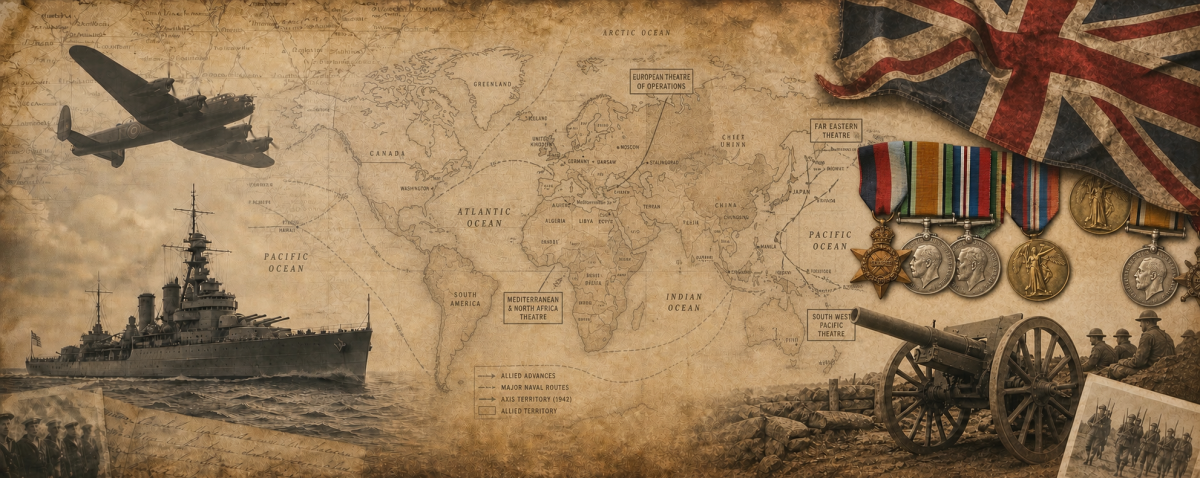
The Story of Edward Godden: A Royal Fusilier’s Journey

Private Edward William Godden, a gardener from Mersham, Kent, enlisted in October 1914 and served with the 8th Battalion, Royal Fusiliers. He was killed in action on 24 March 1916 during trench warfare near Vermelles, France. Buried in Vermelles British Cemetery, he is commemorated for his sacrifice in World War I.

Edward William Godden: A Detailed Biography

Private Edward William Godden, no. 7126, 8th (Service) Battalion, Royal Fusiliers (City of London Regiment), was a gardener from Mersham, near Ashford, Kent, who enlisted in October 1914 and was killed in action in France on 24 March 1916. [1][2][3] He lies in Vermelles British Cemetery, Pas‑de‑Calais, and is commemorated by the Commonwealth War Graves Commission. [1][4][5]


Early Life and Family

Edward William Godden was born in the East Ashford registration district in the December quarter of 1891 (volume 2A, page 773), the son of Alfred Godden and Jane (née Gower). [1] He was baptised at St John the Baptist, Mersham, Kent, on 1 November 1891, confirming the family’s residence in this rural parish just south‑east of Ashford. [1]

In the 1901 census Edward appears at The Street, Mersham, aged 9, described as a scholar and son in his parents’ household. [1] By 1911 he was still living in The Street, Mersham, aged 19, single, and working as a gardener, a typical occupation in a village environment where estate and domestic gardening provided regular employment. [1] Within the wider family tree he is recorded as a first cousin three times removed of the compiler, linking him closely to local Godden and Gower kin. [1]


Early Life and Family (Physical Description and Character)

Surviving enlistment data give a brief physical sketch of Edward. He was recorded as 5 feet 6½ inches tall, with grey eyes and brown hair, features typical of many men of his generation but made distinctive by the precise measurements preserved in recruitment registers. [1][6] The Surrey Recruitment Register, cited in external research on “G” surnames, confirms that “E. W. Godden” was born in Ashford, attested at Epsom on 21 October 1914 and joined the Royal Fusiliers, aligning exactly with the details in the individual report. [1][6]

Although no personal letters or anecdotes are quoted in the compiled material, this combination of village upbringing, gardening work and early voluntary enlistment suggests a man accustomed to physical labour and outdoor life, who responded promptly to the wartime call for recruits. [1][6]


Military Service

Edward enlisted at Epsom, Surrey, on 21 October 1914, joining the Royal Fusiliers (City of London Regiment) as a private, with the number G/7126 (often rendered simply as 7126). [1][6] He was posted to the 8th (Service) Battalion, Royal Fusiliers, a New Army battalion raised in 1914 which became part of 36th Brigade in the 12th (Eastern) Division. [1][2][3]

The 12th (Eastern) Division assembled in England and moved to France in late May and early June 1915, taking over a sector of the line in the Loos area and gradually becoming involved in front‑line fighting. [1][2] The 8th Royal Fusiliers fought in the Battle of Loos in September 1915 and remained in the Loos–Vermelles–Hohenzollern Redoubt area over the winter of 1915–16, a sector characterised by mining, trench raids and frequent artillery and trench‑mortar bombardments. [4][2][3]


Military Service (Hohenzollern Redoubt and Vermelles)

In early 1916 the 12th (Eastern) Division was ordered to carry out operations against the Hohenzollern Redoubt, a strongly fortified German position near Loos. [4][5] On 2 March 1916 British tunnellers exploded a series of large mines under the German lines, and the 8th and 9th Battalions, Royal Fusiliers, led the assault into the crater field, capturing new and existing craters and sections of trench at heavy cost; the 8th Royal Fusiliers alone suffered some 254 casualties in that initial attack. [4][7][8]

Following this, the division continued to hold the line from the Quarries to Hohenzollern Redoubt throughout March, facing repeated German counter‑attacks, intense trench‑mortar fire and heavy shelling, particularly around the villages of Vermelles and the approaches back towards Annequin and Noyelles. [4][2][5] From 2 to 19 March the 12th Division sustained more than 3,000 casualties, and by the time it was relieved in late April total losses in the sector exceeded 4,000 men, underlining the severe attrition suffered by Edward’s battalion and brigade. [4][2]


Circumstances of Death

Edward’s date of death is recorded as 24 March 1916, with the theatre noted as France and Flanders and the cause as “Killed in action”. [1] At this date the 8th Royal Fusiliers and 36th Brigade were still holding trenches near Vermelles and in or around the crater fields created during the Hohenzollern Redoubt action, enduring continuous shelling and localised fighting even after the main assault period earlier in the month. [2][9][3]

A closely related narrative for another 8th Battalion casualty, Private Arthur Henry Noden, notes that the battalion was in the trenches near Vermelles in March 1916, suffering casualties from artillery and sniper fire rather than from major set‑piece attacks. [9] Given Edward’s burial at Vermelles British Cemetery and the timing of his death shortly after the main Hohenzollern operations, it is likely that he was killed either by shellfire or during routine but dangerous trench‑holding duties in that sector, part of the persistent day‑to‑day toll of front‑line service. [1][4][2]


Burial and Commemoration

Unlike many of his comrades on the Western Front, Edward has an identified grave. He is buried at Vermelles British Cemetery, Pas‑de‑Calais, in plot II, row N, grave 23. [1] The Commonwealth War Graves Commission entry records him as “GODDEN, E. W., Private, 7126, 8th Bn., Royal Fusiliers, who died on 24 March 1916, son of Alfred and Jane Godden, of 12, Mersham St., Ashford, Kent.” [1][5]

The cemetery, established near the front‑line positions held by the 12th (Eastern) Division and others, contains many burials from the Loos and Hohenzollern sectors of early 1916, and Edward’s grave stands among those of fellow infantrymen and support troops who fell in the same period. [4][5] A Find a Grave memorial (ID 56589100) reproduces his CWGC details and locates his grave within Vermelles British Cemetery, providing an online point of reference for relatives and researchers unable to visit the site in person. [1]


Legacy

His place of origin – Mersham Street, Ashford – remains a key part of local remembrance in Kent. [1][6] His service with the 8th Royal Fusiliers links him not only to the history of that famous City of London regiment but also to the specific story of the 12th (Eastern) Division’s costly operations at the Hohenzollern Redoubt in March 1916. [1][4][3]

Modern regimental and historical summaries of the Royal Fusiliers note the role of the 8th Battalion within 36th Brigade, 12th Division, and its participation in Loos‑sector operations, ensuring that the actions in which Edward fought and died remain part of the wider narrative of the Great War on the Western Front. [2][3][8] Through his named grave at Vermelles, his CWGC record, and digital memorials, Private Edward William Godden is remembered today as one of the many young Kent men whose lives were given in the grinding trench warfare of 1916, months before the Somme battles shifted the British focus further south. [1][4][2]


Key External Links

Sources
[1] Individual-Report-for-Edward-William-Godden.pdf
[2] 12th (Eastern) Division – The Long, Long Trail https://www.longlongtrail.co.uk/army/order-of-battle-of-divisions/12th-eastern-division/
[3] Royal Fusiliers (City of London Regiment) – Vickers MG Collection … https://vickersmg.blog/in-use/british-service/the-british-army/royal-fusiliers-city-of-london-regiment/
[4] Hohenzollern Redoubt action, 2–18 March 1916 – Wikipedia https://en.wikipedia.org/wiki/Hohenzollern_Redoubt_action,_2%E2%80%9318_March_1916
[5] Hohenzollern Redoubt – Wikipedia https://en.wikipedia.org/wiki/Hohenzollern_Redoubt
[6] War Memorials – WW1 – Surnames G https://eehe.org.uk/40914/warmemorialssurnamesg/
[7] Hohenzollern Redoubt Facts for Kids https://kids.kiddle.co/Hohenzollern_Redoubt
[8] 3 British underground mines explode under German trenches. Early … https://www.reddit.com/r/ww1/comments/132hg6g/3_british_underground_mines_explode_under_german/
[9] Pvt Arthur Henry Noden (1894-1916) – Find a Grave Memorial https://www.findagrave.com/memorial/56589748/arthur_henry-noden
[10] Officers 8th Battalion Royal Dublin Fusiliers http://www.dublin-fusiliers.com/battaliions/8-batt/personnel/officers/officers-8-bn.html
[11] Men of the Northumberland Fusiliers in St Eloi, France, March 1916 … https://www.facebook.com/veteransfoundation/posts/men-of-the-northumberland-fusiliers-in-st-eloi-france-march-1916-we-will-remembe/1067739755383993/
[12] Lancashire Fusiliers – Wikipedia https://en.wikipedia.org/wiki/Lancashire_Fusiliers
[13] How-to Blog Post Template https://www.kbspas.com/brl/8th-battalion-leicestershire-regiment-1916
[14] Casualty Details https://www.fadedgenes.co.uk/CWGC_Frederick_Godden.pdf
[15] Royal Dublin Fusiliers 8th Battalion – Great War Forum https://www.greatwarforum.org/topic/148751-royal-dublin-fusiliers-8th-battalion/
[16] (E ROYAL FUSILIERS http://agiusww1.com/wp-content/uploads/2018/02/The-Royal-Fusiliers-in-the-Great-War-H-C-ONeill.pdf
[17] Noor’s Royal Dublin Fusiliers humble collection – Page 3 https://www.omsa.org/forums/topic/noors-royal-dublin-fusiliers-humble-collection/page/3/
[18] Obits https://glosters.tripod.com/regobitsp.htm
[19] London Regiment – The Long, Long Trail https://www.longlongtrail.co.uk/army/regiments-and-corps/the-british-infantry-regiments-of-1914-1918/london-regiment/
[20] The 23rd (Service) Battalion Royal Fusiliers (First Sportsman’s) A … http://www.gutenberg.lib.md.us/2/0/3/7/20377/20377-8.txt
[21] 8th Btn Royal Fusiliers – WD Missing? https://www.greatwarforum.org/topic/316361-8th-btn-royal-fusiliers-wd-missing/

Pearson George Dray: From Kent to the Trenches

Pearson George Dray, born about December 1895 in Hythe, Kent, was the son of motor engineer Pearson Henry Dray and Bertha Beatrice Fagg [1]. Serving as Private 960 in the 10th (Service) Battalion, Royal Fusiliers (Stock Exchange Battalion), he died on 17 December 1915 and lies in Foncquevillers Military Cemetery, France.

Pearson George Dray: A Detailed Biography

Early Life and Family

Pearson George Dray was born about December 1895 in Hythe, Kent, England, his birth registered in the December quarter of 1895 in the Elham registration district (volume 02A, page 980) [1]. He was the son of Pearson Henry Dray, a motor engineer, and his wife Bertha Beatrice, née Fagg, placing him in a lower–middle-class family with the means to live in a coastal Kentish community at the turn of the twentieth century [1]. The Dray and Fagg families’ roots in Kent suggest a strong local identity shaped by seaside trade, tourism, and the growing motor industry in which his father was engaged [1].

By the 1901 census, Pearson was living with his parents in Sun Lane, St Leonard, Hythe, recorded as a six‑year‑old son in the household [1]. Hythe was then a quiet coastal town but also one of the historic Cinque Ports, with a long martial tradition that may have influenced later decisions to enlist [1]. Pearson’s later association with an address at Grosvenor Place, and then with “Seaffeld”, 10 The Beach, Lower Walmer, Kent, indicates that the family moved along the Kent coast and enjoyed a respectable standard of living with sea‑front accommodation [1].

As Pearson grew into adolescence in the years before the First World War, he would have been educated locally in Kent, probably leaving school to enter clerical or commercial employment typical of men who later joined the “Stock Exchange Battalion” [1][2]. The probate record describes his father as a motor engineer, suggesting that Pearson came from a technically minded, upwardly mobile family with links to modern industry and London commerce [1]. This background aligns closely with the social profile of many volunteers who enlisted in the 10th (Service) Battalion, Royal Fusiliers in 1914 [1][2].

Military Service

In August 1914, at the outbreak of the First World War, a new battalion was raised in the City of London composed largely of men from the London Stock Exchange and associated commercial houses, becoming the 10th (Service) Battalion, Royal Fusiliers (often called the Stock Exchange Battalion) [1][2]. Pearson George Dray enlisted as Private 960 in this battalion, his low service number indicating that he joined the unit early in its formation [1]. The battalion formed part of Kitchener’s New Army and was initially attached to 54th Brigade, 18th (Eastern) Division, before later transferring to 111th Brigade, 37th Division as part of wider organisational changes within the British Expeditionary Force [1][2].

The 10th Royal Fusiliers assembled and trained in England through late 1914 and early 1915, preparing for service on the Western Front [2][3]. Men like Pearson underwent rapid transition from civilian life to soldiering, learning musketry, fieldcraft, and trench routine while also absorbing the tight-knit, professional ethos of a battalion drawn from London’s financial community [1][2]. The battalion landed in France in the summer of 1915, joining the British Expeditionary Force during a period of intense fighting as the armies settled into trench warfare across northern France and Flanders [2][3].

Pearson’s individual record notes “Military Service: 1915; London/Western European Theatre” and confirms his presence in France in 1915, evidenced by his entitlement to the 1915 Star campaign medal [1]. Serving as a private in the 10th Battalion (Service) (Stock Exchange Battalion), Royal Fusiliers, he would have taken part in trench holding, working parties, and front‑line tours typical of newly arrived New Army units in late 1915 [1][4]. As the battalion settled into the routine of the Western Front, it contributed to the defensive line in the sector north of the Somme, where divisions such as the 12th and 37th endured a “quiet” but costly winter characterised by attrition from shelling, sniping, trench raids, and disease [4][3].

Circumstances of Death

Pearson George Dray was killed on 17 December 1915 at or near Toucquer Villers, France, a location consistent with the Foncquevillers sector of the Western Front where British divisions were holding the line that winter [1]. Contemporary divisional histories for the period between mid‑December 1915 and mid‑January 1916 record that, even in what was described as a relatively quiet spell of trench warfare, British units lost hundreds of officers and men to ongoing shelling, sniping, and localised engagements [4]. Pearson’s death falls within this period of attrition, suggesting that he was either killed in action in the trenches, possibly by artillery or small‑arms fire, or died of wounds shortly after being injured during a front‑line tour or working party [1][4].

The 10th Royal Fusiliers, in common with other New Army battalions, were by this stage acclimatised to trench life but still vulnerable to the hazards of an experienced enemy and the harsh winter environment [2][4]. The battalion was holding and improving positions in the sector, carrying out repairs to trenches and wire and supporting minor operations while awaiting the larger offensives that would follow in 1916 [4][3]. In such conditions, casualties like Private Dray were frequent; they rarely resulted from large-scale attacks but more often from the daily grind of trench warfare that wore down units even when no major battle was in progress [4].

Pearson’s recorded place and date of death, combined with his unit’s deployment, make it highly likely that he fell as part of this continuous low‑level fighting, rather than in a named battle [1][4]. His status as a young private, aged about twenty, reflects the heavy toll borne by volunteers of the 1914–1915 enlistment wave, many of whom succumbed during their first winter at the front [1][4]. The loss would have been keenly felt by his family at Seaffeld, 10 The Beach, Lower Walmer, Kent, and among his comrades in the Stock Exchange Battalion who were beginning to experience the cumulative strain of casualties within their tightly knit social group [1][2].

Burial and Commemoration

Following his death on 17 December 1915, Pearson George Dray was buried in Foncquevillers Military Cemetery, France, in grave I. B. 7 [1]. This cemetery lies close to the village of Foncquevillers on the Western Front and contains the graves of many men who died in the surrounding sector during the trench‑holding period prior to the major battles of 1916 [1][4]. The location of his grave in a marked plot suggests that his body was recovered and buried with military rites, rather than being lost in no‑man’s‑land, a small consolation for his family and future researchers [1].

The Commonwealth War Graves Commission commemorates him under the name “P H Dray”, with a dedicated casualty record that confirms his service with the Royal Fusiliers and his place of burial in Foncquevillers Military Cemetery, France [1]. This CWGC record can be viewed online and provides official confirmation of his details alongside the wider register of Commonwealth war dead [1]. In addition, a memorial entry for Pearson George “H” Dray appears on Find a Grave, which records his dates, grave location, and often includes photographs and biographical notes contributed by researchers and relatives [1][5].

Pearson’s probate was granted on 17 July 1916 in London, describing him as “of Seaffeld 10 The Beach Lower Walmer Kent private 10th Service Battalion Royal Fusiliers”, with administration to his father, Pearson Henry Dray, motor engineer [1]. This legal record confirms both his unit designation and family residence, tying his service and sacrifice firmly to his Kentish home [1]. It also provides crucial genealogical evidence linking the military casualty to the civil identity of the Dray family, ensuring that his story can be traced within both military and family history sources [1].

Legacy

Pearson George Dray’s legacy lies first in his role as one of the early volunteers who answered the call in 1914, joining a battalion formed from the professional and commercial classes of London at a time when enthusiasm and a sense of duty drew men into the army in unprecedented numbers [1][2]. The 10th (Service) Battalion, Royal Fusiliers, known as the Stock Exchange Battalion, suffered heavy casualties over the course of the war, with hundreds of its men killed or missing on the Western Front, and Pearson’s death in 1915 forms part of this wider narrative of sacrifice [1][2]. His story illustrates the way in which the war cut across class and occupation, taking a young man from a coastal Kentish family and placing him in the trenches of northern France where he died at about twenty years of age [1][4].

Over a century later, his name endures in the registers of the Commonwealth War Graves Commission and on digital memorials, where descendants, researchers, and local historians can access records of his service and sacrifice [1][5]. The continued availability of his details in genealogical databases—such as his FamilySearch ID L5RF‑QDL, his medal index card reference, and his appearance in probate listings—ensures that his life can be reconstructed in some detail despite its brevity [1]. Through these records, Pearson George Dray represents the many young men of the New Army whose personal stories, once confined to family memory and local communities, now contribute to a broader understanding of the human cost of the First World War.

Sources
[1] Individual-Report-for-Pearson-George-Dray.pdf
[2] 10th (Service) Battalion, Royal Fusiliers (Stockbrokers) – Wikipedia https://en.wikipedia.org/wiki/10th_(Service)Battalion,_Royal_Fusiliers(Stockbrokers)
[3] Royal Fusiliers (City of London Regiment) – Vickers MG Collection … https://vickersmg.blog/in-use/british-service/the-british-army/royal-fusiliers-city-of-london-regiment/
[4] 12th (Eastern) Division – The Long, Long Trail https://www.longlongtrail.co.uk/army/order-of-battle-of-divisions/12th-eastern-division/
[5] Pearson George “H” Dray (1895-1915) – Find a Grave Memorial https://www.findagrave.com/memorial/56440053/pearson-george-dray
[6] 10th Battalion Royal Dublin Fusiliers Casualties 1917 https://www.dublin-fusiliers.com/battaliions/10-batt/10th-casualties.html
[7] 10th Battalion Royal Fusiliers – Soldiers and their units https://www.greatwarforum.org/topic/157434-10th-battalion-royal-fusiliers/
[8] London Regiment (Royal Fusiliers) – First World War Casualties https://astreetnearyou.org/regiment/175/London-Regiment-(Royal-Fusiliers)
[9] Today’s finds – Great Britain: Orders, Gallantry, Campaign Medals https://gmic.co.uk/topic/48954-today39s-finds/
[10] 10th Battalion 1914-19 https://calgaryhighlanders.com/about-the-regiment/detailed-history/10th-battalion-1914-19/
[11] History https://higgshightech.org/kiwix/content/wikipedia_en_all_maxi_2025-08/Royal_Fusiliers
[12] Remembering relatives who served in the buffs – Facebook https://www.facebook.com/groups/436081820298097/posts/1919282805311317/
[13] Royal Fusiliers (City of London Regiment) – The Long, Long Trail https://www.longlongtrail.co.uk/army/regiments-and-corps/the-british-infantry-regiments-of-1914-1918/royal-fusiliers-city-of-london-regiment/
[14] THE ROYAL FUSILIERS [THE CITY OF LONDON REGIMENT] https://rrflondon.2day.uk/siteFiles/files/RRFLondon_RFLocationofBattalions_1246371704.pdf
[15] Dublin Fusiliers 10th battalion history https://www.dublin-fusiliers.com/battaliions/10-battalion.html
[16] Royal Fusiliers – wiki143 https://debianws.lexgopc.com/wiki143/index.php?title=Royal_Fusiliers
[17] [PDF] WWI ROLL of HONOUR WIELD – BRIEFING NOTES https://wieldpc.org.uk/wp-content/uploads/sites/9/2020/12/V16-War-Dead.pdf
[18] Fusilier Stories added a new photo. – Facebook https://www.facebook.com/FusilierStories/photos/d41d8cd9/122146205198736267/
[19] December 1915 https://thesherwoodforesters.com/december-1915/
[20] 8th ROYAL FUSILIERS https://somme-roll-of-honour.com/Units/british/8th_Royal_Fusiliers.htm
[21] 1 https://www.greatwar.ie/wp-content/uploads/2017/02/The-Blue-Cap-20.pdf