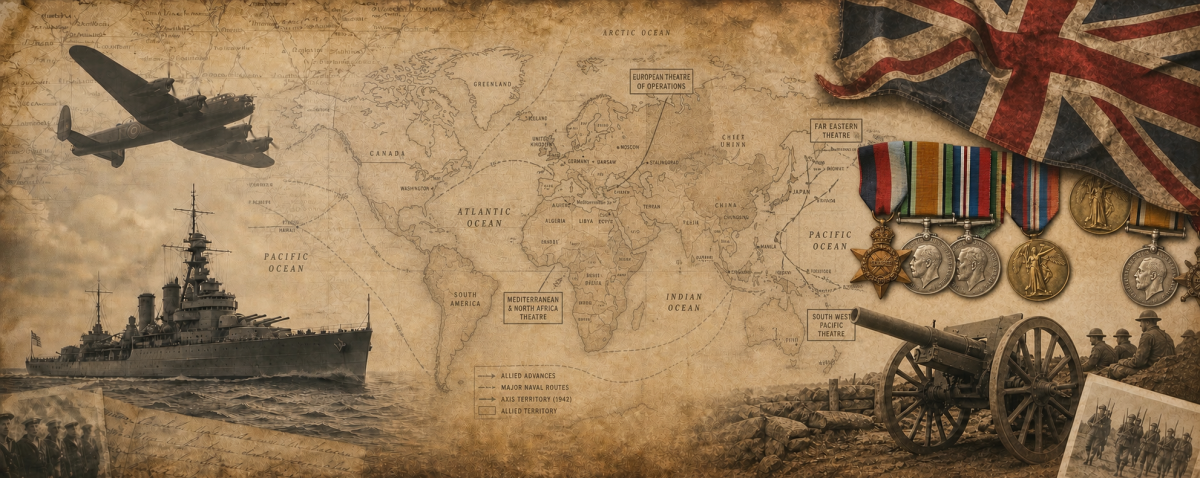

Sergeant Frederick James Hulse (service number 2630) served with the 1st Battalion, Rifle Brigade (The Prince Consort’s Own), and died of wounds in France on 15 April 1915, aged twenty‑five.[file:146][web:147][web:150]
He is buried in Bailleul Communal Cemetery, Nord, France, in grave J. 69, a burial ground closely associated with the casualty clearing stations that served the Ypres and Armentières sectors.[file:146][web:153][web:159]
Early Life and Family
Frederick James Hulse was born in Ospringe, Kent, in late 1889, his birth registered in the Faversham district in the 1889 December quarter (volume 2A, page 853). He was baptised on 8 December 1889 at Ss Peter & Paul, Ospringe, confirming his family’s roots in this small parish on the outskirts of Faversham.[file:146]
He was the son of James Hulse and Mary Ann (née Pilcher). In the 1891 census he appears as a one‑year‑old at Painters Forstal, Ospringe, recorded as a son in the household. By 1901 the family were living at 11 Abbey Place, Faversham Within, where Frederick, aged eleven, remained listed as a son, suggesting a stable childhood in and around Faversham.[file:146]
The individual report records no spouse, no shared facts with a partner, and no children, indicating that Frederick did not marry and left no direct descendants. By the time of his death his parents’ address is given as 60 Park Road, Faversham, Kent, and CWGC records note him as “Son of James and Mary Hulse, of 60, Park Rd., Faversham, Kent.”[file:146][web:150]
From Painters Forstal and Abbey Place in Faversham, Frederick Hulse went on to serve as a sergeant in one of the British Army’s elite rifle regiments.
Reconstructed from birth, baptism, and census records
Service with the Rifle Brigade
Frederick enlisted in the Rifle Brigade (The Prince Consort’s Own) and served between about 1908 and 1915, rising to the rank of Sergeant. His service number, 2630, and rank indicate several years of pre‑war or early‑war service, during which he would have gained experience in the regiment’s distinctive light infantry and rifleman traditions.[file:146][web:147]
The Rifle Brigade was a long‑standing regular infantry regiment established in the early nineteenth century to provide sharpshooters, scouts, and skirmishers for the British Army. By the First World War its battalions were serving across the Empire and on the Western Front, where their training in open‑order tactics and marksmanship remained highly valued in trench warfare conditions.[web:151]
Frederick’s individual report lists his sub‑unit as the 1st Battalion, placing him in one of the regiment’s regular battalions. Although the report does not spell out the battalion’s full war history, associated casualty records confirm him as “Serjeant 2630, Rifle Brigade, 1st Bn.,” and note that he died of wounds, tying his story to the battalion’s early service on the Western Front in 1914–1915.[file:146][web:147][web:150]
As a sergeant of the 1st Rifle Brigade, Hulse would have led men in the front‑line trenches and been responsible for discipline, training, and example under fire.
Summary based on Rifle Brigade NCO roles
The 1st Battalion in Early 1915
By early 1915, the 1st Battalion, Rifle Brigade, was part of the British Expeditionary Force on the Western Front, serving in Flanders in sectors such as Armentières, Ploegsteert, and the approaches to the Ypres Salient. The battalion was engaged in routine trench duty—holding, improving, and patrolling the line—interspersed with raids and local attacks.[web:152][web:158]
Although the battalion would later see major actions such as Neuve Chapelle and the Battle of Aubers Ridge in May 1915, in April it was already taking casualties from shellfire, sniping, and small‑scale engagements. The presence of a large number of casualty clearing stations at Bailleul, and the concentration of burials from this period in Bailleul Communal Cemetery, show that this area served as the main medical and burial hub for wounded from the nearby front‑line sectors.[web:153][web:159][web:161]
Frederick’s burial at Bailleul Communal Cemetery, together with the Faversham News note that he “died of wounds,” indicates that he was probably wounded in the line—likely somewhere in the Flanders front held by his battalion—and evacuated back to a casualty clearing station at Bailleul, where he succumbed to his injuries on 15 April 1915.[file:146][web:150][web:159]
Hulse did not fall in a named “big battle” but as so many did, died of wounds after the daily grind of trench warfare in the Flanders sector.
Context from Bailleul casualty and battalion histories
Circumstances of Death
The Commonwealth War Graves transcription for Frederick James Hulse records him as: “Serjeant 2630, Rifle Brigade, 1st Bn., died 15/04/1915, age 25, grave J. 69, Bailleul Communal Cemetery, Nord. Son of James and Mary Hulse, of 60, Park Rd., Faversham, Kent.” A Faversham News extract from 7 August 1915 describes him as having “died of wounds.”[web:150][file:146]
Although no surviving record in this summary gives the exact engagement in which he was wounded, the timing and location indicate that his injuries were sustained in front‑line service with the 1st Battalion Rifle Brigade in the Flanders area, with Bailleul serving as the rear medical centre where his life ended. His death fits the pattern of many Regular Army NCOs who fell in the early trench‑war years of 1915.[file:146][web:153][web:159]
Burial and Commemoration
Frederick is buried in Bailleul Communal Cemetery, Nord, France, in grave J. 69. Bailleul, occupied by British forces from October 1914, became an important railhead, air depot, and hospital centre, with several casualty clearing stations (including Canadian and Australian units) based there for extended periods, receiving wounded from Armentières, the Forest of Nieppe, Ploegsteert, and other nearby sectors.[web:153][web:159][web:161]
The communal cemetery itself contains 610 Commonwealth burials from the First World War, of which 575 are identified. When the original plots were filled, the Bailleul Communal Cemetery Extension was opened, but Frederick’s grave lies in the earlier communal cemetery area, reflecting his death in the spring of 1915, when the first wave of BEF casualties was still being buried close to town centres.[web:153][web:159]

His CWGC casualty record can be viewed here: CWGC casualty details for Serjeant F. J. Hulse. He also appears in local compilations of Rifle Brigade casualties and in the Imperial War Museum’s “Lives of the First World War” database.[file:146][web:147][web:148]
Medals and Recognition
The individual report records that Frederick was entitled to the 1914/15 Star, the British War Medal, and the Victory Medal, reflecting his early service in the Western European theatre and subsequent war‑long contribution. As a man who died of wounds, his family would also have received the Memorial Plaque and Scroll issued to next of kin of those who fell.[file:146][web:150]
His inclusion in specialist lists such as A Street Near You’s Rifle Brigade casualty pages and the IWM’s Lives of the First World War ensures that his details are preserved beyond the bare entry on his headstone.[web:147][web:148]
Family and Legacy
Frederick left no wife or children, but his parents James and Mary Hulse of 60 Park Road, Faversham, and their wider family would have carried the burden of his loss. For them, Bailleul Communal Cemetery and the local newspaper notice were the main public markers of his sacrifice.[file:146][web:150]
His story forms part of the broader history of the Rifle Brigade’s professional soldiers who bore much of the burden of the war’s early years. For family historians, resources such as Ancestry, the CWGC, A Street Near You’s Rifle Brigade casualty list, and the IWM’s Lives of the First World War entry for Frederick James Hulse allow his life—from his baptism at Ospringe to his grave at Bailleul—to be placed within a wider regimental and community story.[file:146][web:147][web:148]
Sources
- Individual report for Sergeant Frederick James Hulse (family tree compilation, including birth and baptism at Ospringe; census addresses at Painters Forstal and Abbey Place, Faversham; parents James Hulse and Mary Ann Pilcher; service with 1st Battalion, Rifle Brigade; death on 15 April 1915; and burial at Bailleul Communal Cemetery, grave J. 69).[file:146]
- Commonwealth War Graves Commission – casualty record for “HULSE, FREDERICK JAMES”, Serjeant 2630, 1st Bn., Rifle Brigade (The Prince Consort’s Own), Bailleul Communal Cemetery, grave J. 69: CWGC casualty details.[file:146]
- Faded Genes / CWGC PDF transcript for Frederick James Hulse – includes CWGC text, age, parents’ address at 60 Park Road, Faversham, and note “died of wounds”: CWGC Frederick James Hulse transcript.[web:150]
- Rifle Brigade (The Prince Consort’s Own) – regimental history providing background on the regiment’s role as a rifle and light infantry unit in the British Army: Rifle Brigade (The Prince Consort’s Own).[web:151]
- Rifle Brigade casualties – A Street Near You regimental casualty listing, used to corroborate battalion, rank, and general operational context: Rifle Brigade – First World War casualties.[web:147]
- Bailleul Communal Cemetery (Nord, France) – background on the cemetery and its role as a burial ground for casualties from nearby casualty clearing stations: Bailleul Communal Cemetery – Webmatters and Bailleul Communal Cemetery – Remembering the Fallen.[web:153][web:159]
- Bailleul casualty context – Grandad’s War and related resources summarising the use of Bailleul as a medical and burial centre for wounded from Armentières, Ploegsteert, and the Ypres sector (used for medical/operational context rather than specific biography details): Bailleul – Grandad’s War.[web:161]
- Imperial War Museum “Lives of the First World War” and surname/unit searches for “Hulse” and “Rifle Brigade” – used to cross‑check spelling, unit, and commemoration details: IWM Lives – Hulse surname search; IWM Lives – Rifle Brigade unit search.[web:148][web:149]