
Harry Luckhurst: A Detailed Biography
Early Life and Family
Harry Luckhurst was born on 7 November 1892 at Ashford, Kent, the son of Harry (often recorded as Henry) Luckhurst and Sarah (Sally) Luckhurst, née Young.[1] His parents lived in Beaver Road, South Ashford, an area that was expanding rapidly at the turn of the twentieth century as the town grew with the railway and associated trades.[1] Harry grew up in a working‑class household typical of the period, in which steady employment and the prospect of service, either military or industrial, shaped the lives of young men.
By the time of the 1901 census Harry was living with his parents at 71 Beaver Road, Ashford, where he was recorded as their eight‑year‑old son.[1] A decade later, in 1911, the family home was at 168 Beaver Road, and Harry, aged eighteen, was described as a bricklayer, reflecting the building boom that accompanied Ashford’s development as a railway and commercial centre.[1] He was educated at Ashford Council School, a state elementary school established to provide basic education for local children, and this schooling would have equipped him with the literacy and numeracy that later enabled him to serve as a signaller in the Army.[1]
Harry’s mother, Sarah, was the daughter of William Young, and De Ruvigny’s Roll of Honour specifically notes his parentage, underlining the pride the family took in his service and sacrifice.[1] The family’s address is consistently given as 168 Beaver Road, South Ashford, co. Kent, in both Commonwealth War Graves Commission and memorial register entries, showing that this remained the family home throughout and after the war.[1] Harry did not marry and had no children, so his immediate legacy within the family line is carried through his parents and extended relatives.[1]
Military Service
Harry enlisted in the Territorial Force on 3 September 1914, soon after the outbreak of the First World War, joining the 5th (Territorial) Battalion, The Buffs (East Kent Regiment).[1] His service number was T/1638, and he rose to the rank of Corporal, a non‑commissioned rank indicating both experience and responsibility within his company.[1] De Ruvigny records him specifically as a signaller, a role requiring reliability and technical skill in handling visual and telephonic communications under fire.[1]
The 1/5th (Weald of Kent) Battalion, The Buffs, formed at Ashford on 4 August 1914 as part of the Kent Brigade of the Home Counties Division, moving initially to Dover, Canterbury and Sandwich for home defence duties.[1][2] On 30 October 1914 the battalion embarked for India from Southampton when the Home Counties Division was broken up, serving there as part of the Indian garrison.[1][3] In December 1915 the battalion landed at Basra in Mesopotamia and joined the 35th Indian Brigade of the 7th (Meerut) Division, becoming part of the force assembled to relieve the besieged British and Indian garrison at Kut‑el‑Amara.[1][4]
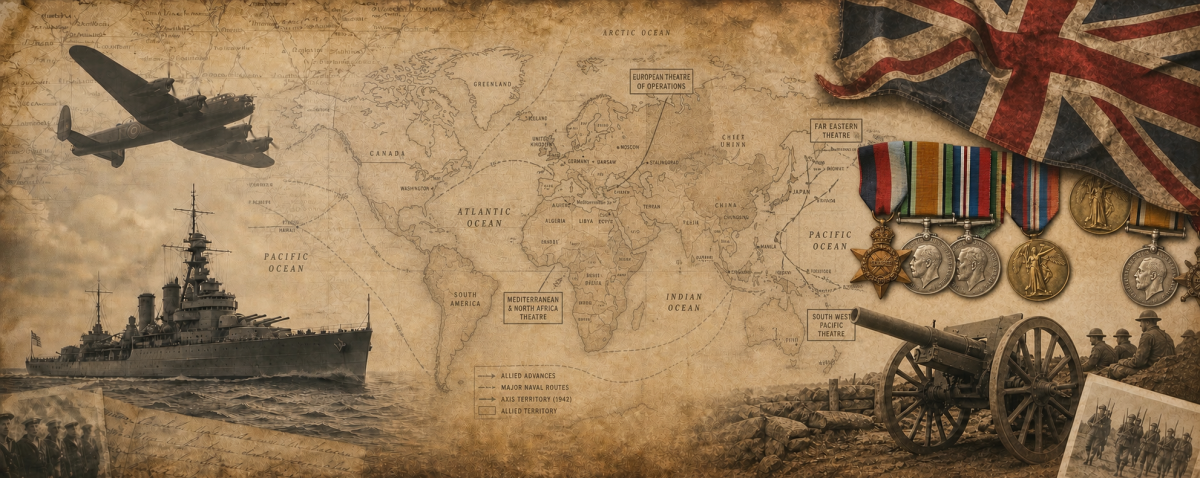
Harry’s individual report records his overseas service as between 3 September 1914 and 7 January 1916 in the “Asiatic Theatres”, with deployment overseas (to Mesopotamia via India) on 9 December 1915.[1] The 1/5th Buffs were quickly drawn into the hard fighting along the River Tigris, where British‑Indian forces attempted to break through strong Ottoman positions in difficult terrain with limited intelligence and logistical support.[4] Harry qualified for the 1914–15 Star, British War Medal, Victory Medal and the Memorial Death Plaque, reflecting both his early war service and ultimate sacrifice.[1]
Circumstances of Death
Corporal Harry Luckhurst was killed in action on 7 January 1916 during the Mesopotamian campaign, at or near Sheikh Saad on the Tigris, during operations connected with the relief of Kut‑el‑Amara.[1] His individual report summarises his death as “Killed in Action – Mediterranean Expeditionary Force” at Sheikh Saad, Mesopotamia, while serving with the 5th Battalion, The Buffs (East Kent Regiment).[1] The Commonwealth War Graves Commission entry confirms his age as 23 and notes his parents and address, anchoring his loss firmly to the Ashford community.[1][5]
De Ruvigny’s Roll of Honour provides a vivid account from a comrade, explaining that during the advance at Sheik Said a shrapnel shell burst, killing the Adjutant, wounding the Colonel, killing Corporal Luckhurst and also killing a private.[1] This description aligns closely with the battalion war diary entry for 7 January 1916, which records “D” Company returning from outpost duty at 6 a.m., artillery fire starting at 8 a.m., a major engagement throughout the day, heavy casualties, and the deaths of the Adjutant and other officers with the Colonel and others wounded.[1] The National Army Museum’s overview of the Mesopotamia campaign notes that on 6–8 January 1916 British forces launched costly attacks near Sheikh Saad in an effort to break through to Kut, suffering heavy casualties in both infantry and supporting units.[4]
These operations formed part of the wider and ultimately unsuccessful effort to relieve the besieged garrison at Kut‑el‑Amara, an episode later described as one of the British Empire’s worst defeats of the war, with relief forces incurring around 23,000 casualties.[4][6] Harry’s death on 7 January 1916 therefore occurred at a critical moment in this campaign, during intense fighting in which his battalion advanced under heavy artillery and small‑arms fire in difficult flat terrain, with little cover and imperfect reconnaissance.[1][4] As a signaller and corporal, he would have been near the command elements of his company or battalion, which accords with the report that the same shell that killed him also struck the Adjutant and wounded the Colonel.[1]
Burial and Commemoration
Although De Ruvigny states that Harry was buried at Kut‑el‑Amara, the official concentration of graves and the Commonwealth War Graves Commission now record his grave in Amara War Cemetery, Iraq, plot XXXI. D. 1.[1][5] The CWGC entry names him as Corporal Harry Luckhurst, T/1638, 5th Bn., The Buffs (East Kent Regiment), son of Harry and Sarah Luckhurst of 168 Beaver Road, Ashford, Kent, confirming the key details gathered from family and regimental sources.[1] The Amara War Cemetery contains thousands of burials from the Mesopotamia campaign, many of them moved from smaller battlefield cemeteries after the war, and thus serves as a central place of remembrance for those who fell on the Tigris front.[4]
Harry is also commemorated on online memorials that make his story accessible to a wider audience. A Find‑a‑Grave entry (Memorial 56325868) records his birth on 7 November 1892 and death on 7 January 1916 at Al‑Amarah, Iraq, again linking his identity, dates and place of service.[1][7] In addition, the “Lives of the First World War” project and other digital databases list him among the men of The Buffs, preserving service details such as his rank, unit and service number for researchers and descendants.[8][5] These commemorations complement the printed memorials in De Ruvigny’s Roll of Honour and the War Graves Commission’s registers, ensuring that his name is preserved across multiple formats and locations.[1]
Legacy
Within his family and local community, Harry’s legacy is that of a young Ashford bricklayer who volunteered early, served diligently as a Territorial signaller, and died in one of the most difficult and costly campaigns of the war.[1] The consistent recording of his parents’ names and address in official records suggests that his relatives remained in the same house at 168 Beaver Road for many years, bearing the memory of their son who never returned from Mesopotamia.[1] Because he did not marry or have children, his story has been preserved largely through such records, family memory, and the interest of later genealogists and historians.
At a wider level, Harry represents the sacrifice of the 1/5th Buffs and other Territorial units that were sent far from Kent to fight in harsh climate and terrain in Iraq.[1][4] Modern summaries of the regiment’s history emphasise the battalion’s transfer from home defence to India and then Mesopotamia, underlining how local volunteer units found themselves involved in imperial campaigns far beyond their expectations.[1][2] Harry’s medals – the 1914–15 Star, British War Medal, Victory Medal and Memorial Plaque – symbolise both his service and the broader contribution of thousands of ordinary soldiers who endured the hardships of the Mesopotamian front.[1]
Contemporary interest, reflected in online forums and regimental histories, often highlights Corporal Harry Luckhurst as an example of the “particularly unfortunate soldier” of the Buffs who died so soon after arriving in theatre, scarcely a month after landing at Basra.[9][10] Through continued research, family history projects, and digital commemoration, his life and service continue to be recognised, ensuring that his story remains part of the collective memory of the Great War and of Ashford’s local heritage.[1][5]
Sources
[1] Individual-Report-for-Harry-Luckhurst.pdf
[2] Buffs (East Kent Regiment) – The Long, Long Trail https://www.longlongtrail.co.uk/army/regiments-and-corps/the-british-infantry-regiments-of-1914-1918/buffs-east-kent-regiment/
[3] Buffs (Royal East Kent Regiment) – Wikipedia https://en.wikipedia.org/wiki/Buffs_(Royal_East_Kent_Regiment)
[4] Mesopotamia campaign | National Army Museum https://www.nam.ac.uk/explore/mesopotamia-campaign
[5] Friday 7 January 1916 – First World War Casualties https://astreetnearyou.org/date/1916/01/07
[6] Siege of Kut – Wikipedia https://en.wikipedia.org/wiki/Siege_of_Kut
[7] Corporal Harry Luckhurst (1892-1916) – Memorials https://www.findagrave.com/memorial/56325868/harry-luckhurst
[8] Search for “The Buffs (East Kent Regt.)” in unit | Lives of the First … https://livesofthefirstworldwar.iwm.org.uk/searchlives/field/unit/The%20Buffs%20(East%20Kent%20Regt.)/filter
[9] 1/5th Buffs (East Kent Regiment) – Great War Forum https://www.greatwarforum.org/topic/73148-15th-buffs-east-kent-regiment/
[10] The Buffs – The Royal East Kents – Soldiers and their units https://www.greatwarforum.org/topic/12626-the-buffs-the-royal-east-kents/
[11] Private William Jay | Soldiers’ Stories – First World War in Focus https://ww1.nam.ac.uk/stories/private-william-jay/
[12] 1st/4th hampshire regiment – Documents – Great War Forum https://www.greatwarforum.org/topic/250701-1st4th-hampshire-regiment/
[13] Kut el Amara – Lives of the First World War https://livesofthefirstworldwar.iwm.org.uk/story/100633
[14] East Kent Militia – Wikipedia https://en.wikipedia.org/wiki/East_Kent_Militia
[15] Kut 1916: How the Ottomans defeated the British army https://interactive.aljazeera.com/ajt/2016/kutul-amare/en/kut-siege.html
[16] Men of the 1/5th Battalion of the Buffs (East Kent Regiment) passing … https://www.facebook.com/ww1incolour/posts/men-of-the-15th-battalion-of-the-buffs-east-kent-regiment-passing-over-the-jebel/1938285016315341/
[17] Hi would anyone know which battle my great grandfather died in … https://www.facebook.com/groups/436081820298097/posts/1249133155659622/
[18] Hampshire Regiment – The Long, Long Trail https://www.longlongtrail.co.uk/army/regiments-and-corps/the-british-infantry-regiments-of-1914-1918/hampshire-regiment/
[19] WW1 Home News in January 1916 – Lynsted with Kingsdown Society http://lynsted-society.co.uk/research_ww1_home_news_1916_01.html
[20] [PDF] Buffs (Royal East Kent Regiment) https://www.queensregimentalassociation.org/media/Buffs%20(Royal%20East%20Kent%20Regiment).pdf
[21] A Medical Meeting At Kut-El-Amara – jstor https://www.jstor.org/stable/20306171
Discover more from Mike's Cousins
Subscribe to get the latest posts sent to your email.