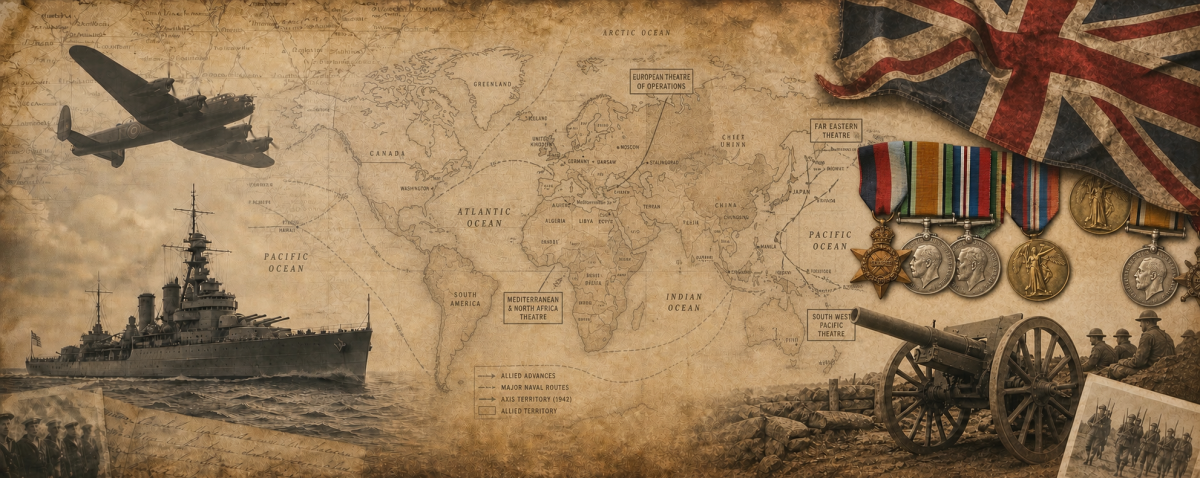

Montgomery Crowe was born on 13 August 1890 in Clones, County Monaghan, the son of Montgomery Crowe and Ellen Stringer. His early life was shaped by the small-town world of south Ulster, where he appears in the 1901 census in Whitehall Street as a scholar, and in 1911 as a domestic servant and groom. These details suggest a boyhood and early adulthood spent in ordinary labour and service, before military enlistment took him far from Monaghan. [1]
He married Susan Maguire in Clones on 18 April 1915, and the family record notes one child, Thomas Joseph (Michael) Crowe. Crowe’s life thus combined the familiar responsibilities of a young married man with the upheaval of military service in wartime. He was physically small, at 5 feet 3¼ inches, with brown eyes and brown hair, and his surviving records preserve the precise administrative traces of a soldier whose later life was marked by illness and hardship. [1]
He was a married man from Clones whose life was taken not by battle, but by the long aftermath of military service and illness.
Early Life and Family
Crowe’s family came from Clones, a market town in County Monaghan, and the early census records place him in Whitehall Street before adulthood. The family information gives his father’s name as Montgomery Crowe and his mother as Ellen Stringer, linking him to a local household that appears in the surviving civil and military records. His progression from scholar to domestic servant and groom reflects the life course of many working-class Irish boys who entered service work at an early age. [1]
By 1915 Crowe had established his own family through marriage to Susan Maguire. The birth of their son Thomas Joseph, also recorded as Michael in the family summary, gave him a direct family stake in the future that was soon disrupted by war and illness. Like many men from Ireland in the early twentieth century, he was drawn into a wider imperial military system at a time when enlistment could carry a young husband from the local street to distant theatres of war. [2][1]
Military Service
Montgomery Crowe enlisted in the Royal Irish Fusiliers on 2 August 1909 at Cavan and served as a Private, service number 2421. He was later promoted to Corporal on 31 December 1915, indicating that he had earned some degree of trust and responsibility within the battalion. His military medals included the 1914–15 Star, Victory Medal, British War Medal, and Silver War Badge, the last issued on 26 February 1918. [1]
The family record states that he was with the 4th Battalion, Princess Victoria’s (Royal Irish Fusiliers), and that he was later posted to the 6th Battalion in Salonika on 4 November 1915. He joined the unit in the field at Calhafi, Serbia, on 16 November 1915 and remained with the Salonica Force until 26 December 1916. This means that Crowe’s military career was tied not only to Ireland but also to one of the more difficult and less familiar theatres of the First World War. [3][1]
Unit Context at Time of Death
At the time of Crowe’s death in July 1918, the Royal Irish Fusiliers had already spent years in the Macedonian and Salonika theatre, where British and Allied forces were engaged against Bulgaria and its allies. The Salonika front was known for its severe climate, rough terrain, and the constant strain of disease, especially malaria, as much as for fighting. The 5th and 6th Battalions of the Royal Irish Fusiliers had served in that theatre from 1915 and were part of the wider Irish Division’s long commitment there. [4][2][3]
Crowe’s own military notes show that he was in hospital from 18 February to 3 April 1916 for a haematoma of the right forearm, later transferred to England from Malta aboard the Grantully Castle on 15 December 1916, and finally discharged at Cork on 27 February 1918 as no longer physically fit. These details indicate that his final months were shaped less by combat than by the continuing consequences of service, injury, and illness acquired in wartime conditions. The Silver War Badge confirms that he left the Army due to ill health or incapacity rather than through a normal completion of service. [1]
The Salonika theatre punished soldiers as much with disease and exhaustion as with bullets.
Circumstances of Death
Montgomery Crowe died on 19 July 1918 in Clones, County Monaghan, from tuberculosis. The record makes clear that his death occurred after he had been discharged from military service, and that it was the result of illness rather than battlefield action. In this respect he belongs to the large but often less visible group of wartime veterans whose deaths came home with them after service abroad. [5][1]
Tuberculosis was a devastating disease in the early twentieth century, especially among men weakened by military strain, poor conditions, and exposure to illness in overseas theatres. Crowe’s service in Salonika and his subsequent invaliding to England and discharge suggest a prolonged decline in health before his death in Clones. His story therefore reflects the hidden cost of war: not only those killed outright in battle, but those who survived the front only to die later from the lasting damage of service. [1]
Burial and Commemoration
The family record states that Montgomery Crowe is commemorated on the Brookwood 1914–1918 Memorial. Brookwood memorialises Commonwealth casualties who died in the United Kingdom and Ireland without a known grave, and it is the appropriate place of commemoration for men whose deaths occurred away from a formal battlefield burial. As a casualty who died in Clones after discharge, Crowe belongs to that category of wartime dead remembered through memorial inscription rather than cemetery plot. [6][5][1]
Brookwood’s significance lies in its role as a national memorial for those whose graves were lost, unrecorded, or never formally recognised. For Crowe’s family, the memorial provides a place of official remembrance even though his death took place at home in County Monaghan. His commemoration there ensures that his name stands among those of other servicemen who died of disease, wounds, or later complications of war in the years 1914 to 1918. [5][6][1]
Legacy
Montgomery Crowe’s life shows how the First World War reached beyond the trenches and into the homes and families of Ireland. He was not killed in action, yet his military service in the Royal Irish Fusiliers, his time in Salonika, and his later struggle with tuberculosis all form part of the same wartime story. As a married man and father, his loss would have been felt directly within the Crowe household in Clones. [3][1]
His biography also helps recover the history of the Salonika campaign, a theatre often overshadowed by the Western Front but important to the wider Allied war effort. The Royal Irish Fusiliers served there in harsh conditions, and Crowe’s experience reflects the combination of service, sickness, and physical breakdown that affected so many men in that front. Remembering him allows his family history to connect with the wider military history of Ireland’s contribution to the Great War. [2][3][1]
Sources and Further Reading
- Commonwealth War Graves Commission: Montgomery Crowe
- Brookwood 1914–1918 Memorial | CWGC
- Royal Irish Fusiliers: Battle Honour Macedonia 1915–17
- Royal Irish Regiment: On This Day posts and related Salonika material
- Wartime Memories Project: 6th Battalion, Royal Irish Fusiliers in the Great War
Sources
[1] Individual-Report-for-Montgomery-Crowe.pdf https://ppl-ai-file-upload.s3.amazonaws.com/web/direct-files/attachments/141549598/0fe972a0-d90c-4119-ad48-ef0a2cb1035a/Individual-Report-for-Montgomery-Crowe.pdf?AWSAccessKeyId=ASIA2F3EMEYEV27ZDYLU&Signature=FJdw%2BRKGrrLZVFWEbrunMgLIMtI%3D&x-amz-security-token=IQoJb3JpZ2luX2VjEIP%2F%2F%2F%2F%2F%2F%2F%2F%2F%2FwEaCXVzLWVhc3QtMSJIMEYCIQDgTdq28v1dZT%2BbJdu88tbNcHL%2FdA301FK5YaWyW0jE5wIhAKW9UOBVvS4%2BItm8pywPNVDS230WBC4qgVEoqHAq1K7UKvMECEsQARoMNjk5NzUzMzA5NzA1IgyUszHy0wq3ADGmcYMq0ATs8n%2FKB%2FwAfMxgG1g4xT9nEVzApZy49Wlm3of%2BnIriU8K7D0R4PUNDkTWdZl%2BGTa%2Fk%2BKEm19unE4FeB0l13u5a8bUMgBuAx8W%2BeOvy%2BxMokVa7uDLyuDga%2FMVEf47krQvtecTTdoC1rPIfoLpWpA7iM0bVDm%2BlJTux49%2Bt8VCj9FbXEM9ZmWA%2BNLEtSrGpKqYW%2Fd3rAR2XjCjYPWOlpYcqeUG5iZRzQKygNZWMdbjvKGicQ1FbFZhgMp37bQG15WEWOrS81qAvLkqTW9EcvJduW3H9xNwvLtY5zOdkOsLFCTx1oDKD6LU60TS8NqzEaMx5gxqJV9i6wFZ5%2Fr7OWrgQYf2AKy8WJ0PNUTJeJUPxRXJIP1OmXlD8lNoHv%2Fs%2FOuUq2BoHrQFiFK8fkE5ECTVr96exnFRms4fLO3Ywohe%2BUjoyLkG0rmr6ZrzBVkgetdlv5QmHGnHzDlwZXBo%2Bd3xu2wQHLS2cNY%2BOvTPQnS1C97o5tWB2b7sZkNHzS1eE4YchHFMcb3nEEtkpF2nhL39wA8WfTN5vt0Kibz3ObzDUfQQNW0hLjRurqZ9qdohnARpHkscDK4WyYKESZ%2BxGkVb%2FsOoDa0oLEw9GdKqKM3qdpj9RH6VmHYLzDGAprnCQFOTYS3HUtKcVXSDWyFxND5%2FY4PALKpajXtVc2UTrspkyI40l3NPwPSxFp%2FRFuBTU6ZuZNe5%2FLcusp3s%2FOTsXy5HbPhTZQu26phhCybCpWY4FRjpc4f%2FFC5Xzh8hfZ2X4hvlY9mQcYqdwxRzZLfRabidhMPG75NIGOpcBaHzmNh9YqaQX4dsI9jCpIIQBb%2B5ziQdOABvlcJ6llabI4E3JvPfT3NGCdLkR6KeFn6akh%2Fj2SllFtnLkUVnEK3VIMmCyq6n6BW23kENCFvnACzN0s%2B9tZSBGVKspQOlnqLFiWxzrKQmQF5Ty%2FU1UK7t%2FXkHkxPqGGvdayjIVQh1QAI%2BLOIAbAIAaNL1VlvLtOjZJAWMQLw%3D%3D&Expires=1784225979
[2] Royal Irish Fusiliers. https://www.ciroca.org.uk/first-world-war-links/infantry-regiments-1914-18/royal-irish-fusiliers/
[3] Battle Honour MACEDONIA 1915-17 https://www.royal-irish.com/events/battle-honour-macedonia-1915-17
[4] Gallipoli to Salonika, 10th (Irish) Division – Virtual Military Gallery http://www.royal-irish.org/events/royal-irish-fusiliers-arrive-salonica-10th-irish
[5] Brookwood 1914-1918 Memorial | Cemetery Details | CWGC https://www.cwgc.org/visit-us/find-cemeteries-memorials/cemetery-details/4007318/brookwood-1914-1918-memorial/
[6] Brookwood graves: ‘Forgotten’ fallen of world wars remembered https://www.bbc.co.uk/news/uk-england-surrey-26442541
[7] Princess Anne unveils new memorial for lost WWI heroes in Brookwood https://www.bbc.co.uk/news/articles/cgk67l6zjg7o
[8] New Commonwealth War Graves Commission memorial at Brookwood cemetery https://the-past.com/news/new-commonwealth-war-graves-commission-memorial-at-brookwood-cemetery/
[9] 6 RIR into the Line, Macedonia http://www.royal-irish.com/events/6-rir-into-the-line-macedonia
[10] 6th Battalion, Royal Irish Fusiliers in the Great War https://wartimememoriesproject.com/greatwar/allied/battalion.php?pid=6334
[11] Brookwood memorial unveiled as more WW1 names emerge https://www.bbc.com/news/uk-england-surrey-34718840
[12] Why a new memorial was needed at Brookwood https://www.youtube.com/watch?v=FOEG6bcD5vM
[13] Royal Irish Fusiliers https://en.wikipedia.org/wiki/Royal_Irish_Fusiliers
[14] Princess Victoria’s (Royal Irish Fusiliers) During the First World … https://www.nickmetcalfe.co.uk/the-evolution-of-the-regular-and-service-battalions-of-princess-victorias-royal-irish-fusiliers-1914-1918-part-1/
[15] Browse our ‘On This Day’ posts https://www.royal-irish.com/explore/onthisday?explore-onthisday-day=&explore-onthisday-month=06&explore-onthisday-submit=
[16] Brookwood Military Cemetery – The Memorials, Past & Present https://thebignote.com/2024/01/05/brookwood-military-cemetery-the-memorials-past-present/
Discover more from Mike's Cousins
Subscribe to get the latest posts sent to your email.