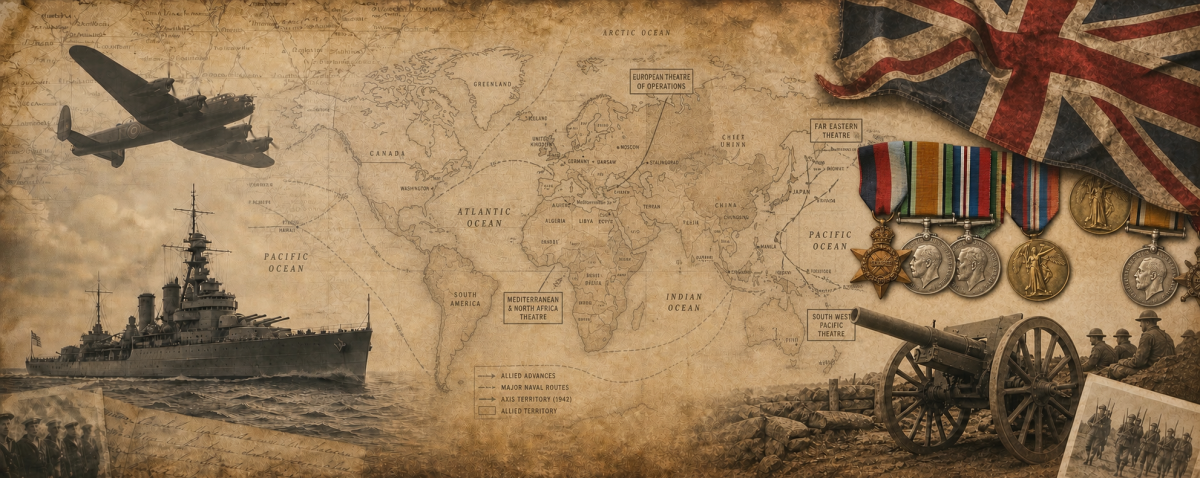

Private William Henry Raines (service number 3145) served with the Australian Imperial Force, initially with the 10th Reinforcements of the 14th Battalion and later with the 46th Battalion, Australian Infantry, A.I.F. He died of wounds in France on 20 April 1917, following the First Battle of Bullecourt.[file:179][web:183][web:188]
He is buried at St. Sever Cemetery Extension, Rouen, in Plot O. IX. G. 3, one of thousands of soldiers who died in the great hospital centre at Rouen and were laid to rest there.[file:179][web:182][web:189]
Early Life and Family
William Henry Raines was born on 1 February 1896 in Fitzroy, Victoria, Australia, his birth registered under number 27776. He was the son of Henry Hammond Raines and Margaret Elizabeth (née Morrison), and was raised in North Fitzroy, a suburb of Melbourne.[file:179][web:180]
At the time of his enlistment he was single, working as a labourer, and recorded as Presbyterian. His next of kin was his mother, Mrs M. Raines, of 66 Scotchmer Street, North Fitzroy, Melbourne—an address later repeated in Australian embarkation and Roll of Honour records.[file:179][web:183]
The Virtual War Memorial Australia entry for his father notes that William was the eldest son of Henry Hammond Raines and confirms that he died of wounds at the age of twenty‑one, and is buried at St Sever Cemetery Extension, Rouen. This reinforces the family’s personal loss and the fact that the Raines family story spans both Australia and the Western Front.[web:180][file:179]
From Scotchmer Street, North Fitzroy, William Raines went from labourer to infantryman, joining the AIF at just twenty years of age.
Reconstructed from AIF enlistment and family records
Enlistment and the 14th Battalion
William enlisted in the Australian Imperial Force on 5 July 1915 at North Fitzroy, Victoria. His attestation papers record him as twenty years old, a labourer, single, with blue eyes, fair hair, and a height of 5 feet 7¾ inches.[file:179]
He was posted to the 10th Reinforcements of the 14th Infantry Battalion, part of the 4th Infantry Brigade. He embarked from Melbourne on 16 October 1915 aboard HMAT A17 Port Lincoln, bound for overseas service with the AIF.[file:179][web:184]
By the time he completed training and arrived in the theatre of war, the AIF was undergoing a major reorganisation in Egypt. Experienced men from Gallipoli units, including the 14th Battalion, were used to form new battalions for service on the Western Front, and William was among those transferred into the newly created 46th Battalion.[file:179][web:188]
Originally a reinforcement for the 14th Battalion, Raines became one of the 46th Battalion’s original ranks when the AIF doubled its strength in Egypt.
Based on AIF reorganisation in early 1916
The 46th Battalion on the Western Front
The 46th Battalion was formed in Egypt on 24 February 1916 as part of the expansion of the AIF. It drew experienced men from the 14th Battalion and new recruits from Victoria, with additional drafts from New South Wales and Western Australia.[file:179][web:188]
The battalion arrived in France on 8 June 1916 and soon entered the fighting on the Somme. Its first major battle came at Pozières in August, initially carrying ammunition for the 2nd Division’s attack and later holding captured positions under heavy bombardment. The 46th then rotated through front‑line, support, and reserve positions through the winter of 1916–17.[web:188][web:185]
The battalion later took part in major engagements at Bullecourt, Messines, and Passchendaele, and in 1918 fought at Dernancourt, Amiens, and in the Hindenburg outpost line battles. For William, however, the crucial episode was the First Battle of Bullecourt in April 1917, during which he suffered the wounds that led to his death.[file:179][web:185][web:188]
The 46th Battalion’s path from Pozières to Bullecourt was typical of the AIF on the Western Front: hard fighting, heavy losses, and long months in the trenches.
Summary from battalion and AWM unit histories
Bullecourt and the Wounding of Private Raines
The First Battle of Bullecourt on 11 April 1917 formed part of the wider Arras offensive and the British and Dominion attempts to breach the Hindenburg Line. The 46th Battalion, as part of the 12th Brigade, 4th Australian Division, was committed to this attack against heavily fortified German positions near the village of Bullecourt.[file:179][web:188][web:194]
The battalion initially achieved some success, breaking into sections of the Hindenburg Line, but came under intense artillery and machine‑gun fire and suffered very heavy casualties. Tanks failed to provide the expected support, wire was not fully cut, and German counter‑attacks eventually forced a withdrawal.[web:188][web:191]
The individual report states that Private Raines “died of multiple gunshot wounds received in action in France,” and the timing of his death—nine days after the battle—strongly suggests that his injuries were sustained during the Bullecourt fighting or associated actions in mid‑April 1917. He was evacuated to No. 6 General Hospital at Rouen, where he died on 20 April 1917.[file:179][web:183]
Badly wounded in the costly First Battle of Bullecourt, Raines was evacuated to Rouen, where he succumbed to his wounds nine days later.
Derived from casualty details and battalion timelines
Burial at St. Sever Cemetery Extension, Rouen
William was buried in St. Sever Cemetery Extension, Rouen, in Plot O. IX. G. 3. Rouen was a major Allied hospital centre throughout the war, with multiple general, stationary, and convalescent hospitals. As these hospitals filled the original St. Sever Cemetery, an extension was opened in September 1916 and used until 1920.[file:179][web:189][web:192]
The cemetery extension contains 8,348 Commonwealth burials from the First World War (ten unidentified), many of them men who died of wounds or illness after evacuation from the front. St. Sever Cemetery Extension later received further burials from the Second World War, including prisoners of war who died in German captivity.[web:189][web:186]

The Australian War Memorial’s Roll of Honour confirms his service details and burial: “Private 3145, 46th Australian Infantry Battalion, AIF; died of wounds 20 April 1917; cemetery or memorial details: St Sever Cemetery Extension, Haute‑Normandie, France; place of association: North Fitzroy, Melbourne.”[web:183]
His CWGC entry can be viewed at CWGC casualty details for Private W. H. Raines. There is also a memorial entry at Find a Grave memorial 56264810, which may include photographs and additional notes.[file:179][web:181]
Medals and Recognition
The individual report records that William was entitled to the British War Medal and Victory Medal, standard awards for AIF soldiers who served overseas in the First World War, and his family also received the Memorial Plaque and Scroll issued to the next of kin of those who died.[file:179]
His name appears on the Australian War Memorial Roll of Honour and is referenced in the Virtual War Memorial Australia entry for his father, ensuring that his service and sacrifice remain part of the documented story of Australian involvement on the Western Front.[web:180][web:183]
Family and Legacy
William did not marry and left no children. His loss fell most directly on his parents, Henry Hammond and Margaret Elizabeth Raines, and on his siblings in North Fitzroy. For them, his grave in distant Rouen and his inclusion on honour rolls served as the primary public markers of his short life.[file:179][web:180]
His story exemplifies the experience of many young Australians who left suburban lives and labouring work to enlist, train, and serve in the AIF’s battalions on the Western Front. For genealogists and family historians, resources such as the AIF Project, the Australian War Memorial, Virtual War Memorial Australia, and commercial sites like Ancestry allow his journey—from Fitzroy to Bullecourt and finally to Rouen—to be traced in detail and placed within the broader narrative of the 46th Battalion’s service.[file:179][web:183][web:188]
Sources
- Individual report for Private William Henry Raines (family tree compilation, including birth in Fitzroy, Victoria; parents Henry Hammond Raines and Margaret Elizabeth Morrison; enlistment and embarkation details; service with 10th Reinforcements, 14th Battalion and later 46th Battalion, AIF; cause of death – died of multiple gunshot wounds; death at No. 6 General Hospital, Rouen, on 20 April 1917; and burial at St. Sever Cemetery Extension, Rouen, Plot O. IX. G. 3).[file:179]
- Commonwealth War Graves Commission – casualty record for “RAINES, WILLIAM HENRY”, Private 3145, 46th Bn., Australian Infantry, A.I.F., who died on 20 April 1917, aged 21, buried at St. Sever Cemetery Extension, Rouen: CWGC casualty details.[file:179]
- Find a Grave – memorial for William Henry Raines (St. Sever Cemetery Extension, Rouen, with scope for headstone photographs and biographical notes): Find a Grave memorial 56264810.[web:181][file:179]
- Australian War Memorial – Roll of Honour entry for Private William Henry Raines, 46th Australian Infantry Battalion, confirming service number, unit, date of death, and burial at St. Sever Cemetery Extension, and listing North Fitzroy as place of association: AWM Roll of Honour: William Henry Raines.[web:183]
- The AIF Project – unit and reinforcement details for the 10th Reinforcements, 14th Battalion, and subsequent service with the 46th Battalion, including embarkation on HMAT A17 Port Lincoln from Melbourne on 16 October 1915 and later Western Front service: The AIF Project – 46th Battalion.[web:184]
- 46th Battalion histories – Australian War Memorial unit history and Wikipedia article giving formation in Egypt on 24 February 1916, composition from 14th Battalion veterans and new recruits, and service at Pozières, Bullecourt, Messines, Passchendaele and later battles: AWM – 46th Australian Infantry Battalion; 46th Battalion (Australia).[web:185][web:188]
- St. Sever Cemetery Extension, Rouen – cemetery descriptions and history, confirming its role as a major burial ground for casualties who died in the Rouen hospitals, with over 8,300 First World War burials: St. Sever Cemetery Extension – Remembering the Fallen and Veterans Affairs Canada description: St. Sever Cemetery Extension.[web:189][web:186]
- Virtual War Memorial Australia – entry relating to the Raines family, confirming William Henry as the eldest son of Henry Hammond Raines and recording that he died of wounds and is buried at St. Sever Cemetery Extension: VWMA – Raines family context.[web:180]
- Bullecourt campaign context – analyses of the First Battle of Bullecourt, highlighting the 4th Australian Division’s attack on 11 April 1917, heavy casualties, difficulties with uncut wire and tank support, and subsequent withdrawal, used to contextualise the wounding of Private Raines: Bullecourt April 1917; Bullecourt: AIF Divisions.[web:194][web:191]
Discover more from Mike's Cousins
Subscribe to get the latest posts sent to your email.