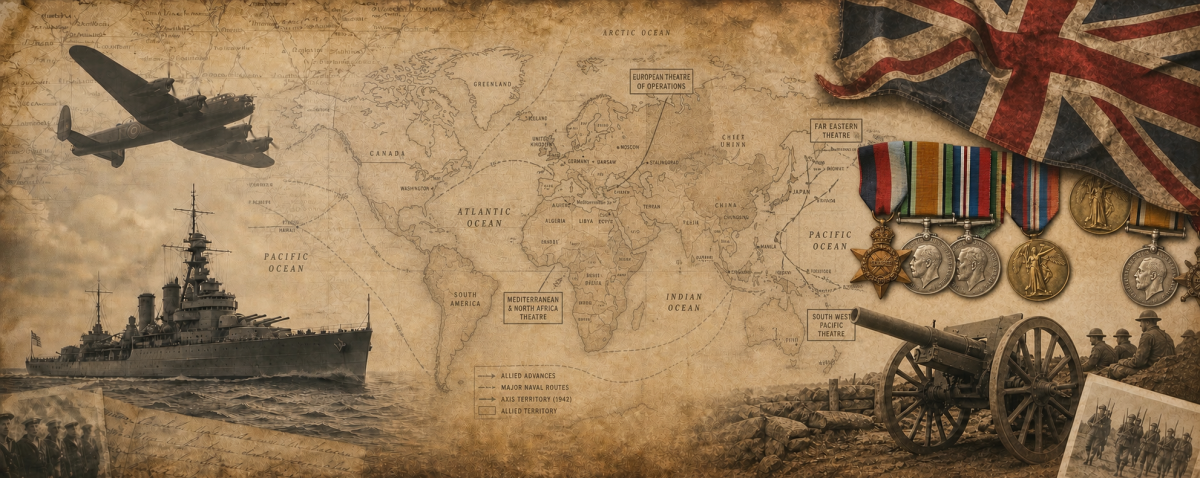

Guardsman Frederick Charles Maple (service number 18808) served with the 4th (Service) Battalion, Grenadier Guards, and died of scarlet fever at Tooting Hospital, Wandsworth, on 18 April 1915, before his battalion went overseas.[file:196][web:202]
He is buried in Holy Innocents Churchyard, Adisham, Kent, where his grave lies on the west boundary of the new ground, marked and recorded by the Commonwealth War Graves Commission.[file:196]
Early Life and Family
Frederick Charles Maple was born on 16 September 1893 in Nonington, Kent, his birth registered in the Eastry district in the December quarter of 1893 (volume 2A, page 903). He was baptised on 26 November 1893 at St Mary the Virgin, Nonington.[file:196]
He was the son of Charles Maple and Ada Sophia (née Ovenden). In the 1901 census he appears as a seven‑year‑old son in Nonington; by 1911 he was living at Woodlands, Adisham (via Dover), working as a house and garden boy in the household of Mary Eldridge and recorded as a seventeen‑year‑old single servant.[file:196]
The individual report records no spouse, shared marital facts, or children, indicating that Frederick did not marry and left no direct descendants. His closest family remained his parents and extended Maple–Ovenden relatives in the Nonington and Adisham area.[file:196]
From village life in Nonington and domestic work at Adisham’s Woodlands, Maple volunteered for the Grenadier Guards at the age of twenty‑one.
Reconstructed from birth, census, and 1911 employer records
Enlistment in the Grenadier Guards
The report records Frederick’s military service simply as “1915 in London, England,” with his rank given as Guardsman and his service number as 18808. He served in the 4th (Service) Battalion of the Grenadier Guards, a wartime battalion raised during the First World War.[file:196]
The Grenadier Guards – formally “The 1st or Grenadier Regiment of Foot Guards” – is the most senior infantry regiment of the British Army, with a lineage dating back to the 1650s. During the First World War it expanded from its peacetime establishment to include additional battalions, among them the 4th and 5th (Reserve) Battalions, to meet the demands of the Western Front.[web:204][web:205]
According to specialist research on the Grenadier Guards, the 4th Battalion was originally formed as a reserve battalion at Kensington in August 1914, moving shortly afterwards to Chelsea Barracks. On 14 July 1915 this unit was redesignated the 5th (Reserve) Battalion, and a new 4th Battalion was formed at Marlow, Buckinghamshire, which later served with the 3rd Guards Brigade, Guards Division, from August 1915.[web:202]
Maple belonged to the Grenadier Guards during their rapid wartime expansion, when new service battalions were created to feed the front‑line brigades in France and Flanders.
Summary of regimental expansion in 1914–15
The 4th (Service) Battalion in Early 1915
Frederick’s sub‑unit is given as “4th Battalion (Service), Grenadier Guards.” In early 1915, before the July redesignation, this battalion functioned primarily as a reserve and training formation in London, providing drafts of trained Guardsmen to the regiment’s front‑line battalions already serving on the Western Front.[file:196][web:202]
The Guards Division itself was only formed in August 1915, so in April 1915 the regiment’s additional battalions were still in the process of organising, equipping, and training. Guardsmen like Frederick would have been undergoing intensive drill, musketry, and field training in and around London barracks, while also being exposed to urban health risks such as infectious disease outbreaks.[web:204][web:205]
Frederick died before either incarnation of the 4th Battalion left for France, so his entire period of service was at home. Nonetheless, his status as a Guardsman of a wartime service battalion and his subsequent commemoration by CWGC place him firmly among those whose deaths in training and home service were recognised as war deaths.[file:196]
Although he never reached the front, Maple’s death as a Guardsman in a London military hospital meant his loss was counted among the regiment’s war dead.
Context from unit timelines and CWGC criteria
Circumstances of Death
Frederick died on 18 April 1915 at Tooting Hospital, Wandsworth, London, with the civil registration entry recorded in Wandsworth district (volume 1D, page 718, line 123). The cause of death is given in the report as scarlet fever, a serious infectious disease that was still often fatal in the early twentieth century.[file:196]
Tooting and the surrounding area contained several fever hospitals run by the Metropolitan Asylums Board, including the Fountain Hospital and the Grove Fever Hospital. Grove Hospital, completed in 1896 and opened in 1899, was purpose‑built for infectious diseases; it was later requisitioned as the Grove Military Hospital from November 1916 to 1919. In 1915 it functioned as a fever hospital receiving both civilian and, increasingly, military patients.[web:203][web:206]
Although the report describes the place of death simply as “Tooting Hospital,” contemporary sources show that the Tooting fever hospitals were the natural destination for soldiers with scarlet fever and other infectious diseases in the capital. Frederick’s death there illustrates the dangers faced by servicemen not only in battle but also from illness contracted during training and garrison duties.[file:196][web:203]
Hospitalised in Tooting with scarlet fever, Frederick Maple died in April 1915 – a reminder that disease claimed many soldiers’ lives before they saw combat.
Based on civil registration and Tooting hospital histories
Burial and Commemoration
Frederick was brought home to Kent and buried on 23 April 1915 in Holy Innocents Churchyard, Adisham. The burial register records his interment on the west boundary of the new ground, and this location is also noted in CWGC documentation.[file:196]

His Commonwealth War Graves Commission entry can be accessed at CWGC casualty details for Guardsman F. C. Maple. A further memorial entry is available at Find a Grave memorial 22757210, which may include photographs and headstone details.[file:196]
Medals and Recognition
The individual report records that Frederick was entitled to the 1914/15 Star, the British War Medal, and the Victory Medal, along with the Memorial Plaque, reflecting his recognised war service despite dying in the United Kingdom before overseas deployment. These awards would have been issued to his next of kin.[file:196]
His inclusion on the CWGC database and in regimental remembrance lists places him among the Grenadier Guards’ First World War dead, alongside comrades who fell in France and Flanders. He would also likely appear on local Rolls of Honour in Nonington or Adisham, though these are not detailed in the current report.[file:196][web:205]
Family and Legacy
Frederick left no wife or children, so his memory was carried chiefly by his parents, Charles and Ada Maple, and by his wider family in Nonington and Adisham. His grave in Holy Innocents churchyard gave them a local focus for mourning, unlike families whose relatives were buried overseas.[file:196]
His story adds a quieter but important dimension to the history of the Grenadier Guards in the Great War, showing how the regiment lost men not only in battles such as Loos, the Somme, and Passchendaele, but also in the barracks and hospitals of Britain. For family historians, sources such as Ancestry, CWGC, and Grenadier Guards unit histories help to place his life—from Nonington baptism to Adisham burial—within the broader narrative of the regiment’s wartime service.[file:196][web:202][web:205]
Sources
- Individual report for Frederick Charles Maple (family tree compilation, including birth and baptism at Nonington; census entries in Nonington and Adisham; employment as a house and garden boy at Woodlands, Adisham; enlistment and service in London; death from scarlet fever at Tooting Hospital, Wandsworth, on 18 April 1915; and burial at Holy Innocents Churchyard, Adisham, on the west boundary of the new ground).[file:196]
- Commonwealth War Graves Commission – casualty record for “MAPLE, F. C.”, Guardsman 18808, 4th Bn., Grenadier Guards, who died on 18 April 1915, aged 21, and is buried in Adisham (Holy Innocents) Churchyard: CWGC casualty details.[file:196]
- Find a Grave – memorial for Frederick Charles Maple (Holy Innocents Churchyard, Adisham, with scope for grave photographs and inscription details): Find a Grave memorial 22757210.[file:196]
- Grenadier Guards – general regimental history outlining the regiment’s origins, status as the senior infantry regiment of the British Army, and expansion during the First World War to include additional wartime battalions: Grenadier Guards; National Army Museum – The Grenadier Guards.[web:204][web:205]
- Grenadier Guards WW1 specialist research – summary of battalion formations and roles, including the creation of the 4th Battalion at Kensington/Chelsea in 1914 as a reserve unit, its redesignation as the 5th (Reserve) Battalion in July 1915, and the subsequent formation of a new 4th Battalion that later joined Guards Division: Grenadier Guards WW1 – battalion outlines.[web:202]
- Lost Hospitals of London and related hospital histories – background on Tooting fever hospitals (including Grove Fever Hospital and its later role as Grove Military Hospital), used to contextualise Frederick’s death from scarlet fever at “Tooting Hospital” in 1915 and the treatment of infectious diseases among soldiers: Grove (Tooting Grove) – Lost Hospitals of London; general notes on “Deadly diseases – Hospitals” at St George’s Library: Deadly diseases – Hospitals.[web:206][web:203]
Discover more from Mike's Cousins
Subscribe to get the latest posts sent to your email.