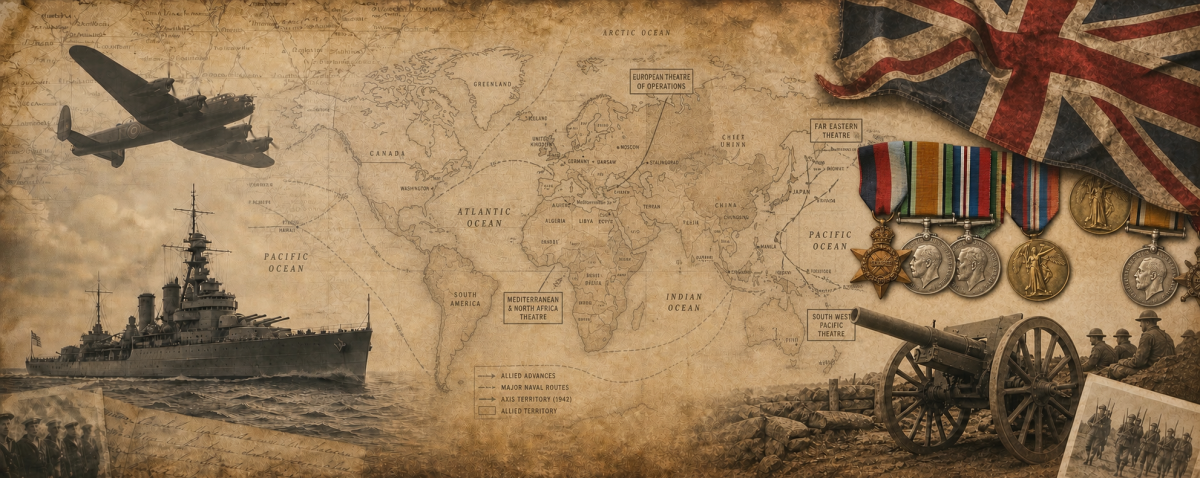
Private Albert Conley G/8517: 6th Buffs East Kent Regiment, Killed Arras 1917

From gamekeeper in rural Brabourne, Kent, to Private G/8517 in the 6th (Service) Battalion, The Buffs (East Kent Regiment), Albert Conley fell during the First Battle of the Scarpe on 9 April 1917. Son of Edward Conley and Emily Thornby, this 27-year-old volunteer from West Brabourne near Ashford perished assaulting Observation Ridge amid sleet and machine-gun fire, part of the 12th (Eastern) Division’s Arras Offensive. Buried at Cabaret-Rouge British Cemetery, he earned the British War Medal, Victory Medal, and Memorial Death Plaque—discover his full story of sacrifice.

Private Albert Conley: A Detailed Biography

Early Life and Family
Albert Conley was born before 16 February 1890 in Brabourne, Kent, England, with his birth registered in Volume 2A, Page 810, Line Number 375.[1] He was baptised on 16 February 1890 at St Mary the Virgin Church in Brabourne, the son of Edward Conley and Emily Thornby (née Thornby).[1] The 1891 census records him as a one-year-old son living in Brabourne, while by 1901 he resided at West Brabourne Green Lane as a scholar, and in 1911 at age 21 he lived as a single son in Brabourne, working as a gamekeeper.[1]

This rural Kent upbringing in West Brabourne near Ashford shaped a young man from a modest family background, typical of many who later enlisted from close-knit villages.[1][2] No records indicate siblings, spouses, or children, suggesting Albert remained unmarried and childless at his death.[1] His family connection to modern descendants includes being the 4th cousin twice removed to researcher Mike.[1]

Military Service
Albert enlisted at Ashford, Kent, joining the 6th (Service) Battalion, The Buffs (East Kent Regiment), with service number G/8517 and rank of Private.[1][3] Formed in August 1914 at Canterbury as part of the First New Army (K1), the battalion trained at Colchester, Purfleet, and Shorncliffe before moving to Aldershot in February 1915, landing at Boulogne in June 1915 for Western Front service.[1] It saw action at the Battle of Loos (1915), Battle of Albert, Battle of Pozières, and Battle of Le Transloy (1916), before the 1917 Arras offensives.[1][4]

The Buffs, with their historic buff-coloured facings earning the nickname from Dutch service origins, formed a proud East Kent line infantry tradition dating to the 18th century, including Marlborough’s campaigns and Napoleonic Wars.[5][6] Albert’s unit belonged to the 37th Brigade, 12th (Eastern) Division, VI Corps, Third Army, operating in the Western European Theatre.[1][4] He qualified for the British War Medal, Victory Medal, and Memorial Death Plaque.[1]

Circumstances of Death
Private Conley was killed in action on 9 April 1917 during the First Battle of the Scarpe, part of the Arras Offensive, near Observation Ridge north of the Arras-Cambrai road.[1][3][7] The 6th Buffs advanced as second-wave battalion in the 12th Division’s assault, following an artillery barrage at 05:30 amid sleet, snow, and winds, targeting German trenches, Feuchy Switch, and positions towards Monchy-le-Preux.[1][7] Initial gains met stiff resistance; the Buffs, alongside 6th Queen’s Own (Royal West Kent Regiment), pushed for second-line objectives but faced heavy machine-gun fire, with supports like 35th Brigade committed amid high casualties.[1][4]

Casualty lists confirm Albert among the fallen that day, alongside comrades like Private William James John Skinner (G/559) and Second Lieutenant Thomas Weston Buss.[3][8] The division ended short of final objectives near La Chapelle de Feuchy, though Sergeant Horace Cator of 7th East Surrey earned the Victoria Cross nearby.[1] Albert’s death place is recorded as France & Flanders.[1][2]

Burial and Commemoration
Albert lies buried in Cabaret-Rouge British Cemetery, Souchez, Pas-de-Calais, France, Plot XVII, Row M, Grave 3.[1] The Commonwealth War Graves Commission lists him as son of Edward and Emily Conley of West Brabourne.[1] His probate, granted 17 November 1917 in London to widow Emily Conley, valued effects at £123 19s 6d.[1]

He appears on Brabourne’s Roll of Honour and Lives of the First World War.[1][9][2] A Find a Grave Memorial (ID: 56068920) commemorates him.[1] For further research, consult Ancestry.co.uk or The National Archives.

Legacy and Descendants
Private Albert Conley’s sacrifice exemplifies the rural Kent volunteer’s path from gamekeeper to frontline soldier in a storied regiment, cut short at age 27 during a pivotal Arras push.[1][3] Though no direct descendants are noted, his story endures through family genealogy links and public memorials, honouring the 6th Buffs’ endurance across Loos to Cambrai.[1][4] Modern researchers can contribute to Lives of the First World War or local Brabourne histories.[9] Share additional family documents via this Space for collaborative expansion—your uploads could reveal more on the Conleys of West Brabourne.[1]

Sources
[1] Individual-Report-for-Albert-Conley.pdf
[2] Brabourne – Kent – Roll of Honour https://www.roll-of-honour.com/Kent/Brabourne.html
[3] Monday 9 April 1917 – First World War Casualties – A Street Near You https://astreetnearyou.org/date/1917/04/09
[4] 12th (Eastern) Division – The Long, Long Trail https://www.longlongtrail.co.uk/army/order-of-battle-of-divisions/12th-eastern-division/
[5] Buffs (Royal East Kent Regiment) – Wikipedia https://en.wikipedia.org/wiki/Buffs_(Royal_East_Kent_Regiment)
[6] The Buffs (Royal East Kent Regiment) – National Army Museum https://www.nam.ac.uk/explore/buffs-royal-east-kent-regiment
[7] Battle of Arras (1917) – Wikipedia https://en.wikipedia.org/wiki/First_Battle_of_the_Scarpe
[8] 7135 died on this day: Mon 09/04/1917 – First World War – On this day https://firstworldwaronthisday.blogspot.com/2017/04/7135-died-on-this-day-mon-09041917.html
[9] Search for “Conley” in lastname | Lives of the First World War https://livesofthefirstworldwar.iwm.org.uk/searchlives/field/lastname/Conley/filter/span%5B
[10] The Buffs 6th batt East Kent – The – Great War Forum https://www.greatwarforum.org/topic/105179-the-buffs-6th-batt-east-kent/
[11] 109 years ago tonight, 6th East Kent’s, The Buffs, were preparing to … https://www.facebook.com/groups/433097467321733/posts/1752996758665124/
[12] WW1 Home News in May 1917 – Lynsted with Kingsdown Society http://www.lynsted-society.co.uk/research_ww1_home_news_1917_05.html
[13] WW1 Roll of Honour – George Potts of Teynham http://lynsted-society.co.uk/research_ww1_casualties_potts_g.html
[14] Private William Jay | Soldiers’ Stories – First World War in Focus https://ww1.nam.ac.uk/stories/private-william-jay/
[15] Search for “Buffs East Kent Regiment” in unit | Lives of the First … https://livesofthefirstworldwar.iwm.org.uk/searchlives/field/unit/Buffs%20East%20Kent%20Regiment/filter/?page=41
[16] The Buffs (Royal East Kent Regiment) Commemoration – Facebook https://www.facebook.com/groups/436081820298097/posts/1680864395819827/
[17] Rolvenden – Kent – Roll of Honour https://www.roll-of-honour.com/Kent/Rolvenden.html
[18] The Buffs (East Kent Regiment) – First World War Casualties – A Street Near You https://astreetnearyou.org/regiment/256/The-Buffs-(East-Kent-Regiment)
[19] 6th Battalion East Kent Buffs WW1 Ancestors – Facebook https://www.facebook.com/groups/436081820298097/posts/1688545658385034/
[20] [EPUB] Historical records of the Buffs, East Kent Regiment (3rd Foot) https://www.gutenberg.org/ebooks/73159.epub.noimages
[21] 6th East Kent (Buffs) – 03/05/1917 https://www.greatwarforum.org/topic/41626-6th-east-kent-buffs-03051917/

Percy James East: A Soldier’s Journey in WWI

Percy James East, born around September 1892 in Sandwich, Kent, served as a Private in the 6th Battalion, The Buffs during World War I. He was killed in action on March 18, 1916, and is commemorated on the Loos Memorial in France. His military service and dedication are honored through various remembrance efforts.

Percy James East: A Detailed Biography

Private Percy James East, G/6280, 6th (Service) Battalion, The Buffs (East Kent Regiment), was born at Sandwich, Kent, about September 1892 and was killed in action in France on 18 March 1916. [1][2] He has no known grave and is commemorated on the Loos Memorial, Pas‑de‑Calais, France, where his name appears on Panels 15–19 alongside many comrades of the 12th (Eastern) Division. [1][3]


Early Life and Family

Percy James East’s birth is registered in the September quarter of 1892 in the Sandwich registration district, Kent (volume 2A, page 950, line 204), placing his birth around late summer 1892. He was the son of Walter East and Selina Caroline East, née Mannering, and grew up in a close‑knit Kentish family rooted in the small port and market town of Sandwich. [1]

By the 1901 census the family were living in Harnet Street, Sandwich, with Percy recorded as a school‑age child in his parents’ household. [1] Sandwich’s mix of maritime, agricultural and small‑trades employment provided the backdrop to his early life, and the family’s continuing presence there is reflected in the later addresses recorded for his mother. [1]


Early Life and Family (Work and Home)

By 1911 Percy was living at 1 Jessamine Villas, Sandwich, where his occupation is given as bottle washer, indicating work in a bottling or mineral‑water business or similar local industry. [1] This sort of manual but semi‑skilled employment was typical for young working‑class men in small Kent towns in the years immediately before the First World War. [1]

In 1915 his address is given as 11 Jasmine (Jessamine) Villas, Woodnesborough Road, Sandwich, showing that he remained close to his childhood home and that the small terrace of Jessamine Villas continued to be the family base. [1] After his death, the Commonwealth War Graves Commission recorded his mother, Selina C. East, as living at “1, Jessamine Villas, Boatsman’s Hill, Sandwich, Kent”, further confirming this cluster of related addresses as the East family’s long‑term home. [1]


Military Service

Percy enlisted at Sandwich into The Buffs (East Kent Regiment), being posted to the 6th (Service) Battalion, with the service number G/6280 and the rank of Private. [1][2] His medal entitlement—1914–15 Star, British War Medal and Victory Medal—confirms overseas service in a theatre of war from 1915. [1]

The 6th (Service) Battalion, The Buffs, was formed at Canterbury in August 1914 as part of Kitchener’s First New Army (K1), joining 37th Brigade of the 12th (Eastern) Division and training at Colchester, Purfleet and then Shorncliffe before moving to Aldershot in February 1915. [1][4][5] In late May 1915 the Division crossed to France via Folkestone–Boulogne and Southampton–Le Havre, concentrating south of Saint‑Omer by early June and joining III Corps; the 6th Buffs thereafter served continuously on the Western Front. [1][5][6]


Military Service (Battles and Front‑Line Duty)

The 6th Buffs and 12th (Eastern) Division first saw major action at the Battle of Loos in September–October 1915, where they attacked in the sector near Hulluch and the Hohenzollern Redoubt, suffering heavy casualties in repeated assaults and German counter‑attacks. [1][3][6] Subsequent fighting in October 1915 around positions known as “The Quarries” at Hulluch further depleted the battalion but also established it as a seasoned front‑line unit. [1][3]

In early 1916 the area around the Hohenzollern Redoubt became the focus of intensive mine warfare. On 2 March 1916, four large British mines were blown under German positions, followed by attacks that captured a series of craters, including the key Triangle Crater, with 12th (Eastern) Division selected to hold and exploit the new positions. [1][3][5] The 37th Brigade, including the 6th Buffs, relieved 36th Brigade in the crater sector on 5 March 1916 and endured continuous German bombing attacks, shelling and trench raiding in appalling mud and cratered ground for the rest of the month. [3][7]


Circumstances of Death

Percy’s individual record notes that he served in France between 31 August 1915 and 18 March 1916, and that he was killed in action in France on 18 March 1916. [1] A contemporary War Office casualty list dated 13 April 1916 initially recorded “E J East, Private, 6280, Buffs, France and Flanders” as missing, reflecting the confusion following the intense fighting in the Hohenzollern Craters sector; this entry clearly relates to Percy under an initialled form of his name. [1]

The broader context of his death is the Hohenzollern Redoubt action of 2–18 March 1916, during which 12th (Eastern) Division fought to hold newly captured mine craters against persistent German counter‑attacks and mortar fire. [3][5] German Minenwerfer bombardments and infantry assaults repeatedly struck the crater line and the old British front trenches, causing very high casualties; accounts of the period describe men standing shin‑deep in churned earth and water, exposed to accurate plunging mortar fire and close‑quarters bombing. [3][6] Percy’s death on 18 March 1916 coincides with the final phase of this action, when the Division was still in the line and suffering losses from shelling and localised attacks around Triangle Crater and the adjacent saps. [1][3]


Burial and Commemoration

Percy James East has no known grave, a common outcome for soldiers killed in cratered and heavily shelled sectors such as Hohenzollern, where bodies were often buried, re‑buried or obliterated by later explosions. [1][3] Instead he is commemorated on the Loos Memorial at Dud Corner Cemetery, near Loos‑en‑Gohelle, Pas‑de‑Calais, which bears the names of more than 20,000 officers and men who fell in the area from 1915 to the end of the war and have no known resting place; his name appears on Panels 15–19 among those of The Buffs and associated units. [1][2]

The Commonwealth War Graves Commission record for “EAST, PERCY JAMES, Private, G/6280, 6th Bn., The Buffs (East Kent Regiment), died 18 March 1916, aged 22, son of Selina C. East, of 1, Jessamine Villas, Boatsman’s Hill, Sandwich, Kent” confirms his age, unit and family details. [1] A Find a Grave memorial (ID 15344005) likewise records his name and commemorative location, providing a modern point of reference for family historians and researchers. [1]


Legacy

Percy’s medals—the 1914–15 Star, British War Medal and Victory Medal—together with the award of a wound stripe and the issue of a Memorial Death Plaque, underline his recognised service and sacrifice on the Western Front. [1] His life also preserved in genealogical form via FamilySearch ID LY9B‑M9F. [1]

Local and national remembrance projects ensure that Percy’s name is not confined to official registers. The “A Street Near You” database lists “Private Percy James East, G/6280, The Buffs (East Kent Regiment), 18/03/1916 (aged 22)” among the regiment’s casualties, linking him to the wider story of The Buffs’ wartime losses. [2][8] More broadly, the history of the Hohenzollern Redoubt action and the 12th (Eastern) Division highlights the ferocity of the fighting in which he died, placing his individual story within a larger narrative of sacrifice in one of the most dangerous sectors of the Western Front in early 1916. [3][5][6]


Key External Links

Sources
[1] Individual-Report-for-Percy-James-East.pdf
[2] The Buffs (East Kent Regiment) – First World War Casualties https://astreetnearyou.org/regiment/256/The-Buffs-(East-Kent-Regiment)
[3] Hohenzollern Redoubt action, 2–18 March 1916 – Wikipedia https://en.wikipedia.org/wiki/Hohenzollern_Redoubt_action,_2%E2%80%9318_March_1916
[4] Buffs (East Kent) Regiment https://vickersmg.blog/in-use/british-service/the-british-army/buffs-east-kent-regiment/
[5] 12th (Eastern) Division – The Long, Long Trail https://www.longlongtrail.co.uk/army/order-of-battle-of-divisions/12th-eastern-division/
[6] The 12th (Eastern) Division Memorial Cross – Hellfire Corner http://www.hellfirecorner.co.uk/middlebrook3.htm
[7] Current Information – London War Memorial https://londonwarmemorial.co.uk/view_profile.php?id=23678
[8] Search for “East Kent Regiment The Buffs” in unit | Lives of the First … https://livesofthefirstworldwar.iwm.org.uk/searchlives/field/unit/East%20Kent%20Regiment%20The%20Buffs/filter/span%5B/?page=21
[9] The Buffs 6th batt East Kent – The – Great War Forum https://www.greatwarforum.org/topic/105179-the-buffs-6th-batt-east-kent/
[10] William Richard COTTER VC – The VC and GC Association https://vcgca.org/our-people/profile/396/William-Richard-COTTER
[11] Lance Corporal William Cotter VC | The Western Front Association https://www.westernfrontassociation.com/world-war-i-articles/2016/february/lance-corporal-william-cotter-vc/
[12] Britain WWI Victory Medal East Kent Regiment (The Buffs) KIA Loos … https://www.medals-orders.com/great-britain-united-kingdom-wwi-victory-interallied-military-medal-east-kent-regiment-the-buffs-kia-1916-loos-ww1-1914-1918-british-decoration-great-war.html
[13] The 1st/3rd (East Kent–The Buffs) https://www.maltaramc.com/regmltgar/3rd.html
[14] We remember George Shilling – Lives of the First World War https://livesofthefirstworldwar.iwm.org.uk/lifestory/4014113
[15] Acting Corporal William Richard Cotter – A Street Near You https://astreetnearyou.org/person/2947410/Acting-Corporal-William-Richard-Cotter
[16] Britain WW1 WW1 Victory Medal – Pte A. Dyke, East Kent Reg. https://www.dracomedals.com/britain-wwi-ww1-victory-medal-pte-east-kent-regiment-the-buffs-kia-loos-1916..html
[17] Search for “Buffs,(East Kent) Regiment” in unit https://livesofthefirstworldwar.iwm.org.uk/searchlives/field/unit/Buffs,(East%20Kent)%20Regiment/filter/span%5B/?page=30
[18] Private Year: 1914-18 East Kent Regiment (The Buffs) 6th Battalion I … https://www.facebook.com/groups/436081820298097/posts/1084910138748592/
[19] Hohenzollern Redoubt Facts for Kids https://kids.kiddle.co/Hohenzollern_Redoubt
[20] Percy James East – Timenote https://timenote.info/lv/Percy-James-East
[21] 6th Battalion The Buffs https://www.greatwarforum.org/topic/6404-6th-battalion-the-buffs/

William Norris: A Tale of War and Commemoration

William Norris, born in 1886 in Petham, Kent, served as a Private in the 2nd Battalion of The Buffs (East Kent Regiment). Enlisting before the First World War, he was killed in action on February 14, 1915, during trench duties in the Ypres salient. He is commemorated on the Menin Gate Memorial.

William Norris: A Detailed Biography

Early Life and Family

William Norris was born in or about October 1886 in the rural parish of Petham, Kent, England, his birth registered in the East Ashford registration district (volume 2a, page 778, line 279). [1] He was the son of John Norris and Charlotte Ann (née Foord), a Kentish couple whose family life was centred on small villages south of Ashford. [1] William’s early years were shaped by this agricultural and village environment, in which many young men later found employment either on the land or in local trades before turning to military service.

By the time of the 1891 census, William was living at “The Lees,” Naccolt, in Kent, reflecting a move within the same general rural area. [1] This address sits close to the later community of Boughton Lees, near Ashford, indicating that the Norris family’s sphere of life remained firmly within the Kent countryside. In 1901, William, aged 14, is recorded as a “stepson” in Boughton Aluph, at Boughton Lees, suggesting a change in family structure, possibly through the death of a parent and remarriage of the surviving spouse. [1] The detail implies a potentially complex household, but one still rooted in the villages around Ashford.

William did not subsequently marry, and no children are recorded for him. [1] His adult life therefore appears to have been defined primarily by his army service rather than by domestic or family responsibilities. Later CWGC records describe him as “son of the late John and Charlotte Ann Norris, of Boughton Lees, Ashford, Kent,” confirming that both parents were deceased by the time of his death and that his closest association in civil life remained the Boughton Lees area. [1][2]

Early Life and Family (Appearance and Character)

Surviving military documentation preserves some physical details about William Norris. He was recorded as being 5 feet 6¾ inches tall, with brown hair and grey eyes. [1] These particulars, typical of attestation or service papers, present a brief but humanising glimpse of the man behind the regimental number L/8705. [1] Such records were compiled when he enlisted, most likely when joining The Buffs (East Kent Regiment) in the years before the First World War.

Coming from Boughton Lees and its surroundings, William would have grown up within sight of Ashford and within easy reach of the county town of Canterbury, where The Buffs had strong recruiting connections. [1][3] The regiment, one of the oldest in the British Army, drew heavily from Kentish men, and a sense of local pride in serving with “The Buffs” was well established by the late nineteenth century. [3][4] William’s enlistment into this regiment therefore reflects both geographical proximity and local martial tradition.

Military Service

William Norris enlisted at Canterbury, Kent, joining The Buffs (East Kent Regiment) and receiving the regular army number L/8705, the “L/” prefix associated with pre-war “old contemptible” regulars of the regiment. [1][2] He served in the 2nd Battalion, The Buffs, holding the rank of Private. [1][5] His recorded period of service runs from 19 November 1907 through to his death on 14 February 1915, indicating over seven years as a professional soldier, most of it in overseas garrisons of the British Empire. [1]

On 4 August 1914, at the outbreak of the First World War, the 2nd Battalion The Buffs was stationed at Wellington, Madras, in India. [1][4] In November 1914, as part of the rapid reinforcement of the British Expeditionary Force on the Western Front, the battalion embarked from Bombay, landing at Plymouth on 16 November and moving to Winchester. [1] There it joined the 85th Brigade of the newly formed 28th Division, a regular division composed largely of battalions brought home from imperial garrisons. [1][6]

On 15–18 January 1915, the 28th Division, including 2nd Buffs, embarked at Southampton for France. [1] Disembarking at Le Havre between 16 and 19 January, the division concentrated in the area between Bailleul and Hazebrouck by 22 January 1915, operating in the Ypres sector. [1][7] The 2nd Buffs were then engaged in trench-holding duties and minor operations in the Ypres salient, a notoriously dangerous sector where artillery, sniping and harsh winter conditions inflicted steady casualties even in periods of relative quiet. [7][8]

Circumstances of Death

Private William Norris, L/8705, 2nd Battalion, The Buffs (East Kent Regiment), was killed in action on 14 February 1915 in France or Belgium, aged about 28. [1][2] His battalion was serving with the 28th Division in the Ypres salient at the time, occupying trenches and positions that were subject to enemy shelling, trench raids and sniper fire. [1][7] While detailed battalion war diary extracts are not quoted in the summary, the date and location strongly suggest that William died during routine front-line duties or localised fighting near Ypres rather than in a major named battle.

Contemporary research on 2nd Buffs in early 1915 notes that the battalion was frequently in exposed positions around the Ypres–Comines Canal and east of Ypres, sustaining casualties from German shellfire and small-arms fire in the months preceding the Second Battle of Ypres. [7][9] Listings of casualties for 14 February 1915 include Private William Norris, L/8705, The Buffs, supporting the conclusion that his death formed part of this attritional pattern of losses. [2][10] Many such casualties were never recovered or their graves later lost due to the intensity of shelling and the subsequent reshaping of the battlefield.

The absence of a known grave for William, and his commemoration instead on a memorial to the missing, reflect the grim realities of the Ypres front. [1][8] The winter of 1914–15 saw foul conditions in the trenches, with mud, flooded dugouts, frostbite and constant harassment by enemy artillery and snipers all contributing to casualties. [8] William’s death on 14 February 1915 fits this pattern of relentless pressure on the early-war regular battalions, many of whose pre-war professionals would not survive to see the later battles of 1915 and 1916.

Burial and Commemoration

William Norris has no known grave and is commemorated on the Ypres (Menin Gate) Memorial in West-Vlaanderen, Belgium. [1] He is listed on Panels 12 and 14 of the memorial, alongside many comrades from The Buffs and other regiments who fell in the Ypres salient before 16 August 1917 and whose bodies were never identified or recovered. [1][2] The Menin Gate bears the names of over 54,000 officers and men of the British and Commonwealth forces who died in the Ypres sector without known graves, making it one of the most significant monuments to the missing of the First World War. [8][11]

The Commonwealth War Graves Commission record for William, available at https://www.cwgc.org/find-war-dead/casualty/919099/norris,-william/, confirms his details: Private L/8705, 2nd Bn. The Buffs (East Kent Regiment), date of death 14 February 1915, son of the late John and Charlotte Ann Norris of Boughton Lees, Ashford, Kent. [1] His Find a Grave memorial (ID 12043537) further records his commemoration on the Menin Gate and provides a virtual place of remembrance for relatives and researchers. [1][5]

William’s entitlement to the 1914–15 Star, British War Medal, and Victory Medal, together with the Memorial Plaque sent to next of kin, underscores his status as an early-war regular who served overseas from the outset of the battalion’s Western Front deployment. [1] These decorations would have been sent to his surviving family in Kent, probably his mother (if then alive) or siblings, forming tangible tokens of his service and sacrifice. [1][12]

Legacy

Within the family, William Norris is remembered as a 3rd cousin 2x removed to the present researcher, linking his story to a broader Kentish kin network. [1] Genealogical work drawing on birth registrations, census returns and CWGC data has re-established his place in the Norris family of Petham and Boughton Lees, ensuring that his name and service are not lost to history. [1][2] The description in CWGC records of him as “son of the late John and Charlotte Ann Norris, of Boughton Lees, Ashford, Kent” anchors his identity firmly to his home community. [1]

More widely, William represents the many pre-war regular soldiers of The Buffs who went to France and Flanders in the early months of the war and who bore the brunt of front-line service before the arrival of Kitchener’s New Army battalions and territorial reinforcements. [3][4] His presence on the Menin Gate links him to the great narrative of the Ypres battles, a place where, as later commentators noted, casualties across several major engagements may have exceeded one million. [8] For Kent and for The Buffs’ regimental community, his name is one among many on memorials, but each represents an individual life, family and story.

Modern digital resources such as the Imperial War Museum’s “Lives of the First World War” project and websites like A Street Near You record William’s service as Private L/8705, The Buffs, born 1886 and died 1915, and highlight his inclusion among the day’s casualties on 14 February 1915. [2][12] Through these resources, along with the Menin Gate and CWGC records, William Norris’s memory continues to be preserved and accessible, allowing descendants, local historians and the broader public to reflect on his journey from Petham and Boughton Lees to the Ypres salient, where he gave his life in the service of his country. [1][2]

Sources
[1] Individual-Report-for-William-Norris.pdf
[2] Sunday 14 February 1915 – First World War Casualties https://astreetnearyou.org/date/1915/02/14
[3] Buffs (Royal East Kent Regiment) – Wikipedia https://en.wikipedia.org/wiki/Buffs_(Royal_East_Kent_Regiment)
[4] [PDF] Buffs (Royal East Kent Regiment) https://www.queensregimentalassociation.org/media/Buffs%20(Royal%20East%20Kent%20Regiment).pdf
[5] Lives of the First World War https://livesofthefirstworldwar.iwm.org.uk/lifestory/3283493
[6] Historical records of the Buffs, East Kent Regiment (3rd Foot) https://www.gutenberg.org/cache/epub/73159/pg73159-images.html
[7] WW1 Roll of Honour – Leonard Terry of Teynham http://lynsted-society.co.uk/research_ww1_casualties_terry_l.html
[8] Battle of Ypres https://en.wikipedia.org/wiki/Battle_of_Ypres
[9] 2nd Btn The Buffs East Kent Regiment – Great War Forum https://www.greatwarforum.org/topic/152452-2nd-btn-the-buffs-east-kent-regiment/
[10] On This Day – from culturepics.org https://culturepics.org/on-this-day/index-bos.php?year=1915&month=02&day=14&collection=
[11] 2nd Lieutenant Elton Cyril Wanstall 8th Battalion The Buffs Royal … https://www.facebook.com/groups/436081820298097/posts/1680673975838869/
[12] Search for “Norris” in lastname | Lives of the First World War https://livesofthefirstworldwar.iwm.org.uk/searchlives/field/lastname/Norris/filter/?page=4
[13] Has anyone got any information on the 2nd Battalion? Doing some … https://www.facebook.com/groups/436081820298097/posts/1041976759708597/
[14] The Buffs – The Royal East Kents – Great War Forum https://www.greatwarforum.org/topic/12626-the-buffs-the-royal-east-kents/
[15] Second Battle of Ypres – Wikipedia https://en.wikipedia.org/wiki/Second_Battle_of_Ypres
[16] List of battalions of the Buffs (Royal East Kent Regiment) – Wikipedia https://en.wikipedia.org/wiki/List_of_battalions_of_the_Buffs_(Royal_East_Kent_Regiment)
[17] The Menin Gate Trilogy – AC https://www.remembering1418.com/menin-gate-triology-a-d
[18] Wednesday 10 February 1915 – First World War Casualties https://astreetnearyou.org/date/1915/02/10
[19] [PDF] st gregory the great – Canterbury Christ Church University https://repository.canterbury.ac.uk/download/66323ecf40dfc5587aa3219fc1760425100a35b817ef8f122d03b5c11d3205f0/508443/17494a_St.%20Gregory’s%20pamphlet.pdf
[20] Search for “East Kent Regiment, The Buffs.” in unit | Lives of the First … https://livesofthefirstworldwar.iwm.org.uk/searchlives/field/unit/East%20Kent%20Regiment,%20The%20Buffs./filter/span%5B/?page=11
[21] Buffs (East Kent) Regiment https://vickersmg.blog/in-use/british-service/the-british-army/buffs-east-kent-regiment/

Harry Luckhurst, 5th Buffs (East Kent Regiment): Ashford Territorial Signaller Killed at Sheikh Saad, Mesopotamia, 7 January 1916.

Corporal Harry Luckhurst was a bricklayer from Beaver Road, Ashford, who joined the 1/5th Battalion, The Buffs (East Kent Regiment) in 1914. Serving as a signaller in Mesopotamia, he was killed in action during the fierce fighting near Sheikh Saad on 7 January 1916, aged just twenty‑three.

Harry Luckhurst: A Detailed Biography

Early Life and Family

Harry Luckhurst was born on 7 November 1892 at Ashford, Kent, the son of Harry (often recorded as Henry) Luckhurst and Sarah (Sally) Luckhurst, née Young.[1] His parents lived in Beaver Road, South Ashford, an area that was expanding rapidly at the turn of the twentieth century as the town grew with the railway and associated trades.[1] Harry grew up in a working‑class household typical of the period, in which steady employment and the prospect of service, either military or industrial, shaped the lives of young men.

By the time of the 1901 census Harry was living with his parents at 71 Beaver Road, Ashford, where he was recorded as their eight‑year‑old son.[1] A decade later, in 1911, the family home was at 168 Beaver Road, and Harry, aged eighteen, was described as a bricklayer, reflecting the building boom that accompanied Ashford’s development as a railway and commercial centre.[1] He was educated at Ashford Council School, a state elementary school established to provide basic education for local children, and this schooling would have equipped him with the literacy and numeracy that later enabled him to serve as a signaller in the Army.[1]

Harry’s mother, Sarah, was the daughter of William Young, and De Ruvigny’s Roll of Honour specifically notes his parentage, underlining the pride the family took in his service and sacrifice.[1] The family’s address is consistently given as 168 Beaver Road, South Ashford, co. Kent, in both Commonwealth War Graves Commission and memorial register entries, showing that this remained the family home throughout and after the war.[1] Harry did not marry and had no children, so his immediate legacy within the family line is carried through his parents and extended relatives.[1]

Military Service

Harry enlisted in the Territorial Force on 3 September 1914, soon after the outbreak of the First World War, joining the 5th (Territorial) Battalion, The Buffs (East Kent Regiment).[1] His service number was T/1638, and he rose to the rank of Corporal, a non‑commissioned rank indicating both experience and responsibility within his company.[1] De Ruvigny records him specifically as a signaller, a role requiring reliability and technical skill in handling visual and telephonic communications under fire.[1]

The 1/5th (Weald of Kent) Battalion, The Buffs, formed at Ashford on 4 August 1914 as part of the Kent Brigade of the Home Counties Division, moving initially to Dover, Canterbury and Sandwich for home defence duties.[1][2] On 30 October 1914 the battalion embarked for India from Southampton when the Home Counties Division was broken up, serving there as part of the Indian garrison.[1][3] In December 1915 the battalion landed at Basra in Mesopotamia and joined the 35th Indian Brigade of the 7th (Meerut) Division, becoming part of the force assembled to relieve the besieged British and Indian garrison at Kut‑el‑Amara.[1][4]

Harry’s individual report records his overseas service as between 3 September 1914 and 7 January 1916 in the “Asiatic Theatres”, with deployment overseas (to Mesopotamia via India) on 9 December 1915.[1] The 1/5th Buffs were quickly drawn into the hard fighting along the River Tigris, where British‑Indian forces attempted to break through strong Ottoman positions in difficult terrain with limited intelligence and logistical support.[4] Harry qualified for the 1914–15 Star, British War Medal, Victory Medal and the Memorial Death Plaque, reflecting both his early war service and ultimate sacrifice.[1]

Circumstances of Death

Corporal Harry Luckhurst was killed in action on 7 January 1916 during the Mesopotamian campaign, at or near Sheikh Saad on the Tigris, during operations connected with the relief of Kut‑el‑Amara.[1] His individual report summarises his death as “Killed in Action – Mediterranean Expeditionary Force” at Sheikh Saad, Mesopotamia, while serving with the 5th Battalion, The Buffs (East Kent Regiment).[1] The Commonwealth War Graves Commission entry confirms his age as 23 and notes his parents and address, anchoring his loss firmly to the Ashford community.[1][5]

De Ruvigny’s Roll of Honour provides a vivid account from a comrade, explaining that during the advance at Sheik Said a shrapnel shell burst, killing the Adjutant, wounding the Colonel, killing Corporal Luckhurst and also killing a private.[1] This description aligns closely with the battalion war diary entry for 7 January 1916, which records “D” Company returning from outpost duty at 6 a.m., artillery fire starting at 8 a.m., a major engagement throughout the day, heavy casualties, and the deaths of the Adjutant and other officers with the Colonel and others wounded.[1] The National Army Museum’s overview of the Mesopotamia campaign notes that on 6–8 January 1916 British forces launched costly attacks near Sheikh Saad in an effort to break through to Kut, suffering heavy casualties in both infantry and supporting units.[4]

These operations formed part of the wider and ultimately unsuccessful effort to relieve the besieged garrison at Kut‑el‑Amara, an episode later described as one of the British Empire’s worst defeats of the war, with relief forces incurring around 23,000 casualties.[4][6] Harry’s death on 7 January 1916 therefore occurred at a critical moment in this campaign, during intense fighting in which his battalion advanced under heavy artillery and small‑arms fire in difficult flat terrain, with little cover and imperfect reconnaissance.[1][4] As a signaller and corporal, he would have been near the command elements of his company or battalion, which accords with the report that the same shell that killed him also struck the Adjutant and wounded the Colonel.[1]

Burial and Commemoration

Although De Ruvigny states that Harry was buried at Kut‑el‑Amara, the official concentration of graves and the Commonwealth War Graves Commission now record his grave in Amara War Cemetery, Iraq, plot XXXI. D. 1.[1][5] The CWGC entry names him as Corporal Harry Luckhurst, T/1638, 5th Bn., The Buffs (East Kent Regiment), son of Harry and Sarah Luckhurst of 168 Beaver Road, Ashford, Kent, confirming the key details gathered from family and regimental sources.[1] The Amara War Cemetery contains thousands of burials from the Mesopotamia campaign, many of them moved from smaller battlefield cemeteries after the war, and thus serves as a central place of remembrance for those who fell on the Tigris front.[4]

Harry is also commemorated on online memorials that make his story accessible to a wider audience. A Find‑a‑Grave entry (Memorial 56325868) records his birth on 7 November 1892 and death on 7 January 1916 at Al‑Amarah, Iraq, again linking his identity, dates and place of service.[1][7] In addition, the “Lives of the First World War” project and other digital databases list him among the men of The Buffs, preserving service details such as his rank, unit and service number for researchers and descendants.[8][5] These commemorations complement the printed memorials in De Ruvigny’s Roll of Honour and the War Graves Commission’s registers, ensuring that his name is preserved across multiple formats and locations.[1]

Legacy

Within his family and local community, Harry’s legacy is that of a young Ashford bricklayer who volunteered early, served diligently as a Territorial signaller, and died in one of the most difficult and costly campaigns of the war.[1] The consistent recording of his parents’ names and address in official records suggests that his relatives remained in the same house at 168 Beaver Road for many years, bearing the memory of their son who never returned from Mesopotamia.[1] Because he did not marry or have children, his story has been preserved largely through such records, family memory, and the interest of later genealogists and historians.

At a wider level, Harry represents the sacrifice of the 1/5th Buffs and other Territorial units that were sent far from Kent to fight in harsh climate and terrain in Iraq.[1][4] Modern summaries of the regiment’s history emphasise the battalion’s transfer from home defence to India and then Mesopotamia, underlining how local volunteer units found themselves involved in imperial campaigns far beyond their expectations.[1][2] Harry’s medals – the 1914–15 Star, British War Medal, Victory Medal and Memorial Plaque – symbolise both his service and the broader contribution of thousands of ordinary soldiers who endured the hardships of the Mesopotamian front.[1]

Contemporary interest, reflected in online forums and regimental histories, often highlights Corporal Harry Luckhurst as an example of the “particularly unfortunate soldier” of the Buffs who died so soon after arriving in theatre, scarcely a month after landing at Basra.[9][10] Through continued research, family history projects, and digital commemoration, his life and service continue to be recognised, ensuring that his story remains part of the collective memory of the Great War and of Ashford’s local heritage.[1][5]

Sources
[1] Individual-Report-for-Harry-Luckhurst.pdf
[2] Buffs (East Kent Regiment) – The Long, Long Trail https://www.longlongtrail.co.uk/army/regiments-and-corps/the-british-infantry-regiments-of-1914-1918/buffs-east-kent-regiment/
[3] Buffs (Royal East Kent Regiment) – Wikipedia https://en.wikipedia.org/wiki/Buffs_(Royal_East_Kent_Regiment)
[4] Mesopotamia campaign | National Army Museum https://www.nam.ac.uk/explore/mesopotamia-campaign
[5] Friday 7 January 1916 – First World War Casualties https://astreetnearyou.org/date/1916/01/07
[6] Siege of Kut – Wikipedia https://en.wikipedia.org/wiki/Siege_of_Kut
[7] Corporal Harry Luckhurst (1892-1916) – Memorials https://www.findagrave.com/memorial/56325868/harry-luckhurst
[8] Search for “The Buffs (East Kent Regt.)” in unit | Lives of the First … https://livesofthefirstworldwar.iwm.org.uk/searchlives/field/unit/The%20Buffs%20(East%20Kent%20Regt.)/filter
[9] 1/5th Buffs (East Kent Regiment) – Great War Forum https://www.greatwarforum.org/topic/73148-15th-buffs-east-kent-regiment/
[10] The Buffs – The Royal East Kents – Soldiers and their units https://www.greatwarforum.org/topic/12626-the-buffs-the-royal-east-kents/
[11] Private William Jay | Soldiers’ Stories – First World War in Focus https://ww1.nam.ac.uk/stories/private-william-jay/
[12] 1st/4th hampshire regiment – Documents – Great War Forum https://www.greatwarforum.org/topic/250701-1st4th-hampshire-regiment/
[13] Kut el Amara – Lives of the First World War https://livesofthefirstworldwar.iwm.org.uk/story/100633
[14] East Kent Militia – Wikipedia https://en.wikipedia.org/wiki/East_Kent_Militia
[15] Kut 1916: How the Ottomans defeated the British army https://interactive.aljazeera.com/ajt/2016/kutul-amare/en/kut-siege.html
[16] Men of the 1/5th Battalion of the Buffs (East Kent Regiment) passing … https://www.facebook.com/ww1incolour/posts/men-of-the-15th-battalion-of-the-buffs-east-kent-regiment-passing-over-the-jebel/1938285016315341/
[17] Hi would anyone know which battle my great grandfather died in … https://www.facebook.com/groups/436081820298097/posts/1249133155659622/
[18] Hampshire Regiment – The Long, Long Trail https://www.longlongtrail.co.uk/army/regiments-and-corps/the-british-infantry-regiments-of-1914-1918/hampshire-regiment/
[19] WW1 Home News in January 1916 – Lynsted with Kingsdown Society http://lynsted-society.co.uk/research_ww1_home_news_1916_01.html
[20] [PDF] Buffs (Royal East Kent Regiment) https://www.queensregimentalassociation.org/media/Buffs%20(Royal%20East%20Kent%20Regiment).pdf
[21] A Medical Meeting At Kut-El-Amara – jstor https://www.jstor.org/stable/20306171