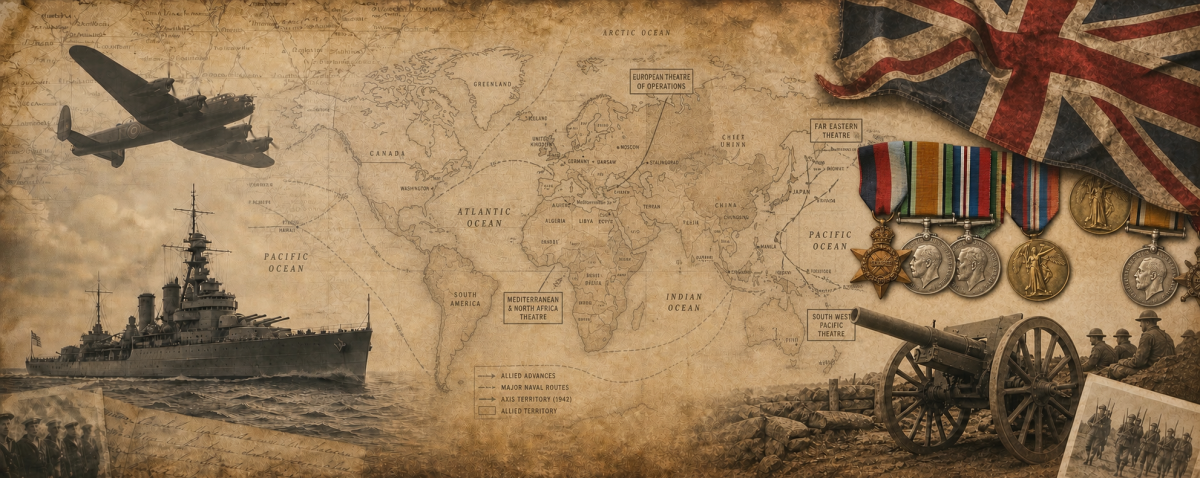

Private Arthur Thomas Champion, 231505, “B” Company, 2nd/2nd Battalion, London Regiment (Royal Fusiliers), was killed in action on 17 May 1917 and is commemorated on the Arras Memorial.
Family report and Commonwealth War Graves Commission
Early Life and Family
Arthur Thomas Champion was born on 18 June 1896 in Southwark, Surrey, the son of Richard Edward Champion and Charlotte Lugton Grosert.[file:58] He was baptised on 30 August 1896 at St Andrew, Newington, an early record that firmly places the family in south London at the close of the Victorian period.[file:58] By the time of the 1901 census he was living at 19 Vineleigh Road, Penge, Surrey, and in 1911 he was recorded at 23 Lyham Road, Brixton, working as a butcher’s errand boy.[file:58]
These details show Arthur growing up in the expanding suburban districts south of the Thames, in a household tied to the working life of Edwardian London.[file:58] His later residence at 22 Glenelg Road, Brixton, is the address given in the military and commemorative records, and it became the family home associated with his remembrance after his death.[file:58][page:1] No marriage or children are recorded in the supplied material, and the report lists him without spouse or issue.[file:58]
Military Service
Arthur enlisted in Westminster in 1917 for service in the Western European theatre, at a time when the British Army was absorbing large numbers of London recruits into Territorial and reserve formations.[file:58] His records show two service numbers, 4075 and 231505, and identify him as a Private in the London Regiment, specifically associated with the 2nd City of London Regiment and later recorded under the Royal Fusiliers (London Regiment).[file:58] The report further identifies his sub-unit as “B” Company, 2nd/2nd Battalion.[file:58]
The 2nd (City of London) Battalion, London Regiment (Royal Fusiliers), often known as the 2nd Londons, was a Territorial battalion with roots in the Volunteer movement of the nineteenth century and a strong association with Westminster and central London.[page:1] During the First World War the original battalion was split into several lines, including the 1/2nd Battalion for overseas service and the 2/2nd Battalion as its second-line counterpart, later also serving abroad.[page:1] The family report’s references to both the London Regiment and the Royal Fusiliers reflect the regiment’s somewhat complex administrative identity, since the London Regiment battalions retained their local titles while also being connected to older county regiments such as the Royal Fusiliers.[file:58][page:1]
Unit Context at the Time of Death
At the time of Arthur’s death on 17 May 1917, the British Army was still engaged in the prolonged fighting that followed the opening of the Arras Offensive in April 1917.[file:58][web:65] The Arras Memorial commemorates those who died in the Arras sector between the spring of 1916 and 7 August 1918 and who have no known grave, placing Arthur among the men lost during that hard-fought campaign.[web:65][web:68] His commemorative panel reference is Bay 9 on the Arras Memorial.[file:58][page:1]
The broader history of the 2nd (City of London) Battalion shows how heavily the London battalions were committed on the Western Front, first through the 1/2nd Battalion’s service in France from early 1915 and then through the reinforcement and reshaping of related battalions as the war intensified.[page:1] The battalion history records the severe strain of trench warfare, repeated drafts, and the transfer of men between lines of the same battalion, which helps explain why Arthur’s paperwork shows both incomplete and renumbered service references.[file:58][page:1] In practical terms, he belonged to one of the London Regiment formations tied to the Royal Fusiliers that supplied infantrymen for front-line duty in France and Flanders during a period of sustained attrition.[file:58][page:1]
Because Arthur was killed on 17 May 1917 and is commemorated at Arras rather than buried in a marked grave, it is likely that he died in the fighting or immediate aftermath of operations in the Arras sector and that his body was either not recovered or could not later be identified.[file:58][web:65] The date falls only days after the main phases of the First and Third Battles of the Scarpe, when British units in the Arras area were still engaged in trench holding, patrol clashes, shellfire, and local actions even when no major set-piece assault was under way.[page:1][web:65] That context helps explain the apparent simplicity of the official phrase “Killed in Action”, which often masked highly chaotic front-line circumstances.[file:58]
Arthur Champion’s service belongs to the wider story of London Territorial battalions that carried the burden of attritional fighting in the Arras sector in the spring of 1917.
London Regiment battalion history and Arras Memorial context
Circumstances of Death
Arthur Thomas Champion was killed in action in France on 17 May 1917 at the age of twenty.[file:58] His record gives his regiment or service as the London Regiment (Royal Fusiliers), with “B” Company, 2nd/2nd Battalion, and identifies him as the son of Edward and Charlotte Champion of 22 Glenelg Road, Brixton, London.[file:58][page:2] Although the supplied report names his father more fully as Richard Edward Champion, the commemorative wording using “Edward” is not unusual in military records, where middle names and familiar names were sometimes substituted in official returns.[file:58]
His death occurred in the Arras sector, one of the most fiercely contested regions of the Western Front in 1917.[web:65] The Arras Memorial stands within the Faubourg d’Amiens British Cemetery and commemorates nearly 35,000 servicemen of the United Kingdom, South Africa and New Zealand who died in the sector and have no known grave.[web:65][web:68] Arthur’s inclusion there confirms both the location of his loss and the fact that no identified burial place survived for him.[web:65]
Commemoration
Arthur is commemorated on the Arras Memorial in Bay 9 rather than in an individual grave.[file:58] The memorial was designed by Sir Edwin Lutyens, with sculpture by Sir William Reid Dick, and it serves as one of the principal places of remembrance for soldiers lost in the Arras battles and surrounding trench warfare.[web:65][web:68] For families such as the Champions of Brixton, the memorial became the symbolic grave of a son whose remains were never recovered or identified.[web:65]
His entitlement to the Victory Medal, British War Medal, and Memorial Death Plaque reflects the standard post-war recognition awarded to British soldiers who served overseas and died during the conflict.[file:58] These medals and commemorative items would have been important material links between his bereaved family in London and his service on the Western Front.[file:58] They also confirm that his service was formally recognised within the post-war system of imperial remembrance.[file:58]
Legacy
Arthur’s life was brief, moving from childhood in Southwark and Penge to working life in Brixton before military service cut it short in 1917.[file:58] He represents the many young London working men who entered the army from ordinary urban trades and were absorbed into Territorial battalions connected to the older county regiments.[file:58][page:1] The family report identifies him as a fourth cousin twice removed to the researcher, showing how his memory still survives within extended family history.[file:58]
Sources and Further Reading
- Compiled family report: Individual Report for Arthur Thomas Champion.[file:58]
- Commonwealth War Graves Commission: Arthur Thomas Champion.[file:58][page:2]
- 2nd (City of London) Battalion, London Regiment (Royal Fusiliers).[page:1]
- Arras Memorial.[web:65]
- Arras Memorial overview.[web:68]
- The National Archives: British Army war diaries, 1914–1922.[web:67]
Discover more from Mike's Cousins
Subscribe to get the latest posts sent to your email.