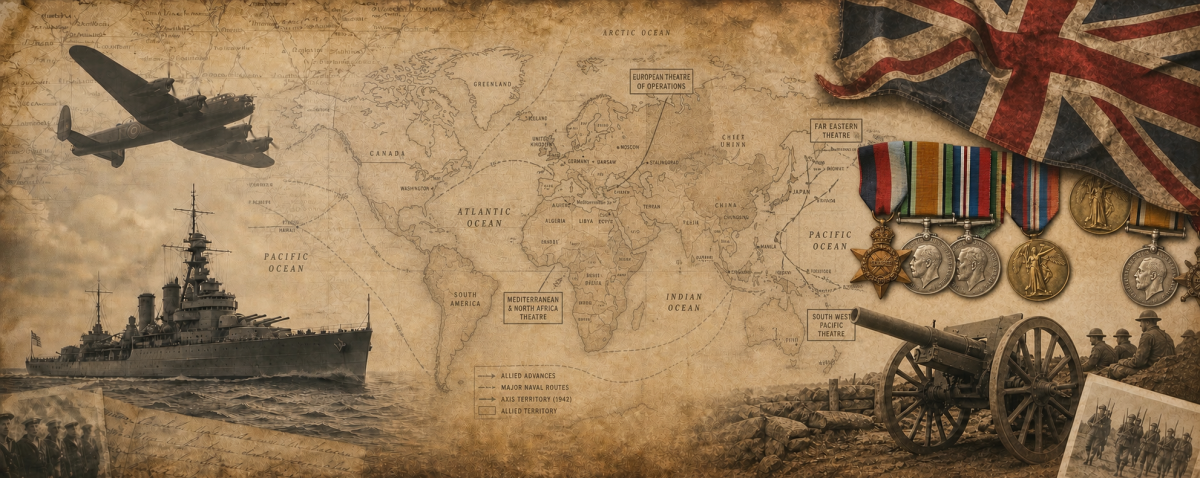

Private William Edward Phillpot Hawkins Handcock was a Kent agricultural worker, husband and father who died of wounds on 31 August 1915 during the Gallipoli campaign. Although his family report contains conflicting regiment and battalion references, the most specific evidence identifies him as Private T/2010, serving with the 2nd/4th Battalion, The Buffs (East Kent Regiment) attached to The Queen’s Own (Royal West Kent Regiment), and buried at Pietà Military Cemetery, Malta.[1][2]
William Handcock left the farms of east Kent for the Gallipoli campaign, dying of wounds at the age of twenty-four after only weeks in the Mediterranean theatre.
Early Life and Family
William Edward Phillpot Hawkins Handcock was born at Brook, near Ashford in Kent, before 26 October 1890. His birth was registered in the East Ashford district, and he was the son of William Handcock and Ann. He was baptised at Wye, Kent, on 26 October 1890, a record which confirms his early connection to the closely linked rural parishes of Brook and Wye. [1]
In the census of 1891, William was recorded as an infant living at Pickersdane Road, Wye, where he was described as a grandson. Ten years later, in 1901, he was recorded at Bickersdane, Wye, aged ten and living as the son of the household. These addresses place his childhood among the scattered hamlets, farms and lanes of the North Downs, an agricultural landscape that shaped both his upbringing and later work. [1]
By 1911, William was living at Bull Town Farm, Brabourne, where he was a single servant employed as a waggoner’s mate. This was demanding rural work: a waggoner’s mate assisted with horses, carts, crop movements and the daily transport needs of a working farm. His occupation reflects the practical skills and physical resilience common among young agricultural labourers from the Kent countryside. [1]
On 25 May 1912, William married Kate Marian Hayward at St Mary’s Church, Brook. The marriage followed the publication of banns at the parish church of St Gregory and St Martin, Wye, earlier that month. William and Kate had a son, also named William Edward Philpott Hawkins Handcock, creating a direct family legacy that survived his father’s loss in the First World War. [1]
Military Service
William entered the British Army as Private T/2010 and served in the Balkan theatre between 18 July and 31 August 1915. His medal entitlement—comprising the 1914–15 Star, British War Medal, Victory Medal and Memorial Plaque—confirms overseas service during the Great War and his death while serving with the forces of the British Empire. [1]
The report gives several overlapping unit references. Its summary identifies the The Buffs (East Kent Regiment) and specifies the 1st/5th Battalion as being attached to the 2nd/4th Battalion, The Queen’s Own (Royal West Kent Regiment); the later death note records him under the Buffs (East Kent Regiment), 5th Battalion. The combination of his Territorial Force service number, Gallipoli service, and the explicit reference to the 2nd/4th Royal West Kent Battalion strongly supports the conclusion that he was serving with the 2nd/4th Battalion at the time he was wounded. [2][1]
Such inconsistencies are not unusual in First World War compiled records. Territorial soldiers could be attached between battalions, while casualty summaries and later databases could preserve an earlier, parent or administratively associated unit rather than the precise front-line battalion at the time of death. The Commonwealth War Graves Commission record should be consulted as the principal official reference for the regiment and unit inscribed in his final commemoration. [1]
The 2nd/4th Royal West Kent Battalion
The 2nd/4th Battalion, The Queen’s Own (Royal West Kent Regiment), was a second-line Territorial Force unit formed at Tonbridge in September 1914. It moved first to Ascot and was attached to the 2nd Kent Brigade of the 2nd Home Counties Division, later redesignated the 202nd (2/1st Kent) Brigade of the 67th (2nd Home Counties) Division. [3][2]
Before deployment overseas, the battalion contributed to a Kent Composite Battalion, formed from headquarters personnel and companies drawn from the 2nd/4th Royal West Kent, 2nd/4th East Kent and 2nd/5th Royal West Kent battalions. In April 1915 this composite formation transferred to the 160th (Welsh Border) Brigade of the 53rd (Welsh) Division, and in June it was retitled as the 2nd/4th Battalion. [2][3]
The battalion sailed from Southampton on 20 July 1915 and landed at Suvla Bay, Gallipoli, on 10 August 1915. William’s recorded theatre service began on 18 July 1915, consistent with the period in which the battalion was preparing, embarking and moving into the eastern Mediterranean theatre. He therefore reached the campaign at the height of the August Offensive, when British forces were attempting to break the prolonged stalemate on the peninsula. [2][1]
Unit Context at Time of Death
The landing at Suvla Bay formed part of the August 1915 offensive at Gallipoli. British commanders intended the Suvla landings to secure high ground, link with forces advancing from the Anzac sector and help force the Ottoman Empire out of the war. Instead, the attacking forces encountered difficult terrain, supply problems, determined Ottoman resistance and severe command difficulties, and the opportunity for a rapid advance was lost. [4][2]
When the 2nd/4th Royal West Kent Battalion landed on 10 August, it entered a sector already marked by exhaustion, casualties and intense operational pressure. Its men faced the harsh conditions of Gallipoli: inadequate water, heat, dust, flies, disease, shellfire and the physical labour of carrying supplies and digging defensive positions. For a Territorial battalion formed less than a year earlier, the sudden transition from home training to campaigning on the peninsula was severe. [4][2]
By the end of August, the Suvla offensive had failed to achieve its strategic aim, while local fighting, sickness and wounds continued to reduce the strength of British units. William’s death on 31 August came twenty-one days after his battalion’s landing and falls within this costly period of consolidation and attrition. His case illustrates that the campaign’s losses were not confined to men killed instantly in battle: many died later from wounds after evacuation to medical facilities beyond the peninsula. [2][1]
William’s burial in Malta shows the wider medical geography of Gallipoli: wounded men were evacuated from the peninsula across the Mediterranean in the hope of treatment and recovery.
Circumstances of Death
Private William Handcock died of wounds on 31 August 1915, aged twenty-four. His death record places him in the Gallipoli theatre, and his burial in Malta indicates that he had been evacuated from the peninsula for medical treatment after receiving the wounds from which he did not recover. [1]
The surviving material does not identify the action in which he was wounded, the date of his evacuation, or the precise medical facility in which he died. It is therefore more accurate to say that he died of wounds sustained during the Suvla phase of the Gallipoli campaign than to attribute his loss to a specific engagement without supporting war-diary or hospital documentation. [2][1]
His death deprived Kate of her husband and their young son of his father. It also brought the consequences of a distant Mediterranean campaign back to Brook and the surrounding villages of east Kent, where many families experienced the war through letters, casualty telegrams, medals and memorial notices rather than through direct knowledge of the battlefields. [1]
Burial and Commemoration
William was buried in Pietà Military Cemetery, Malta, in Plot B, Row VII, Grave 1. Pietà became one of the principal Commonwealth burial places for men who died in Malta’s military hospitals during the Gallipoli campaign and later Mediterranean operations. [5][1]
The cemetery is a tangible reminder of Malta’s role as the principal medical base for the Gallipoli expedition. Thousands of wounded and sick servicemen were transported there by hospital ship, and many who did not survive were buried on the island rather than returned to Britain. William’s grave therefore connects a Kent farm worker’s story to the wider logistical, medical and human history of the Gallipoli campaign. [5]
His official commemoration is maintained by the Commonwealth War Graves Commission, while a Find a Grave memorial is recorded under the identifier 15268851. His medal entitlement and Memorial Plaque provided his family with formal recognition of his military service and sacrifice. [1]
Legacy
William Edward Phillpot Hawkins Handcock’s life was rooted in the farms and villages of east Kent. Born in Brook, baptised in Wye, employed at Brabourne and married in his home parish, he belonged to a rural community whose members were drawn into global war after 1914. [1]
His story also preserves an important connection between the Handcock and Hayward families. The supplied report identifies him as the husband of the researcher’s third cousin twice removed, while the survival of his son ensured that his family name continued beyond the conflict. [1]
Further research may be possible through the war diary of the 2nd/4th Royal West Kent Battalion, Gallipoli casualty lists, hospital and evacuation records, and the original Commonwealth War Graves Commission entry. Together, these records may help clarify the precise circumstances of William’s wounding and resolve the differing battalion references preserved in later family-history compilations. [2][1]
Sources and Further Reading
- Commonwealth War Graves Commission: Private William Edward Handcock — official casualty and grave record.
- Find a Grave: William Edward Handcock — memorial reference for Pietà Military Cemetery.
- The Long, Long Trail: The Queen’s Own (Royal West Kent Regiment) — battalion movements, including the 2nd/4th Battalion’s landing at Suvla Bay in August 1915.
- Malta RAMC: Queen’s Own (Royal West Kent) Regiment — information on Royal West Kent casualties and burials in Malta.
- The National Archives: British Army war diaries, 1914–1922 — guidance for locating the 2nd/4th Royal West Kent Battalion’s war diary.
- Individual Report for William Edward Phillpot Hawkins Handcock — family report containing civil registration, census, marriage, service, medal and burial details.
Sources
[1] Individual-Report-for-William-Edward-Phillpot-Hawkins-Handcock.pdf https://ppl-ai-file-upload.s3.amazonaws.com/web/direct-files/attachments/141549598/d49b2661-7941-4921-bea2-21d7c620ee53/Individual-Report-for-William-Edward-Phillpot-Hawkins-Handcock.pdf?AWSAccessKeyId=ASIA2F3EMEYEYNYRRKRH&Signature=94GWfC7v0MDCdsou0c3E8Me3urc%3D&x-amz-security-token=IQoJb3JpZ2luX2VjEJ%2F%2F%2F%2F%2F%2F%2F%2F%2F%2F%2FwEaCXVzLWVhc3QtMSJGMEQCIFpoWcWndILFS%2BryPhT%2B8awf3nKWwXQZJR%2FrcGCEJ2cYAiA%2BJhRHgpuRDDgWTgAh3LedSSOaW6Ne2RuuIaB%2FSl6eRyrzBAhoEAEaDDY5OTc1MzMwOTcwNSIMyJV8%2BByhIeFC9QyqKtAEIqQM5r4lABR%2FVVf02Lq8Rj5zFhPLK5JQeolLzFwEU7knt8PPloO3SalKOs%2BZtUX4Ya0S4tM%2Fn6kPWCVs36pXvsihRwEh5JQhPV3pgQCCk8CZhr2m1Ym2DivWMHSQy8VwaNiKRljS3agctK2fW1iLmaJrnyBKkLl9f%2FzZt%2B0164dtCYrYuLdUnhvy8oQ8ymyhE0BmWl2iUT5SIYUTPYpG9vDc%2B8MCeqmuddyKqAqNA%2BPjhGxYhxCl84Shppt6WSIESna%2BrQ2fzYgmVtOLtL%2FR48Lm7oknk050YFIPq5mqZq9Znbc%2BSiW%2BAYnxTD8iJEPAqk%2BCLP%2F06ogkhKJ8Ep0CbD5Zdjs9coyKTSqrRouF1p68vJCR1BGOfSUQ9ngnoEobTkVyBCQFw23%2BSA8wQEGoAJuHMqnnsG6Rxlhi70S1fN8JsIKeCSkSUIwkXBlWCAtELyUzemY4qsCqbh5qx9KIUVslu239HxsMEPVZfZSD71rfVH3A%2B%2BfsbVfoF2ileSN6fBh27slifw2ko16FnjNPuhYTfzOyWUDRGXmyZj%2FVjtV3fDlEQQT1WCrxcaracZeO%2Fr3ZmmdIfeThGfhY1QVph5Bfxq%2B90OJVntdHASbOpKaw5j11YfzdDW9j5SVKKJ51ZTImm5mG8cYf04BGaSLXs%2BIl5Pq%2BcHyPWPImyAdDOOvZvo8d4sqISV%2B9WhlP%2FUbD6onBr3V5pM4irc76NmKI9deIlmsQFjI4UVmqSTXtqYb1gCBs3hcKR%2B7DMxZCh6KKhwqq4hJebkBKbuVLSydGmzDX5cvUBjqZAYKBKycsdxn%2BfCM1Fe%2FzZvj3LUZbfXImIH%2Fc5fBotJbC7vGVs7F712e8VZwduOicBWb1Sm5Gz%2BWjNWqAFIR%2FgG4wu%2FGuJhDSWsHCbdg%2BfnqfuudpuxDX6M9f1KabeVOcvriws7ixqW7ljgJwJWcpO782pY92zEvQfOiGinOgpIMLOC0sD97Hex%2FfszPfNLrcsyoGEddKtZwLBw%3D%3D&Expires=1788016101
[2] The Queen’s Own (Royal West Kent Regiment) https://www.longlongtrail.co.uk/army/regiments-and-corps/the-british-infantry-regiments-of-1914-1918/the-queens-own-royal-west-kent-regiment/
[3] The Queen’s Own Royal West Kent Regiment https://whenthewelshcametobedford.wordpress.com/regiments/the-queens-own-royal-west-kent-regiment/
[4] Queen’s Own Royal West Kent Regiment https://en.wikipedia.org/wiki/Queen’s_Own_Royal_West_Kent_Regiment
[5] Queen’s Own (Royal West Kent) Regiment https://www.maltaramc.com/regmltgar/1rywtkent.html
[6] Gallipoli – Opusculum https://opusculum.wordpress.com/category/gallipoli/
[7] The Scotch College World War I Commemorative Website https://portal.scotch.vic.edu.au/ww1/azyear.htm
[8] Anzac Epitaphs Gallipoli H-I-J https://anzacs.org/epitaphs/epitaphshij.html
[9] Gallipoli Peninsula | Australian War Memorial https://www.awm.gov.au/collection/PL503649
[10] Br – WWI Pictorial Honour Roll of Victorians https://ww1vic.weebly.com/br.html
[11] [PDF] Affective geographiesof models and modelling – PURE https://pure.aber.ac.uk/ws/portalfiles/portal/9884787/MacKinnon_R_J.pdf
[12] Routledge Handbook of Global Sport 9781138887237 … https://dokumen.pub/routledge-handbook-of-global-sport-9781138887237-9781315714264.html
[13] Browse by Book Section | VU Institutional Repository https://vuir.vu.edu.au/view/type/book=5Fsection.date.html
[14] Routledge Handbook of Global Sport (John Nauright) | PDF – Scribd https://www.scribd.com/document/587500482/Routledge-Handbook-of-Global-Sport-John-Nauright-Z-lib-org
[15] Tourism and National Identities: An International Perspective [1  https://dokumen.pub/tourism-and-national-identities-an-international-perspective-1nbsped-0415572770-9780415572774-j-4374139.html
[16] Citations of A Treatise on the Family – IDEAS/RePEc https://ideas.repec.org/r/nbr/nberbk/beck81-1.html