
–
Stoker David Anderson, Royal Naval Reserve, service number 2075T, serving in H.M.S. Invincible, was killed in action on 31 May 1916 during the Battle of Jutland and is commemorated on the Portsmouth Naval Memorial.
Family report, CWGC record and naval history sources
Early Life and Family
David Anderson was born on 15 February 1877 at Haddington, East Lothian, Scotland, the son of James and Agnes Anderson.[file:248] By the census of 1881 he was living in Prestonpans, first noted at C Wynd, High Street, and by 1891 he was in Penicuik, Midlothian, where he was recorded as a thirteen-year-old scholar.[file:248] These details place his childhood in the east of Scotland, within communities shaped by industrial employment, coastal trade and working-family migration between towns in the Lothians.[file:248]
By 1901 David was back in Prestonpans, recorded as head of his household at the age of twenty-three, suggesting an early assumption of adult responsibility.[file:248] He later married Annie Marie Horan in the Canterbury registration district in about June 1911, and together they had five children: David, Elizabeth, John, Henry Cook, and Robert Anderson.[file:248] At the time of his death his wife Annie was living at 13 Hope Terrace, Leith, Edinburgh, the address preserved in the CWGC-style family details included in the report.[file:248]
Naval Service
David served in the Royal Naval Reserve, the part-time reserve force that supplied trained seamen and stokers to the Royal Navy in wartime.[file:248] His period of military service is given as between 9 November 1914 and 31 May 1916, and his rank at death was Stoker, service number 2075T.[file:248] He served aboard H.M.S. Invincible, the famous battlecruiser whose loss at Jutland became one of the best-known naval disasters of the First World War.[file:248][web:251]
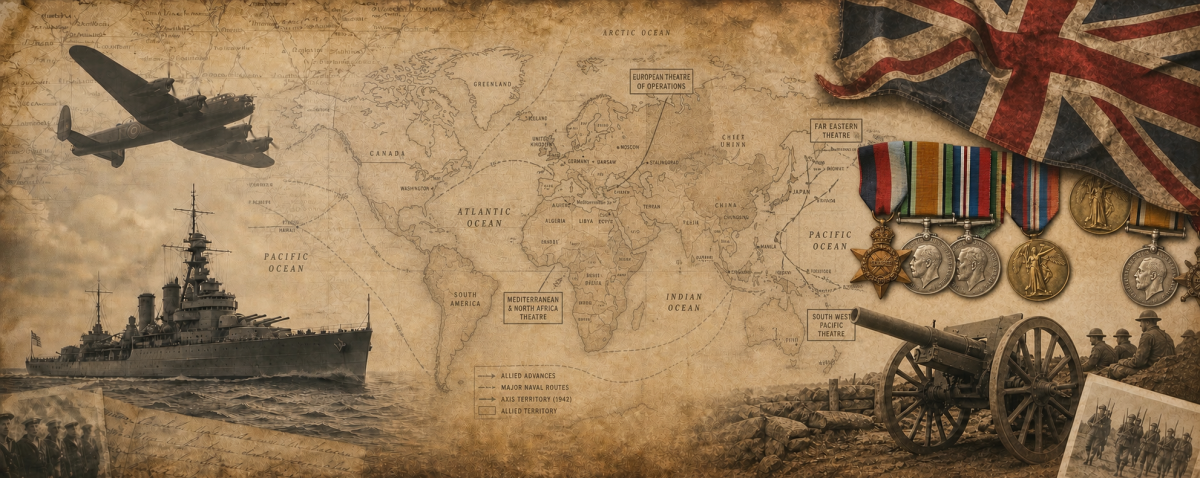
As a stoker, David would have worked in the boiler and engine spaces, part of the physically demanding labour force that kept a battlecruiser moving at high speed in combat.[web:251][web:259] Men in these roles were essential to the functioning of large warships, feeding coal, maintaining steam pressure, and working in extreme heat and noise deep within the hull.[web:259] His medals—the 1914–15 Star, Victory Medal, British War Medal and Memorial Death Plaque—reflect active wartime service and the official post-war recognition given to those who died in the conflict.[file:248]
Unit Context at the Time of Death
At the time of David Anderson’s death, H.M.S. Invincible was serving as flagship of the 3rd Battlecruiser Squadron during the Battle of Jutland, fought on 31 May 1916 between the British Grand Fleet and the German High Seas Fleet.[web:250][web:258] Jutland was the largest naval battle of the First World War, involving more than 100,000 sailors on some 250 ships, with over 6,000 Royal Navy deaths.[web:258][web:259] The battle remains the defining surface action of the war at sea, and the loss of Invincible was one of its most dramatic moments.[web:258][web:251]
Naval history sources record that at about 6.34 pm on 31 May 1916, Invincible was struck by enemy shellfire that penetrated Q turret and ignited the magazine.[web:250][web:251] The resulting explosion blew the ship in half and sank her almost instantly.[web:251] Of a complement of more than a thousand men, only six survived, meaning that David Anderson was among the overwhelming majority of the ship’s company lost with the vessel.[web:250][web:251]
This is the key military context for his death: he was not lost in an isolated naval mishap but in one of the central engagements of the war, aboard a front-line capital ship of the Grand Fleet.[web:250][web:259] The report’s brief phrase “Action against German Fleet. North Sea” is therefore shorthand for the destruction of H.M.S. Invincible during the Battle of Jutland.[file:248][web:250] For a family history audience, this places David’s loss firmly within a major national event whose scale and shock resonated across Britain in 1916.[web:258][web:259]
When Invincible exploded at Jutland, all but six of her crew were lost, making her destruction one of the most devastating single-ship losses of the battle.
Naval-History.net and Imperial War Museums community record
Circumstances of Death
David Anderson was killed in action at sea on 31 May 1916.[file:248] His place of death is given as the North Sea during action against the German Fleet, and his body was not recovered for burial.[file:248] This explains why he is commemorated on a naval memorial rather than buried in an identified grave.[file:248][web:255]
The family details preserved in the report describe him as the son of the late James Anderson of Prestonpans, Edinburgh, and the husband of Annie Anderson of 13 Hope Terrace, Leith, Edinburgh.[file:248] That wording is consistent with the formal language used in Commonwealth war commemoration and links his naval death back to his Scottish family roots and his widow’s home in Edinburgh.[file:248] In practical terms, the Portsmouth Naval Memorial became the surrogate grave for a sailor whose remains were never returned from the sea.[web:255]
Commemoration
David is commemorated on the Portsmouth Naval Memorial, panel 23, one of the principal memorials to Royal Navy sailors and reservists who died without a known grave.[file:248][web:255] The memorial at Southsea records approximately 25,000 British and Commonwealth sailors lost in the two world wars, including around 10,000 from the First World War.[web:255] For men like David, lost at sea when no body could be recovered, such memorials were created to provide a permanent and visible place of remembrance.[web:255]
The supplied report also notes a Find-a-Grave memorial entry and confirms his relationship within the wider family tree as the husband of a third cousin twice removed.[file:248] These genealogical connections help restore personal and family context to a sailor who otherwise appears only in naval casualty records and memorial registers.[file:248] His name also appears within casualty listings for H.M.S. Invincible, where the ship’s dead are preserved as part of the wider roll of Jutland losses.[web:249][web:257]
Legacy
David Anderson’s life links Scotland, Kent, and the Royal Navy in a way that is especially meaningful for family historians.[file:248] Born in East Lothian, married in Canterbury, and commemorated in Portsmouth, his story crosses several parts of Britain and reflects the mobility of working families in the late nineteenth and early twentieth centuries.[file:248] His death aboard Invincible also connects this individual family history to one of the most famous naval actions of the Great War.[web:250][web:258]
Sources and Further Reading
- Compiled family report: Individual Report for David Anderson.[file:248]
- Commonwealth War Graves Commission: David Anderson.[file:248]
- Naval-History.net: H.M.S. Invincible casualty lists, Battle of Jutland 1916.[web:249]
- Imperial War Museums: H.M.S. Invincible at the Battle of Jutland.[web:250]
- Naval-History.net: H.M.S. Invincible, battlecruiser.[web:251]
- The National Archives: Jutland – Death at sea.[web:259]
- UK Government: Nation marks 100 years since great naval battle.[web:258]
- Portsmouth Naval Memorial.[web:255]
Discover more from Mike's Cousins
Subscribe to get the latest posts sent to your email.