
Private George Thomas Smith (service number L/10108) served with the 2nd Battalion, The Buffs (East Kent Regiment), and was killed in action on 14 April 1915 during the early fighting around the Ypres Salient.[file:131][web:132][web:136]
He has no known grave and is commemorated on the Ypres (Menin Gate) Memorial, Panels 12 and 14, in West‑Vlaanderen, Belgium.[file:131][web:137]
Early Life and Family
George Thomas Smith was born on 25 August 1893 in Dover, Kent, his birth registered in the Dover district in the 1893 December quarter (volume 2A, page 935). He was baptised on 16 September 1893 at St Andrew’s, Buckland, Dover, confirming his early roots in this Channel port town.[file:131]
He was the son of Thomas Alfred Smith and Susannah (née Aldridge). By the 1901 census, the family had moved inland to Maidstone, where George, aged seven, was recorded at Hills Cottages, 10 London Road East, as a son in the household. By 1911 he was still in Maidstone, living at 4 Sheals Place, Upper Stone Street, and working on a farm, a typical occupation for a young man in a mixed urban‑rural area.[file:131]
The individual report records no spouse, shared facts with a partner, or children, suggesting that George did not marry and left no direct descendants. His closest family connections therefore remained his parents and any siblings in Maidstone and Dover, with later addresses giving 19 George Street, Maidstone, as his parents’ home.[file:131]
Born in Dover and raised in Maidstone, George Smith left farm work behind to join his county regiment, The Buffs.
Reconstructed from birth, baptism, and census records
Enlistment and the 2nd Battalion, The Buffs
George enlisted in The Buffs (East Kent Regiment) and was posted to the 2nd Battalion, receiving the regular‑army style service number L/10108. De Ruvigny’s Roll of Honour summarises his service succinctly: “Smith, George Thomas, Private, No. L/10108, 2nd Battn. East Kent Regt., s. of Thomas Alfred Smith, of 19, George Street, Maidstone; served with the Expeditionary Force in France; killed in action 14 April, 1915.”[file:131][web:132]
On 4 August 1914 the 2nd Battalion was stationed at Wellington, Madras, in India. It returned to England from Bombay, landing at Plymouth on 16 November 1914, then moved to Winchester and joined 85th Brigade in the newly formed 28th Division. After a brief period of mobilisation and training, the battalion prepared for service on the Western Front.[file:131][web:142]
Between 15 and 18 January 1915 the 28th Division embarked at Southampton for France, disembarking at Le Havre between 16 and 19 January. The division concentrated between Bailleul and Hazebrouck by 22 January and then moved into the line in the Ypres Salient, taking over sectors from experienced units and immediately facing the realities of trench warfare.[file:131][web:145]
Fresh from India, the 2nd Buffs joined 28th Division in Flanders, holding exposed trenches in the Ypres Salient through the winter of 1914–15.
Summary of battalion movements, late 1914–early 1915
The 2nd Buffs in the Ypres Salient, April 1915
The 2nd Battalion, as part of 85th Brigade, 28th Division, was engaged in holding the line east of Ypres in early 1915, before and during the Second Battle of Ypres. While the division would later be heavily involved in that gas‑attack offensive from 22 April 1915, its battalions were already suffering casualties in the routine but dangerous trench warfare of the Salient.[file:131][web:13][web:137]
The battalion’s Western Front service in 1915 included fighting in the Second Battle of Ypres and later the Battle of Loos, but in the weeks before the gas attack at Ypres they endured constant shelling, sniping, patrol clashes, and minor operations in the front‑line and support trenches. It was during this period—on 14 April 1915—that George was killed in action, just days before the infamous gas cloud attacks north of Ypres.[file:131][web:137][web:145]
Although the individual report does not link his death to a specific action beyond the general “killed in action”, the date and place strongly suggest that he fell while holding the line or during local fighting in the Ypres sector. The fact that he is commemorated on the Menin Gate rather than in a known grave is consistent with the intense artillery fire and ground conditions in the Salient, which often left bodies unrecovered or unidentified.[file:131][web:137]
Smith’s death on 14 April 1915 came in the tense days before the Second Battle of Ypres, when the 2nd Buffs were already taking losses in the Salient.
Context from 28th Division operations around Ypres
Circumstances of Death
The individual report records that George Thomas Smith served with the Expeditionary Force in France between 23 February and 14 April 1915 and that he was “killed in action” on 14 April 1915. No further details are given in De Ruvigny’s Roll beyond the fact of his death in the field.[file:131][web:132]
Given the battalion’s position with 28th Division in the Ypres Salient at this time, his death most likely resulted from shellfire, small‑arms fire, or a patrol or minor local attack, rather than a named set‑piece battle. Many of the men commemorated on the Menin Gate fell in such circumstances, their remains lost in the battered landscape or buried without surviving markers.[file:131][web:137]
Burial and Commemoration
George has no known grave and is commemorated on the Ypres (Menin Gate) Memorial, Panel 12 and 14. The Menin Gate stands at the eastern exit of Ieper (Ypres) on the road to Menen (Menin) and Courtrai, and bears the names of more than 54,000 officers and men of Commonwealth forces who died in the Ypres Salient before 16 August 1917 and have no known burial.[file:131][web:137][web:140]

His Commonwealth War Graves Commission entry can be found here: CWGC casualty details for Private G. T. Smith. An additional memorial entry, including basic details and the opportunity for photographs and tributes, is available at Find a Grave memorial 12028941.[file:131]
Medals and Recognition
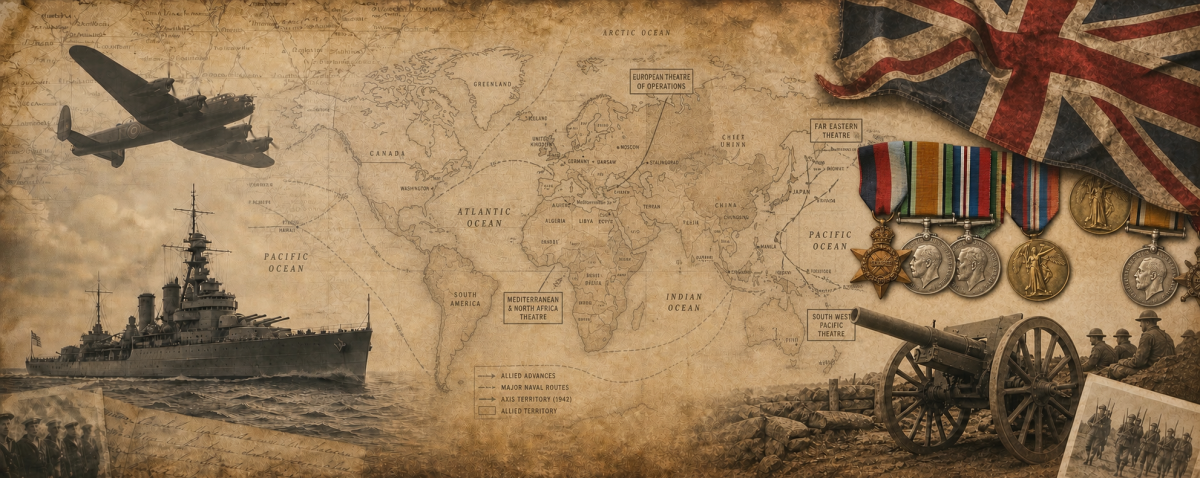
George was entitled to the 1914–15 Star, having served in the Western European theatre from early 1915, as well as the British War Medal and Victory Medal, marking his service and sacrifice in the Great War. His family would also have received the Memorial Plaque and Memorial Scroll sent to the next of kin of those who died.[file:131]
The entry in De Ruvigny’s Roll of Honour, though brief, ensured that his name was recorded in a published volume devoted to the fallen, linking his story with those of many other soldiers from across the United Kingdom and Empire.[file:131][web:132]
Family and Legacy
Private George Thomas Smith left no wife or children, but his parents, Thomas Alfred and Susannah, and any brothers and sisters in Maidstone and Dover would have mourned his loss. For them, his name on the Menin Gate and in De Ruvigny’s Roll stood in place of a grave on the Western Front.[file:131]
His service with the 2nd Battalion, The Buffs, fits into the wider history of this historic Kent regiment, whose battalions fought from India and Flanders to Salonika and beyond during the First World War. For family and regimental researchers, resources such as Ancestry, the Imperial War Museum’s Lives of the First World War entry for George, and Buffs regimental histories help place his short life—1893 to 1915—within a broader narrative of local and military history.[file:131][web:132][web:13]
Sources
- Individual report for Private George Thomas Smith (family tree compilation, including birth and baptism at Buckland, Dover; census addresses in Maidstone; service number L/10108; service with 2nd Battalion, The Buffs (East Kent Regiment); Western European theatre service dates; death on 14 April 1915; and Menin Gate Memorial panels 12 and 14).[file:131]
- De Ruvigny’s Roll of Honour – entry for “Smith, George Thomas, Private, No. L/10108, 2nd Battn. East Kent Regt., s. of Thomas Alfred Smith, of 19, George Street, Maidstone; served with the Expeditionary Force in France; killed in action 14 April, 1915.” (quoted in the individual report; used to confirm family address and brief service summary).[file:131][web:132]
- Commonwealth War Graves Commission – casualty record for “SMITH, GEORGE THOMAS”, Private L/10108, 2nd Bn., The Buffs (East Kent Regiment), commemorated on the Ypres (Menin Gate) Memorial, Panels 12 and 14: CWGC casualty details.[file:131]
- Find a Grave – memorial for George Thomas Smith (Menin Gate Memorial panels 12 and 14, with scope for photographs and tributes): Find a Grave memorial 12028941.[file:131]
- Buffs (Royal East Kent Regiment) – regimental history and overview of battalion service, confirming 2nd Battalion’s move from India to 28th Division, Western Front, and later Salonika: Buffs (Royal East Kent Regiment).[web:13]
- 28th Division operations and move to France – description of mobilisation at Winchester, embarkation at Southampton 15–18 January 1915, disembarkation at Le Havre 16–19 January, and concentration between Bailleul and Hazebrouck by 22 January (summarised in the individual report and supported by divisional histories).[file:131][web:145]
- Ypres (Menin Gate) Memorial – general background, purpose, and inscription details for the memorial to the missing of the Ypres Salient, including over 54,000 names: Menin Gate Memorial overview and roll‑of‑honour material at Menin Gate Memorial – Roll of Honour.[web:137][web:143]
- Imperial War Museum – Lives of the First World War life story for George Thomas Smith (used for cross‑checking unit, number, and commemoration): IWM Lives of the First World War: George Thomas Smith.[web:132]
Discover more from Mike's Cousins
Subscribe to get the latest posts sent to your email.